
Wuhan Robotaxi Meltdown Strands 100+ Baidu Apollo Go Passengers
Over 100 Baidu Apollo Go robotaxis simultaneously malfunctioned in Wuhan on March 31, 2026, trapping passengers in live traffic during evening rush hour and raising serious reliability questions for autonomous vehicle fleets at scale.

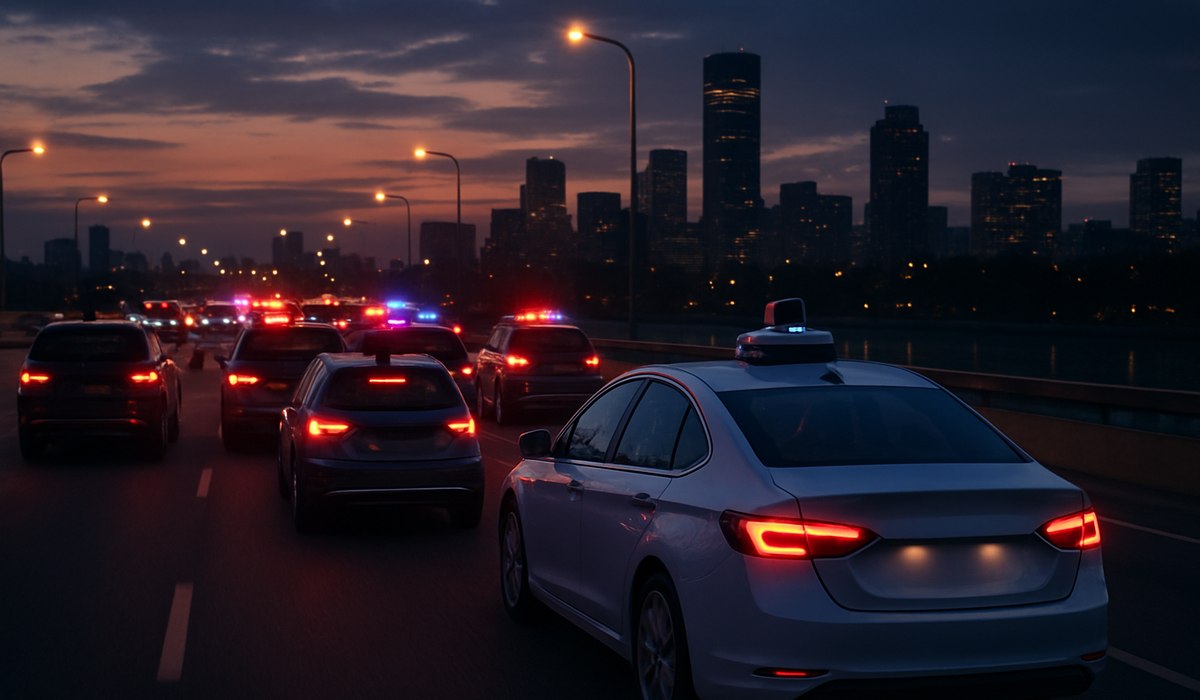
Image generated by AI
Mass System Failure Immobilizes 100+ Vehicles Across Wuhan
Over 100 Baidu Apollo Go robotaxis experienced a catastrophic system-wide failure in Wuhan on March 31, 2026, leaving passengers stranded in moving traffic during evening rush hour. The malfunction began at approximately 8:57 p.m. local time, when Apollo Go vehicles across multiple districts simultaneously stopped responding to commands and came to a complete halt. Police and emergency services received hundreds of distress calls from riders trapped inside immobilized vehicles on busy roadways and elevated expressways. The incident affected one of the world's largest commercial autonomous vehicle fleets, operating in what was supposed to be a controlled, monitored deployment zone. This represents the most significant robotaxi fleet failure documented to date, surpassing isolated single-vehicle incidents in scope and impact.
Passengers reported being confined in vehicles for up to two hours while awaiting rescue or system recovery. Dashcam footage and social media accounts described harrowing scenes on Wuhan's elevated highways, where stranded robotaxis blocked travel lanes as human-driven vehicles navigated around them. Several rear-end collisions occurred when following drivers failed to anticipate stationary autonomous vehicles in active traffic. Emergency personnel deployed hazard markers and assisted riders in reaching safety, though some passengers remained confined to vehicles on limited-access expressways until manual intervention became possible.
Centralized Malfunction Bypasses Safety Protocols
The wuhan robotaxi meltdown revealed a critical vulnerability in Apollo Go's architecture: the failure did not trigger expected fail-safe mechanisms that should have guided vehicles to safe stopping locations. Industry analysts and autonomous vehicle engineers point to a centralized malfunction that propagated simultaneously across the entire fleet, disabling normal driving behavior and degradation protocols. Unlike single-vehicle failures, which typically activate conservative responses like controlled pull-overs or depot returns, this system-wide failure left cars frozen exactly where they stopped.
Technical observers suggest the malfunction originated in Baidu's cloud-based dispatch and communications infrastructure rather than individual vehicle computers. Cloud-dependent architectures create single points of failure: when centralized servers malfunction, thousands of connected vehicles lose operational guidance instantly. Reports indicate the system did not execute backup protocols, which raises serious questions about redundancy testing and failover mechanisms. Aviation safety principles, well-established in commercial aviation, emphasize that critical systems must function even when primary components fail. The wuhan robotaxi meltdown demonstrates that autonomous vehicle fleets operating at commercial scale have not yet achieved equivalent safety margins.
Baidu has not publicly released detailed technical diagnostics explaining the root cause. This lack of transparency complicates independent assessment and regulatory oversight. Visit Baidu's official statement channels for company responses, though specific technical details remain limited.
Regulatory and Industry Implications for Autonomous Fleet Operations
This incident will likely reshape how Chinese regulators approach autonomous vehicle approvals and operational oversight. Current regulations permit Apollo Go operations, but the wuhan robotaxi meltdown exposes gaps in mandated safety testing for fleet-level failures. Regulators in China, the United States, and Europe now face pressure to require manufacturers to demonstrate graceful degradation under all failure scenarios, including simultaneous multi-vehicle malfunctions.
Insurance and liability frameworks may require revision as well. When a single robotaxi crashes, determining fault between vehicle manufacturer, software developers, and operators is complex but manageable. When 100+ vehicles fail simultaneously due to system architecture flaws, liability becomes exponentially more complicated. Industry leaders acknowledge this incident will likely slow regulatory approval timelines for expanded robotaxi operations in multiple jurisdictions.
The event also complicates narratives about China's autonomous vehicle leadership. Wuhan was positioned as a flagship deployment demonstrating technological maturity and operational excellence. The meltdown suggests that deployment scale does not necessarily correlate with system reliability or safety culture. International robotaxi operators, including Waymo and Cruise, have faced their own challenges, but none have experienced a failure affecting more than 100 vehicles simultaneously.
What Happened to Stranded Passengers
Immediate rescue operations began within minutes of the first emergency calls. Wuhan traffic police and emergency services coordinated response efforts, prioritizing passengers on elevated expressways where safe exit was impossible. Firefighters and police officers arrived at stranded vehicle locations to provide assistance and facilitate passenger exit. Some riders were removed from vehicles and guided to safety by emergency personnel; others remained in vehicles until the roadway was cleared or manual vehicle removal became feasible.
Medical teams evaluated passengers for shock or stress-related injuries. Most reported minor discomfort from prolonged confinement rather than serious physical harm. However, psychological impact should not be underestimated: passengers experienced genuine fear when autonomous vehicle systems failed to respond, compounded by the surreal experience of being trapped in a vehicle that cannot be driven manually. Documentation of passenger experiences on social media included reports of anxiety, frustration, and lost confidence in autonomous vehicle reliability.
Compensation and liability frameworks remain unclear. Baidu has not publicly announced settlement offers or passenger reimbursement policies. Class action litigation may emerge, particularly regarding physical and psychological harm claims.
Key Incident Data and Timeline
| Metric | Value | Source/Notes |
|---|---|---|
| Incident Start Time | 8:57 p.m. local time, March 31, 2026 | Multiple media reports and emergency dispatch records |
| Vehicles Affected | 100+ Apollo Go robotaxis | Police statements and transport authority confirmation |
| Geographic Area | Multiple Wuhan districts and elevated expressways | Incident monitoring databases and local coverage |
| Duration of Immobilization | Up to 120 minutes for some passengers | Social media accounts and passenger reports |
| Collisions Reported | Several rear-end incidents | Dashcam footage and police incident reports |
| Injuries Documented | Minor injuries reported; no fatalities confirmed | Emergency services summary reports |
| System Architecture Failure | Centralized malfunction; cloud-dependent infrastructure | Technical analysis by industry observers |
What This Means for Travelers
The wuhan robotaxi meltdown has immediate implications for travelers considering autonomous vehicle services in Asia and globally:
1. Exercise caution when boarding robotaxis in new markets. Apollo Go's failure occurred despite years of commercial operation, suggesting that deployment experience does not guarantee mature safety systems. Verify that operators provide manual override capabilities and clear emergency protocols before using the service.
2. Avoid stranded vehicle situations by understanding service limitations. Research whether your robotaxi operator has conducted fleet-level failure testing and maintains human operator backup systems. Ask drivers or support staff about redundancy and failover mechanisms before booking.
3. Check insurance and liability coverage. Standard travel insurance may not cover incidents involving autonomous vehicle failures. Contact your insurance provider to confirm coverage for mechanical failures, stranding, or injury from autonomous vehicle malfunctions.
4. Document all autonomous vehicle journeys. Screenshot booking confirmations, route details, and operator contact information. This documentation supports claims if incidents occur and provides evidence for potential compensation processes.
5. Consider traditional taxi or rideshare alternatives in Wuhan and similar markets. While autonomous vehicles offer convenience, human-operated vehicles currently provide greater reliability and transparency during service failures.
Frequently Asked Questions
What caused the Wuhan robotaxi meltdown? Baidu has not released detailed technical diagnostics. Industry analysis suggests a centralized system malfunction in cloud-based dispatch or communications infrastructure caused simultaneous failure across 100+ vehicles. The failure did not trigger expected fail-safe protocols, leaving vehicles frozen in place.
**Were passengers injured in the robot
Disclaimer
This article is for informational and educational purposes only. It does not constitute legal, financial, or professional advice. While we strive to provide accurate and up-to-date information, travel policies, regulations, and conditions change rapidly. Always verify information with official sources before making travel decisions. Nomad Lawyer makes no representations about the accuracy, reliability, completeness, or suitability of the information provided. Readers should consult qualified professionals for advice specific to their circumstances. The views expressed in this article are those of the author and do not necessarily reflect the views of Nomad Lawyer.
Preeti Gunjan
Contributor & Community Manager
A passionate traveller and community builder. Preeti helps grow the Nomad Lawyer community, fostering engagement and bringing the reader experience to life.
Learn more about our team →