
Wildfires Halt Amtrak East Coast Service, Stranding Passengers 24 Hours
Fast-moving wildfires across the Florida-Georgia border forced Amtrak to halt its East Coast rail corridor in April 2026, leaving passengers stranded for nearly 24 hours and triggering emergency reroutes across the Silver Service.

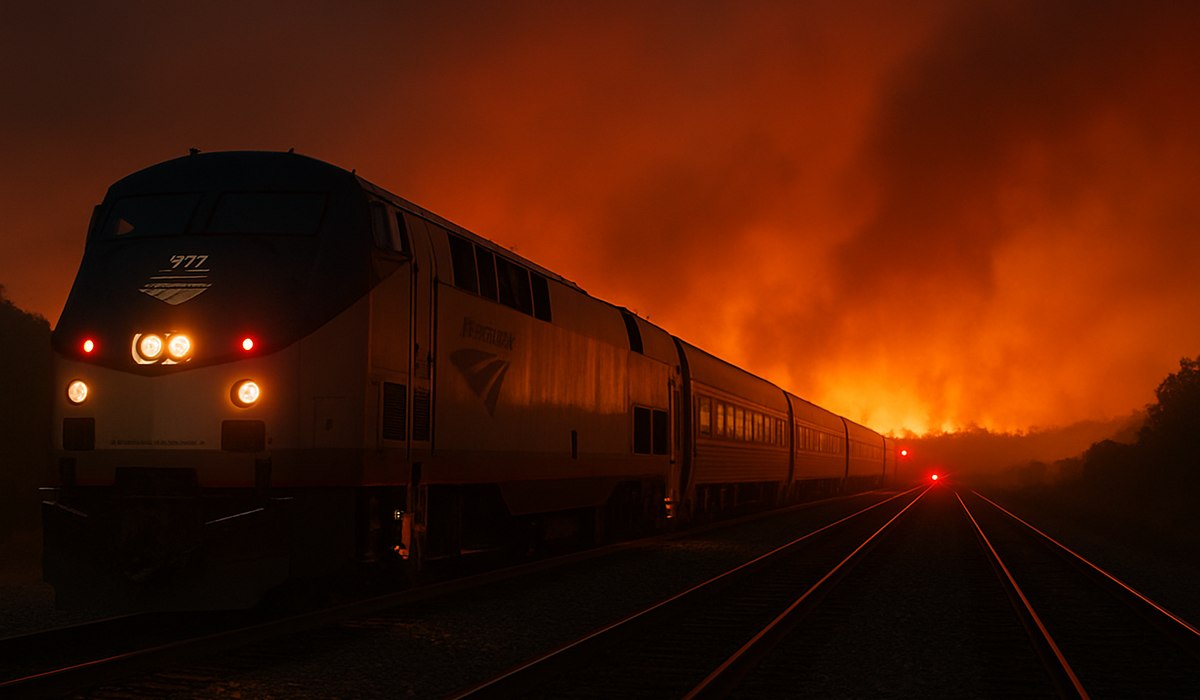
Image generated by AI
Amtrak Halted as Wildfires Sweep Florida-Georgia Border
Fast-moving wildfires across northern Florida and southern Georgia forced Amtrak to halt its busy East Coast rail corridor this week, leaving at least one Savannah passenger stranded for nearly 24 hours. On April 20, 2026, blazes ignited along the Clay and Putnam county line, triggering thick smoke and rapidly changing fire conditions that made rail operations unsafe. A northbound Amtrak train carrying dozens of passengers was forced to reverse course near DeLand, Florida, after waiting for conditions to improve that never materialized. The disruption cascaded across multiple Amtrak services, including the Silver Service, as railroad dispatchers implemented safety holds and emergency reroutes to protect passengers from hazardous smoke and fire proximity.
Wildfire Smoke Brings Passenger Rail to a Standstill
The April 2026 wildfire complex grew to thousands of acres within days, with only limited initial containment. Emergency responders prioritized protecting homes and major transportation corridors, including the tracks used by Amtrak's long-distance services. As flames advanced and visibility dropped, railroad operators had no choice but to halt service along key segments of the East Coast rail corridor.
Fire crews coordinated with Amtrak dispatchers to implement a series of safety slowdowns, extended holds, and complete stoppages. These protocols kept trains away from the most dangerous track segments but also trapped passengers on board and at stations while alternate transportation options were arranged. According to Amtrak's official service alerts, several trains were held on sidings for extended periods as conditions evolved hour by hour.
The wildfire's proximity to single-track segments with few nearby detours meant that passengers had limited alternatives. Unlike highways with multiple routes, rail corridors often have only one viable path through sensitive terrain, making them particularly vulnerable to natural disasters like wildfires.
How the Disruption Cascaded Across Amtrak's Silver Service
The disruption triggered a cascading effect across Amtrak's network. Multiple long-distance services faced cancellations or significant delays as crews monitored fire behavior and track safety. The Silver Service, Amtrak's flagship East Coast corridor serving Miami, Savannah, and Northeast destinations, experienced the most severe impacts.
Some trains were diverted to terminate early in Jacksonville or other safe stations rather than continuing their full routes. The Auto Train and other long-distance services also faced operational challenges as dispatchers worked with freight railroads and emergency management officials. Passengers attempting to connect through the region encountered rolling changes as the situation evolved throughout April 20 and into April 21.
Social media posts and passenger accounts documented extended delays, limited onboard communication, and significant operational uncertainty. Travelers on affected trains reported sparse information from Amtrak staff about duration of delays and alternative arrangements. Many passengers described spending hours in stationary cars with minimal access to food, water, or regular updates about their situation.
One Savannah Traveler's 24-Hour Ordeal
Among those directly affected was a passenger from Savannah, Georgia, whose planned rail journey became an unplanned multi-leg odyssey. The traveler had booked Amtrak as a straightforward connection between Florida and home, but wildfire-related shutdowns scrambled that itinerary within hours.
The northbound Amtrak train never reached Savannah after fire conditions worsened along the route. Instead, the service was truncated and redirected, leaving the Savannah passenger hundreds of miles from home and facing an extended wait while Amtrak evaluated road access, bus logistics, and aircraft options. The passenger ultimately boarded a flight out of central Florida to reach home, transforming a planned rail trip into a complex, multi-mode journey involving airports and last-minute ticket changes.
This experience underscores how quickly long-distance rail travel can be disrupted by natural hazards. For passengers whose plans depend on a specific arrival city like Savannah, a halted train can cascade into missed connections, unexpected lodging costs, and logistical challenges stretching days beyond the initial disruption.
Georgia Declares Emergency as Fires Cross State Lines
The wildfire impact was not confined to Florida. Governor Brian Kemp of Georgia issued a state of emergency declaration as fires crossed the state line and threatened properties in southern Georgia communities. The declaration enabled rapid deployment of additional firefighting resources and streamlined emergency response coordination across both states.
The multi-state fire complex demonstrated how natural disasters can disrupt critical infrastructure corridors that span regional boundaries. Rail routes, highways, and power lines often cross state lines, meaning that emergency response requires coordination among multiple state agencies and federal officials. Amtrak worked closely with Florida and Georgia emergency managers to determine when safe train operations could resume.
Transportation networks in the Southeast are particularly vulnerable during dry seasons when wildfire risk peaks. The April 2026 fires served as a stark reminder that climate-related hazards can impact both highways and rail services simultaneously, limiting traveler options during emergencies.
What Passengers Should Know About Future Travel Plans
The April 2026 wildfire disruptions offer important lessons for rail travelers planning East Coast journeys. Here are key considerations:
| Aspect | Detail |
|---|---|
| Affected Routes | Amtrak Silver Service (Miami-Northeast corridor) |
| Affected Dates | April 20-21, 2026 |
| Primary Cause | Wildfires near Clay-Putnam county line, Florida |
| Maximum Delay Duration | Up to 24 hours for some passengers |
| Services Impacted | Silver Star, Silver Meteor, Auto Train, regional connections |
| Emergency Response | Passenger rebooked on flights, bus services, alternate trains |
| Geographic Impact | Northern Florida through southern Georgia |
| Track Reopening | Conditional on fire containment and air quality improvements |
What This Means for Travelers
The April 2026 wildfire disruptions reveal critical vulnerabilities in East Coast rail service during severe weather events. Passengers planning trips through Florida and Georgia should consider these actionable steps:
-
Check real-time service alerts before and during your trip by visiting Amtrak's official service alerts page daily. Weather and natural disasters can change conditions rapidly, sometimes within hours.
-
Build buffer time into connections when traveling through regions prone to seasonal hazards. If you're connecting to flights or critical meetings, consider arriving at least one full day early to account for potential delays.
-
Review your ticket type and flexibility options before booking. Full-refund tickets provide more protection than restricted fares if disruptions force you to change plans mid-journey.
-
Consider alternative routing during peak wildfire season (typically March through May and August through October in the Southeast). Flying or driving may be safer options during these periods, despite higher costs.
-
Maintain travel insurance that covers trip interruption caused by natural disasters. Standard Amtrak tickets alone may not fully compensate you for missed connections or unexpected lodging expenses.
-
Stay in contact with Amtrak customer service if you're on a stranded train. Staff can help arrange alternative transportation and may provide meal vouchers or lodging assistance, though availability depends on circumstances.
FAQ
What should I do if my Amtrak train is halted due to wildfires?
Stay calm and remain on the train unless directed otherwise by Amtrak staff. Listen for official announcements about delays and estimated resumption times. Conserve phone battery, stay hydrated, and avoid wandering off the train. Contact Amtrak customer service through the official app or by calling the number on your ticket for updates on your specific service and options for rebooking.
**Can
Disclaimer
This article is for informational and educational purposes only. It does not constitute legal, financial, or professional advice. While we strive to provide accurate and up-to-date information, travel policies, regulations, and conditions change rapidly. Always verify information with official sources before making travel decisions. Nomad Lawyer makes no representations about the accuracy, reliability, completeness, or suitability of the information provided. Readers should consult qualified professionals for advice specific to their circumstances. The views expressed in this article are those of the author and do not necessarily reflect the views of Nomad Lawyer.
Preeti Gunjan
Contributor & Community Manager
A passionate traveller and community builder. Preeti helps grow the Nomad Lawyer community, fostering engagement and bringing the reader experience to life.
Learn more about our team →