
Wildfire Stops Florida Amtrak Train, Stranding 300+ Riders 20+ Hours
A fast-moving wildfire near Green Cove Springs in Clay County stranded hundreds of Amtrak passengers for over 20 hours in April 2026, forcing emergency rail halts across Florida's intercity network and exposing vulnerabilities in long-distance train operations.

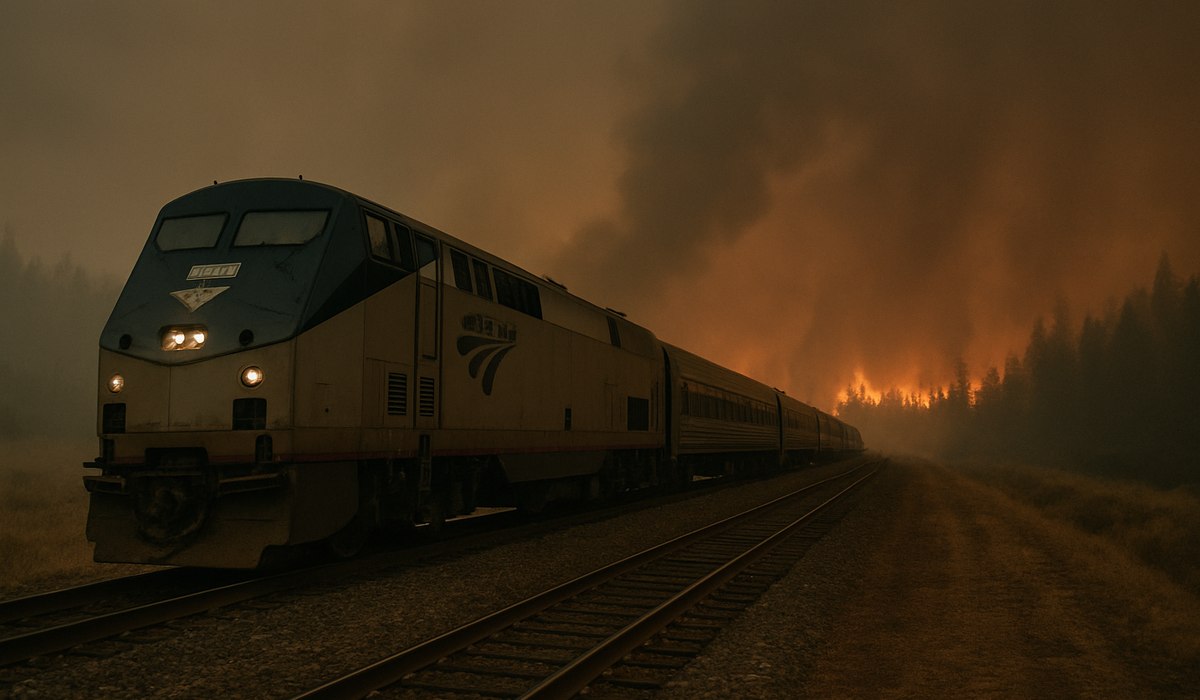
Image generated by AI
Wildfire Near Green Cove Springs Forces Emergency Rail Halt
On Sunday, April 19, 2026, a rapidly advancing wildfire near Green Cove Springs in Clay County created an unprecedented transportation crisis along one of Florida's busiest rail corridors. The blaze, which consumed approximately 2,000 acres in its initial surge, forced Amtrak to halt all northbound and southbound service through the affected zone. Regional emergency officials immediately closed Highway 17 and implemented traffic restrictions, with rail dispatchers ordering all trains to remain stationary for passenger safety. Visibility dropped dramatically as smoke blanketed the rail line, making continued operations impossible. The situation exposed the delicate balance between safety protocols and passenger welfare during extreme weather events in 2026.
Amtrak's corporate office released statements confirming the emergency suspension while fire crews worked containment efforts. Passengers aboard multiple trains received initial notifications of delays but faced hours of uncertainty about departure timelines. The wildfire's unpredictable behavior kept dispatchers and host railroad operators constantly reassessing conditions along critical track segments connecting Miami, Orlando, Jacksonville, and northeastern destinations.
Learn more about Amtrak's safety protocols at Amtrak's official website.
Hundreds Stranded Aboard Amtrak Train 98 for 20+ Hours
Amtrak Train 98, operating the Silver Meteor route between Miami and New York, became the focal point of this transportation disaster. Approximately 300 passengers found themselves immobilized on the halted train for more than 20 consecutive hours as the wildfire situation unfolded. Coach passengers reported the most severe discomfort, describing deteriorating conditions including overflowing toilets, dwindling water supplies, and inadequate air circulation throughout extended delays.
Passengers took to social media documenting their experiences. Many described minimal communication from crew members about expected resolution times, fueling frustration and anxiety among riders. Sleeper car passengers with private facilities fared somewhat better, though all travelers faced uncertainty and confinement. Food supplies aboard the train became depleted as hours stretched beyond expectations. Crew members relayed periodic updates from dispatch, but accurate timelines remained elusive due to the fire's unpredictable progression. Despite the hardships, many travelers attempted maintaining composure by reading, watching downloaded content, and conversing with fellow stranded passengers.
This incident mirrors previous challenges documented on other long-distance Amtrak services affected by weather events, infrastructure failures, or freight congestion throughout the rail network.
Multiple Routes Canceled and Rerouted Across Florida
The wildfire's impact extended far beyond the single stranded train. Cascading service disruptions rippled throughout Florida's entire Amtrak network during the week of April 20-26, 2026. In addition to the Silver Meteor, the Auto Train and multiple regional services faced cancellations, significant delays, or mandatory rerouting away from the fire-affected territory near Palatka and Green Cove Springs.
Amtrak dispatchers worked with host freight railroad operators to identify alternative routing options, though limited corridor alternatives exist in north-central Florida. Passengers with scheduled departures received notifications of altered itineraries, with some trains sent back toward their origin terminals. The disruptions affected connections to Northeast regional services, creating downstream complications for travelers with multi-leg journeys. State transportation agencies coordinated with railroad operators to monitor wildfire behavior continuously before authorizing resumed normal operations.
Regional news outlets documented the cascading effects, noting that Florida's intercity rail spine—linking Miami, Orlando, Tampa, Jacksonville, and northeastern states—represents a critical transportation infrastructure. Even brief closures on relatively short segments create systemwide ripple effects affecting hundreds of daily passengers.
Visit Trainline to check real-time rail service availability and rescheduling options across major routes.
Transportation Vulnerability to Extreme Weather Exposed
This April 2026 wildfire incident starkly illustrates the vulnerability of long-distance rail service to extreme weather and natural disasters. Unlike highway transportation, trains operate on fixed infrastructure with limited routing flexibility. When a single track segment becomes impassable due to wildfire, smoke, or emergency closures, dispatchers cannot simply divert trains to alternate highways. Passengers remain confined to trains with finite supplies and basic onboard facilities, creating humanitarian concerns during extended delays.
Climate data indicates increasing wildfire frequency and intensity across the western and southeastern United States. Rail operators face growing challenges managing passenger safety during extreme weather events. Industry experts argue that improved communication systems, better passenger amenities for extended delays, and enhanced emergency protocols become increasingly essential. The Green Cove Springs incident demonstrates that even established carriers like Amtrak encounter operational constraints during natural disasters.
This situation raises important questions about infrastructure resilience. Should rail corridors include evacuation protocols for prolonged delays? Can onboard facilities better accommodate multi-hour immobilization? What communication systems keep passengers informed during weather emergencies?
What This Means for Travelers
If you're planning Amtrak travel through Florida or other regions prone to seasonal hazards, consider these actionable precautions:
1. Purchase travel insurance covering weather-related cancellations and delays, which typically reimburse accommodation and meal expenses if services are suspended beyond specified timeframes.
2. Book morning or early afternoon departures rather than evening trains, allowing better visibility for crew decision-making and reducing risk of extended nighttime immobilization.
3. Pack substantial personal supplies including snacks, water bottles, books, or downloaded entertainment, recognizing that onboard amenities may become inadequate during extended delays.
4. Monitor local weather and wildfire alerts at least 48 hours before your scheduled departure using NOAA weather service and Florida Division of Forestry resources.
5. Choose sleeper accommodations when possible, as private facilities and dedicated dining access provide significantly greater comfort during unavoidable delays.
6. Enable push notifications from Amtrak's mobile app, ensuring real-time receipt of service updates, cancellations, or rerouting information.
7. Maintain flexible scheduling by avoiding tight connections to flights, business meetings, or time-sensitive events when traveling through regions with documented wildfire seasons.
How to Book the Best Fare
Securing optimal pricing for Amtrak routes requires strategic planning and platform awareness. Early booking typically yields the lowest fares, with prices generally increasing as departure dates approach. Amtrak offers dynamic pricing similar to airline models, meaning fares vary based on demand, season, and seat availability.
Book directly through Amtrak's official website to access their full fare selection and current service status. Most booking sites offer similar pricing due to standardized fares, but Amtrak's platform provides the most reliable real-time service information. Subscribe to Amtrak's email alerts and follow their social media channels for promotional fare announcements, which often include 15-25% discounts during off-peak travel windows.
For flexibility, consider booking roundtrip fares rather than one-way tickets, which frequently offer better per-segment pricing. Senior passengers, military personnel, and AAA members qualify for dedicated discount codes reducing fares by 10-15%. Regional rail passes provide exceptional value for multi-leg journeys through Florida, the Southeast, or Northeast corridors.
Avoid booking immediately after service disruptions or natural disasters, when demand temporarily spikes as stranded travelers rebook. Wait 3-5 days for inventory normalization before purchasing replacement tickets.
FAQ
Q: Did Amtrak offer compensation to passengers stranded for 20+ hours aboard Train 98? A: Amtrak issued formal statements indicating refunds and future travel vouchers were offered to passengers on the most heavily affected trains. However, compensation policies vary based on ticket class and specific circumstances. Contact Amtrak customer service
Disclaimer
This article is for informational and educational purposes only. It does not constitute legal, financial, or professional advice. While we strive to provide accurate and up-to-date information, travel policies, regulations, and conditions change rapidly. Always verify information with official sources before making travel decisions. Nomad Lawyer makes no representations about the accuracy, reliability, completeness, or suitability of the information provided. Readers should consult qualified professionals for advice specific to their circumstances. The views expressed in this article are those of the author and do not necessarily reflect the views of Nomad Lawyer.
Preeti Gunjan
Contributor & Community Manager
A passionate traveller and community builder. Preeti helps grow the Nomad Lawyer community, fostering engagement and bringing the reader experience to life.
Learn more about our team →