
B-21 Raider Marks Paradigm Shift in Military Aviation: New Stealth Bomber Designed for Operational Resilience Over Maintenance Burden
Breaking airline news and aviation industry updates for 2026.

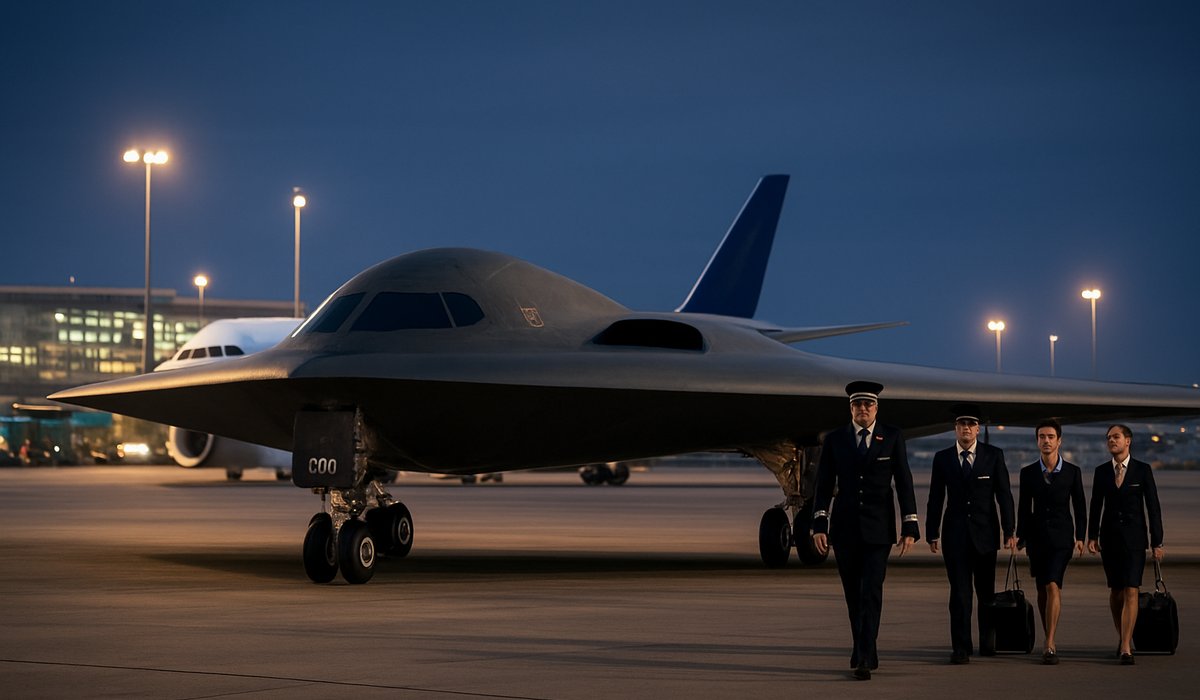
Image generated by AI
B-21 Raider Marks Paradigm Shift in Military Aviation: New Stealth Bomber Designed for Operational Resilience Over Maintenance Burden
Next-generation aircraft abandons predecessor's vulnerability to environmental exposure, signaling broader transformation in defense procurement strategy
Revolutionary Design Philosophy Ends Era of 'Hangar Queens'
The United States Air Force is fundamentally reshaping its strategic bomber fleet with the introduction of the Northrop Grumman B-21 Raider, a sixth-generation aircraft engineered to operate under conditions that would have grounded its celebrated predecessor. Unlike the B-2 Spirit—a multi-billion-dollar platform notorious for requiring climate-controlled hangar facilities even during routine operations—the B-21 Raider represents a decisive break from designs that prioritize fragility over field deployment capability.
The implications are substantial. The B-2 Spirit's well-documented sensitivity to weather exposure, most notably rain infiltration that caused operational shutdowns despite its undefeated combat record, exposed a critical vulnerability in Cold War-era stealth technology. Military strategists and defense analysts now recognize this dependence on protected infrastructure as a strategic liability in an era demanding rapid global response and dispersed force posture.
Advanced Materials Enable Operational Flexibility
The B-21 Raider incorporates cutting-edge multispectral stealth technology integrated into airframes utilizing advanced composite materials designed for durability across diverse environmental conditions. Defense officials emphasize that this generational improvement allows the platform to maintain full operational readiness without the extensive infrastructure overhead that characterized earlier systems.
This engineering advancement addresses a critical gap in force projection capability. The B-2 Spirit's maintenance-intensive profile—requiring dedicated climate-controlled facilities and extensive pre-flight preparation—restricted deployment flexibility and increased operational costs substantially. By contrast, the B-21's ruggedized architecture aligns with modern doctrine emphasizing agile combat employment across distributed basing options, including austere forward operating locations.
Strategic Implications for Defense Posture
The shift reflects broader Pentagon priorities favoring operational resilience and rapid-response capability in contested environments. As geopolitical tensions escalate and adversaries develop increasingly sophisticated air defense systems, the ability to deploy bombers from unimproved facilities or unconventional bases becomes strategically invaluable.
Northrop Grumman's design philosophy prioritizes mission reliability over maintenance intensity—a fundamental departure from previous procurement models. This operational approach reduces dependency on permanent infrastructure, enhances survivability through basing flexibility, and generates substantial long-term cost savings across the platform's projected 50-year service life.
The B-21 Raider's introduction marks a pivotal moment in military aviation, demonstrating how technological maturation enables strategic flexibility previously considered incompatible with advanced stealth capabilities.
Frequently Asked Questions
Q: Why couldn't the B-2 Spirit withstand rain exposure? A: The B-2 Spirit's advanced stealth coatings and complex materials were vulnerable to moisture infiltration, requiring climate-controlled storage to maintain structural integrity and radar-absorbing properties.
Q: How does the B-21 Raider improve upon the B-2 Spirit's design? A: The B-21 incorporates advanced composite materials and multispectral stealth technology engineered for environmental resilience, enabling outdoor storage and faster deployment without extensive hangar support.
Q: What does 'hangar queen' mean in military aviation? A: The term describes high-maintenance aircraft requiring extensive ground support and protected storage, reducing actual flight-time availability despite significant investment.
Q: How does this design improvement affect operational costs? A: Reduced infrastructure dependency, faster turnaround times, and decreased maintenance overhead substantially lower long-term operational expenses compared to previous-generation platforms.
Q: What is agile combat employment in military doctrine? A: It refers to rapid deployment strategies utilizing dispersed basing, austere facilities, and mobile operations to maintain strategic advantage in contested environments.
Related Travel Guides
External Resources
Disclaimer
This article is for informational and educational purposes only. It does not constitute legal, financial, or professional advice. While we strive to provide accurate and up-to-date information, travel policies, regulations, and conditions change rapidly. Always verify information with official sources before making travel decisions. Nomad Lawyer makes no representations about the accuracy, reliability, completeness, or suitability of the information provided. Readers should consult qualified professionals for advice specific to their circumstances. The views expressed in this article are those of the author and do not necessarily reflect the views of Nomad Lawyer.
Kunal K Choudhary
Co-Founder & Contributor
A passionate traveller and tech enthusiast. Kunal contributes to the vision and growth of Nomad Lawyer, bringing fresh perspectives and driving the community forward.
Learn more about our team →