
B-21 Raider Surpasses B-2 Spirit: Next-Generation Stealth Bomber Unlocks New Operational Capabilities
Breaking airline news and aviation industry updates for 2026.

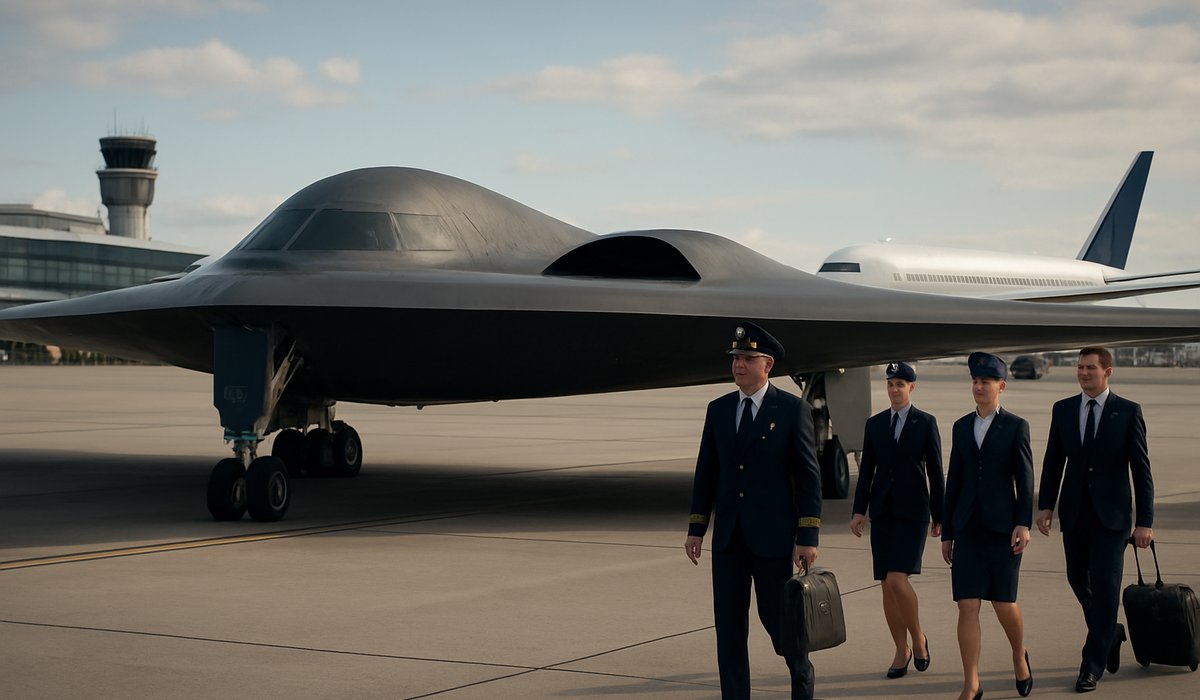
Image generated by AI
B-21 Raider Surpasses B-2 Spirit: Next-Generation Stealth Bomber Unlocks New Operational Capabilities
Advanced aircraft engineering enables deployment from austere forward bases, marking fundamental shift in U.S. military aviation strategy
Generational Leap in Stealth Technology
The Northrop Grumman B-21 Raider represents a transformative advancement over its predecessor, the B-2 Spirit, fundamentally reshaping how the United States approaches strategic bomber operations across global theaters. While both aircraft share comparable external profiles, their internal architectures diverge dramatically—a distinction with profound implications for military readiness and operational flexibility.
Enhanced Operational Flexibility
The primary advantage distinguishing the B-21 from the B-2 lies in its capacity to operate from forward bases previously inaccessible to earlier-generation stealth platforms. The B-2 Spirit, engineered as a specialized system optimized for high-value, limited-scope missions, demands extensive infrastructure and support networks. Conversely, the B-21 introduces scalability and sustainability benchmarks that fundamentally alter force deployment strategies.
This architectural difference enables the B-21 to launch from less developed airfields and austere locations, bypassing the logistical constraints that have historically bound the B-2 to select, heavily fortified installations. Such capability dramatically expands the geographic reach of U.S. strategic bomber operations without requiring substantial infrastructure investment at destination facilities.
Superior Integrated Systems
Beyond mere tactical flexibility, the B-21 incorporates significant improvements across multiple operational domains. Enhanced all-aspect stealth characteristics reduce radar cross-section even further than the B-2's already-formidable signature. Additionally, advanced networking protocols and integrated sensor fusion systems enable real-time battlefield awareness and collaborative operations with other military assets—capabilities the earlier B-2 platform cannot match.
These technological enhancements position the B-21 as a more sustainable, scalable component of America's long-range strike architecture rather than a limited-deployment specialist aircraft. Military strategists view this shift as essential for maintaining technological superiority amid increasingly contested global environments.
Strategic Implications
The B-21's operational flexibility carries broader geopolitical ramifications. Reduced dependency on fixed bases enhances survivability during conflicts involving peer or near-peer adversaries capable of targeting traditional airfield infrastructure. This mobility advantage represents a fundamental realignment in how advanced air forces conceptualize bomber employment.
While President Trump characterized the B-21 as merely an "updated version" of the B-2 Spirit, aviation analysts emphasize the substantial engineering innovations separating these platforms. The distinction underscores how evolutionary improvements in stealth, propulsion, materials science, and avionics compound into transformational military capabilities—far exceeding superficial design similarities.
Frequently Asked Questions
What specific advantages does the B-21 Raider provide over the B-2 Spirit? The B-21 offers enhanced stealth across all aspects, superior sensor fusion, advanced networking capabilities, improved survivability, and critically, the ability to deploy from less-developed forward bases that cannot accommodate B-2 operations.
Why can the B-21 operate from austere bases while the B-2 cannot? The B-2's design requires extensive specialized infrastructure and support systems. The B-21 incorporates more efficient, scalable engineering that reduces logistical demands and permits operations from minimally developed airfields.
How does sensor fusion in the B-21 differ from B-2 capabilities? The B-21 integrates real-time battlefield information sharing and collaborative systems enabling coordination with other military platforms—a significant advancement over the B-2's more isolated operational model.
What does "all-aspect stealth" mean for the B-21? All-aspect stealth refers to reduced radar detectability from any direction and altitude, whereas earlier stealth designs were optimized primarily for frontal approaches.
How does the B-21's deployment flexibility affect U.S. military strategy? Reduced infrastructure dependency enhances force resilience, expands geographic operational reach, and improves survivability against adversaries capable of targeting fixed military installations.
Related Travel Guides
-
United Airlines' 10 Longest Boeing 737 MAX Routes Push Narrowbodies to 8-Hour Nonstop Limits in 2026
-
Icelandair Hunts World's Worst Photographer for $50K Nordic Trip
-
China Flights India Resume: Air China Restores Beijing-Delhi Service After Four Years
External Resources
Disclaimer
This article is for informational and educational purposes only. It does not constitute legal, financial, or professional advice. While we strive to provide accurate and up-to-date information, travel policies, regulations, and conditions change rapidly. Always verify information with official sources before making travel decisions. Nomad Lawyer makes no representations about the accuracy, reliability, completeness, or suitability of the information provided. Readers should consult qualified professionals for advice specific to their circumstances. The views expressed in this article are those of the author and do not necessarily reflect the views of Nomad Lawyer.
Preeti Gunjan
Contributor & Community Manager
A passionate traveller and community builder. Preeti helps grow the Nomad Lawyer community, fostering engagement and bringing the reader experience to life.
Learn more about our team →