
Dubai's $10 Billion Airport Expansion Sets New Global Standard: Every Gate Engineered for World's Largest Passenger Aircraft
Breaking airline news and aviation industry updates for 2026.

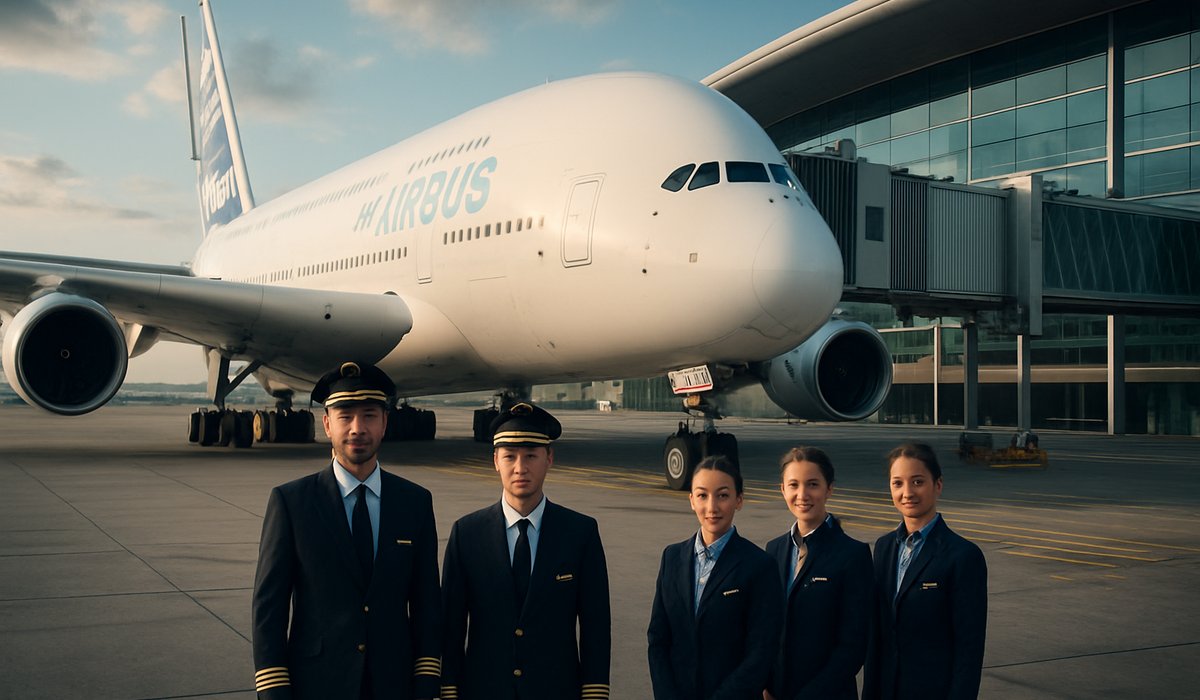
Image generated by AI
Dubai's $10 Billion Airport Expansion Sets New Global Standard: Every Gate Engineered for World's Largest Passenger Aircraft
Ambitious megahub project signals shift in aviation infrastructure strategy, positioning UAE hub for post-pandemic growth
The World's First A380-Centric Airport Design
Dubai World Central (DWC) is poised to become a paradigm shift in modern aviation infrastructure, with newly approved expansion plans accelerating the emergence of what could be the globe's most strategically significant aviation megahub. Unlike previous generation airports built around generic slot configurations, this sprawling desert development represents a bold departure: every one of the planned 400 new gates has been deliberately engineered to accommodate the Airbus A380—the world's largest passenger aircraft—alongside next-generation widebody jets.
The distinction is critical. Rather than pursuing expansion for headline-grabbing capacity figures alone, DWC's architects have fundamentally reimagined gate infrastructure around operational realities of the 21st-century aviation industry, where fleet economics increasingly favor massive, efficient aircraft for ultra-long-haul routes.
Strategic Implications for Global Aviation Networks
This infrastructure-first approach carries profound implications for airline route planning, aircraft procurement decisions, and competitive positioning among international hubs. By committing to universal A380 compatibility across 400 gates, Dubai has effectively signaled its long-term confidence in the superjumbo's viability for high-density intercontinental travel—a strategic positioning that directly challenges established hubs across Europe, Asia, and North America.
The project's massive financial footprint reflects this ambition. The multi-billion-dollar investment arrives at a critical inflection point in global aviation, as carriers grapple with rising jet fuel prices, evolving baggage charge structures, and airline fee optimization strategies necessary to offset operational costs.
Reshaping Transit Network Economics
DWC's expansion represents more than architectural ambition; it signals a fundamental restructuring of how premium aviation hubs compete for traffic. By eliminating infrastructure constraints that typically force carriers into aircraft compromises, Dubai has created a competitive advantage for airlines seeking to deploy their most efficient long-haul fleets without operational restrictions.
Industry analysts note that such purposeful infrastructure design could accelerate consolidation around fewer, larger-capacity hubs, potentially reshaping global airline network topology and altering the economics of aviation industry pricing across baggage fees, fuel surcharges, and service charges.
The approved expansioncements DWC's trajectory toward becoming the world's most strategically engineered aviation facility—not through mere size, but through precision alignment between physical infrastructure and operational reality.
Frequently Asked Questions
What is Dubai World Central (DWC) and why is this expansion significant? DWC is an emerging aviation megahub designed with 400 gates specifically engineered to accommodate the Airbus A380, the world's largest commercial passenger aircraft, alongside modern widebody jets.
How does A380-centric airport design affect airline operations and baggage fees? Universal A380 compatibility reduces aircraft deployment constraints, potentially allowing airlines to optimize fleet efficiency and restructure their baggage charge policies and ancillary fee structures for long-haul routes.
What impact will this have on jet fuel costs and airline pricing? By enabling airlines to deploy larger-capacity aircraft, the infrastructure could help distribute fuel costs across more passengers per flight, potentially offsetting rising jet fuel prices and reducing per-passenger aviation expenses.
How does DWC's expansion compare to other major airport development projects globally? Unlike conventional airport expansions, DWC's design prioritizes aircraft-specific compatibility rather than generic gate capacity, representing a fundamentally different approach to aviation infrastructure planning.
Will this expansion affect travel costs and airline competition? The hub's strategic positioning and infrastructure advantages could reshape competitive dynamics among international carriers, potentially influencing pricing, route selection, and long-term airline fee strategies.
Related Travel Guides
-
Travel Canada Ottawa Hit by Grounding: Air Canada, Porter Suspend 9 Flights
-
Legendary A-10 Warthog: How Unconventional Design Prioritizes Pilot Protection in Combat Zones
External Resources
Disclaimer
This article is for informational and educational purposes only. It does not constitute legal, financial, or professional advice. While we strive to provide accurate and up-to-date information, travel policies, regulations, and conditions change rapidly. Always verify information with official sources before making travel decisions. Nomad Lawyer makes no representations about the accuracy, reliability, completeness, or suitability of the information provided. Readers should consult qualified professionals for advice specific to their circumstances. The views expressed in this article are those of the author and do not necessarily reflect the views of Nomad Lawyer.
Raushan Kumar
Founder & Lead Developer
Full-stack developer with 11+ years of experience and a passionate traveller. Raushan built Nomad Lawyer from the ground up with a vision to create the best travel and law experience on the web.
Learn more about our team →