
The Airbus A220: Aviation's Most Overlooked Game-Changer Is Quietly Reshaping Global Airways
Breaking airline news and aviation industry updates for 2026.

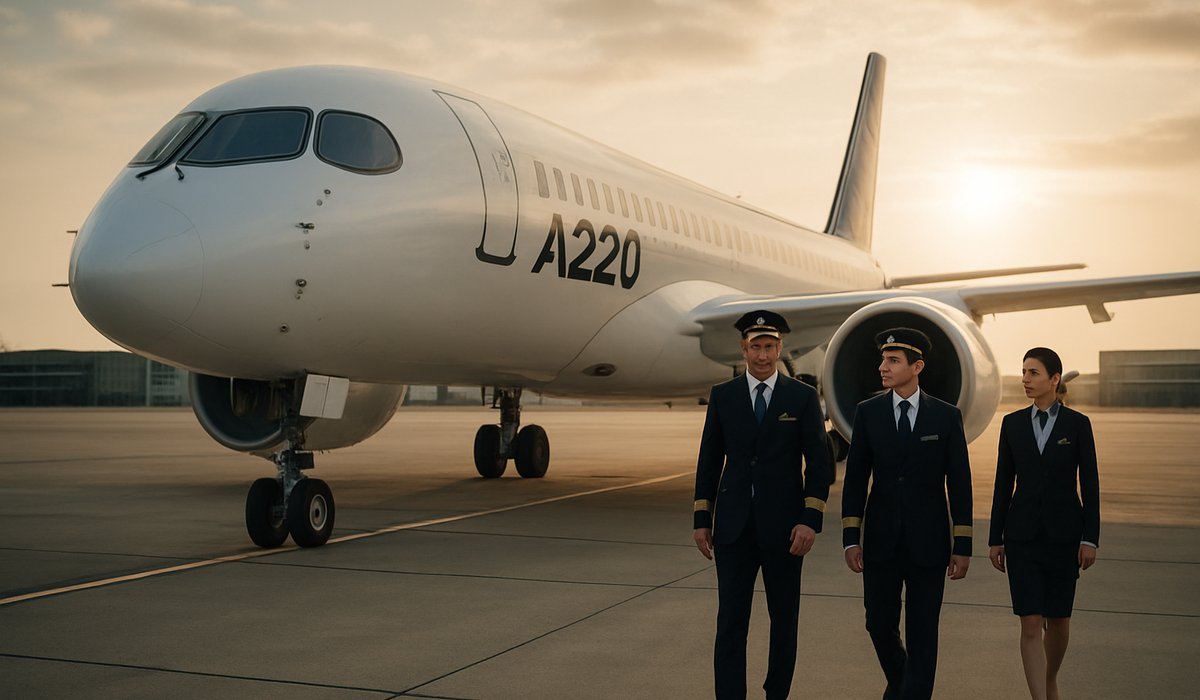
Image generated by AI
The Airbus A220: Aviation's Most Overlooked Game-Changer Is Quietly Reshaping Global Airways
While industry giants dominate headlines, this next-generation twin-engine aircraft is proving to be the unsung hero of modern short-to-medium haul operations
The Aircraft Airlines Should Be Talking About
The commercial aviation sector remains fixated on household aircraft names—Boeing 737s, Airbus A320s, and their variants—yet one of the most transformative aircraft operating in global skies today receives remarkably little attention. The Airbus A220, a purpose-built narrowbody jet designed from the ground up for efficiency, is fundamentally reshaping how airlines operate regional and short-haul routes while delivering economics that challenge conventional industry wisdom.
Unlike legacy aircraft platforms retrofitted repeatedly across decades, the A220 represents a clean-sheet engineering approach to modern aviation challenges. This distinction matters significantly in an industry confronting rising jet fuel prices, environmental regulations, and demand for route flexibility without sacrificing passenger comfort or operational profitability.
Engineering Excellence Meets Market Opportunity
The twin-engine A220 delivers a compelling operational proposition that extends far beyond basic capacity metrics. Its advanced aerodynamics, lightweight composite construction, and fifth-generation avionics deliver fuel consumption levels approximately 20% below comparable single-aisle aircraft. In an era where aviation fuel costs directly correlate to airline profitability—and subsequently to baggage charges, seat fees, and ticket prices—this efficiency advantage translates into genuine competitive differentiation.
The aircraft's design flexibility represents another overlooked strength. With a range exceeding 3,200 nautical miles and cabin configurations accommodating between 120 and 160 passengers, the A220 operates routes that larger mainline jets cannot profitably serve while outperforming regional turboprops on distance capabilities. This operational versatility opens secondary markets and underserved city-pairs that traditional fleet planning overlooks.
Why Industry Analysts Have Underestimated Its Potential
Despite these compelling technical advantages, the A220 remains subordinate in aviation conversations dominated by largest manufacturers and high-density trunk routes. Analyst reports emphasizing narrow-body aircraft orders frequently shortchange the A220's growing order book and airline commitments, focusing instead on the endless 737 versus A320 competition.
The aircraft's relative newness to major fleet operations—production only accelerated substantially in recent years—partly explains this oversight. Additionally, the initial purchase price, while justified through operational economics over aircraft lifecycles, creates perception barriers among cost-conscious carriers during expansion phases.
Market Momentum Suggests Reassessment Is Overdue
Leading carriers including Air Canada, Delta Air Lines, and Swiss International Air Lines have significantly expanded A220 commitments, signaling confidence in its long-term value proposition. These orders suggest aviation's decision-makers recognize what remains underappreciated: an aircraft simultaneously addressing pressing industry challenges around fuel efficiency, emissions reduction, and route profitability.
As sustainability pressures mount and airlines seek competitive advantages through operational cost control, the Airbus A220's integration into global networks will likely accelerate—finally bringing this exceptional aircraft the recognition its capabilities merit.
FAQ: Understanding the Airbus A220
What makes the Airbus A220 more fuel-efficient than older aircraft models? The A220's advanced aerodynamic design, lightweight composite materials, and modern engines deliver approximately 20% better fuel economy than comparable legacy narrowbody jets, directly reducing airline operating costs and ticket prices.
How does the A220 compare to Boeing and Airbus's standard single-aisle offerings? While the Boeing 737 and Airbus A320 prioritize high-density configurations on major routes, the A220 targets underserved short-to-medium haul markets with superior efficiency, better passenger space-to-weight ratios, and exceptional profitability on lower-density routes.
Which airlines currently operate the Airbus A220 fleet? Major carriers including Air Canada, Delta Air Lines, Swiss International Air Lines, and numerous regional operators have incorporated A220s into their networks, with order books continuing to expand.
Will the A220 eventually replace older aircraft on major airline networks? Rather than direct replacement, the A220 is likely to capture growing share of regional and secondary-route operations where its efficiency advantages and operational flexibility create competitive advantages over aging narrowbody platforms.
How does the A220 impact overall aviation travel costs and airline fees? Superior fuel economics enable airlines to maintain profitability at lower ticket prices and potentially reduce ancillary charges like baggage fees, though competitive dynamics ultimately determine consumer benefit realization.
Related Travel Guides
External Resources
Disclaimer
This article is for informational and educational purposes only. It does not constitute legal, financial, or professional advice. While we strive to provide accurate and up-to-date information, travel policies, regulations, and conditions change rapidly. Always verify information with official sources before making travel decisions. Nomad Lawyer makes no representations about the accuracy, reliability, completeness, or suitability of the information provided. Readers should consult qualified professionals for advice specific to their circumstances. The views expressed in this article are those of the author and do not necessarily reflect the views of Nomad Lawyer.
Kunal K Choudhary
Co-Founder & Contributor
A passionate traveller and tech enthusiast. Kunal contributes to the vision and growth of Nomad Lawyer, bringing fresh perspectives and driving the community forward.
Learn more about our team →