
Southwest Airlines' Seat Assignment Overhaul Backfires: Speed Advantage Lost as Operational Disruptions Mount
Breaking airline news and aviation industry updates for 2026.

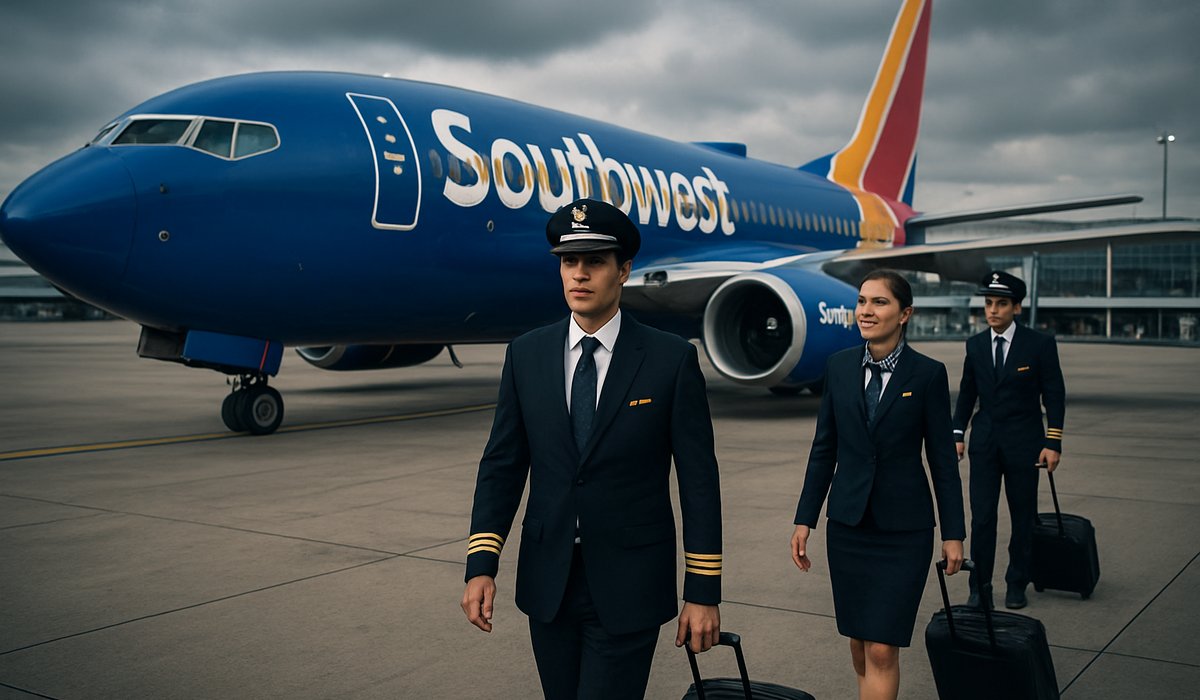
Image generated by AI
Southwest Airlines' Seat Assignment Overhaul Backfires: Speed Advantage Lost as Operational Disruptions Mount
The carrier's historic open-seating model gives way to assigned seats, triggering unexpected bottlenecks and operational challenges across its domestic network
A Half-Century Tradition Ends in Turbulence
Southwest Airlines has dismantled one of aviation's most distinctive operational models—its pioneering open-seating system that for over 50 years defined the carrier's competitive edge. The Dallas-based airline's transition to assigned seating, intended to modernize its offering and compete with legacy carriers, has instead exposed critical vulnerabilities in ground operations, passenger flow management, and fleet utilization.
The shift represents a fundamental departure from the low-cost carrier's founding principle: rapid turnarounds powered by streamlined boarding procedures. Where passengers once boarded by group and selected any available seat, creating organic cabin distribution without bottlenecks, the new system requires passengers to locate designated rows and seats—a process that has demonstrably slowed aircraft turnaround times across Southwest's Boeing 737-heavy fleet.
Operational Reality Clashes with Strategic Vision
Industry analysts point to cascading operational challenges that Southwest's leadership apparently did not fully anticipate. Extended boarding times have rippled through scheduling efficiency, creating downstream delays and reducing the airline's legendary quick-turn advantage—a cornerstone of its profitability model that relies on aircraft spending minimal time on the ground between flights.
The implementation has also created congestion at overhead bin allocation, a problem largely nonexistent under the previous system where passengers naturally distributed themselves throughout the cabin. Gate agents now face increased passenger inquiries regarding seat locations and boarding procedures, further extending dwell times at terminals.
"The transition underscores the operational complexity of changing legacy systems," explains the carrier's operational framework, which has historically prioritized throughput over seat-specific revenue optimization that competitors like United and American have long leveraged.
Financial and Competitive Implications
While assigned seating theoretically enables ancillary revenue opportunities through premium seat sales—a proven monetization strategy across the industry—early data suggests Southwest has sacrificed operational efficiency without equivalent revenue compensation. The airline's operational costs per available seat-mile may face upward pressure if boarding times continue to exceed projections.
This shift also signals Southwest's positioning shift toward traditional airline economics as low-cost carrier economics face margin compression from elevated jet fuel prices and sustained labor cost increases across the aviation sector.
Looking Ahead
Southwest faces a critical juncture: optimize its assigned seating procedures to recapture operational speed, or accept permanent erosion of the efficiency advantage that differentiated it for decades. Industry observers will closely monitor whether the carrier can solve implementation challenges or whether this strategic pivot proves costlier than anticipated.
FAQ: Southwest Airlines Seating Changes and Aviation Industry Impact
Why did Southwest Airlines abandon its open-seating model? Southwest shifted to assigned seating to compete with legacy carriers and unlock ancillary revenue streams from premium seat sales—a standard monetization strategy across the aviation industry facing pressures from elevated jet fuel prices.
How have airline baggage charges and seating fees evolved industry-wide? Major carriers have increasingly bundled baggage allowances and seat selection into revenue models, with some airlines generating 20-30% of ancillary revenue from seat assignments and baggage fees amid rising operational costs.
What impact do ground turnaround times have on airline profitability? Rapid turnarounds directly affect aircraft utilization rates and daily flight capacity. Extended boarding procedures can reduce daily flights per aircraft by 10-15%, significantly impacting revenue potential.
How do jet fuel prices influence airline operational decisions? Volatile fuel costs pressure carriers to maximize efficiency metrics like ground time and seat-mile revenue, often driving operational restructuring like Southwest's seating transition.
Are other low-cost carriers experiencing similar operational challenges with assigned seating? Most low-cost carriers maintain hybrid systems balancing rapid boarding with ancillary revenue, though few have completely abandoned speed-focused processes like Southwest historically maintained.
Related Travel Guides
Flight Delay Compensation Guide 2026
Understanding Airline Route Changes
Airport Security Process Updated (2026)
External Resources
Disclaimer
This article is for informational and educational purposes only. It does not constitute legal, financial, or professional advice. While we strive to provide accurate and up-to-date information, travel policies, regulations, and conditions change rapidly. Always verify information with official sources before making travel decisions. Nomad Lawyer makes no representations about the accuracy, reliability, completeness, or suitability of the information provided. Readers should consult qualified professionals for advice specific to their circumstances. The views expressed in this article are those of the author and do not necessarily reflect the views of Nomad Lawyer.
Raushan Kumar
Founder & Lead Developer
Full-stack developer with 11+ years of experience and a passionate traveller. Raushan built Nomad Lawyer from the ground up with a vision to create the best travel and law experience on the web.
Learn more about our team →