
Why Egypt’s Saint Catherine Is Booming With Spiritual Tourism
Why Egypt’s Saint Catherine Is Booming With Spiritual Tourism

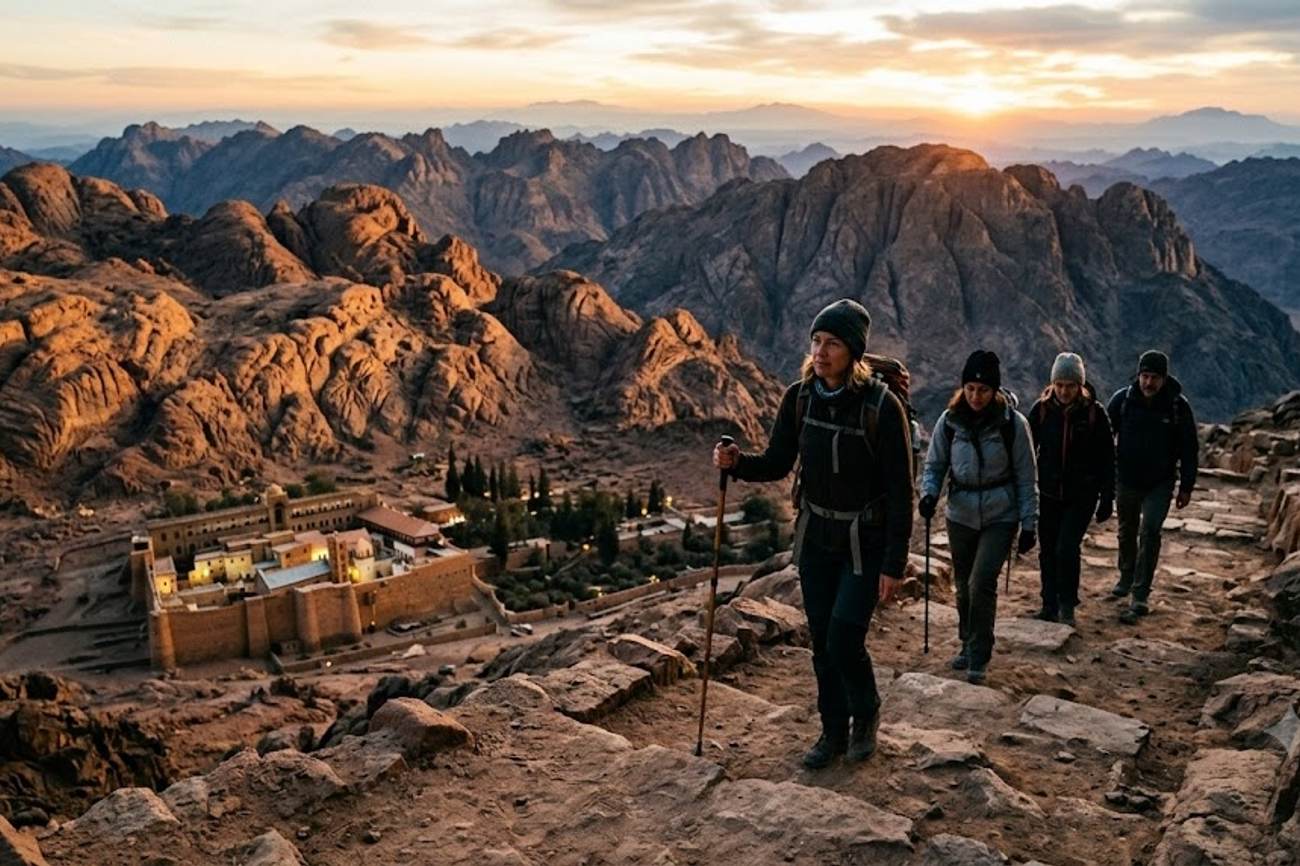
Image generated by AI
One of the oldest working Christian monasteries in existence, constructed between 548 and 565 CE, serves as the anchor for a surge in tourism within Egypt’s South Sinai Governorate. This fortified complex, established under Byzantine Emperor Justinian I, is not merely a religious site but a geopolitical and cultural asset that positions Saint Catherine as a critical node in the global travel market.
The Geopolitical Architecture of South Sinai
The ascent of Saint Catherine as a premier global destination is rooted in its unique status as a multi-faith sanctuary. While the region is governed by the administrative frameworks of the South Sinai Governorate, its cultural gravity is dictated by its role as a crossroads for the Abrahamic faiths. The monastery is situated at the base of Mount Sinai, the site traditionally identified as the location where the Ten Commandments were delivered.
This intersection of faith and history creates a specific type of demand—pilgrimage tourism—which is historically more resilient to economic volatility than luxury or leisure travel. The site is recognized as a UNESCO World Heritage site, which subjects the area to strict international preservation standards. The Egyptian Ministry of Tourism and Antiquities oversees the management of these sites, balancing the influx of international visitors with the need to protect fragile archaeological structures.
The monastery's intellectual value is equally significant. It houses the second-largest collection of ancient manuscripts and codices in the world, surpassed only by the Vatican Library. For the academic traveler and the historian, this repository makes the remote desert location a non-negotiable stop on any study of early Christian and Mediterranean history.
Topographic Assets and the Ecotourism Shift
The physical geography of the region is a primary driver of its current economic expansion. Mount Sinai reaches an elevation of 2,285 metres, creating a high-altitude environment that attracts a demographic of adventure tourists distinct from the religious pilgrims. This diversification of the visitor base is a strategic move to reduce seasonal dependence on specific religious calendars.
The Saint Catherine Protectorate encompasses thousands of square kilometres of regulated wilderness. This designation is not merely environmental but regulatory, ensuring that the "low-impact" tourism model is maintained to prevent the degradation of the desert ecosystem. The presence of the Nubian ibex and endemic flora makes the region a target for specialized ecotourism, which typically commands a higher price point per visitor than mass tourism.
| Asset | Specification | Primary Appeal |
|---|---|---|
| Mount Sinai | 2,285 Metres | High-altitude trekking / Sunrise observation |
| St. Catherine's Monastery | Built 548–565 CE | Byzantine architecture / Biblical history |
| Monastery Library | 2nd Largest Globally | Ancient codices and manuscripts |
| St. Catherine Protectorate | Thousands of sq km | Biodiversity / Nubian ibex conservation |
Expert Analysis: The Bedouin Economic Integration Model
The most critical logistical force shaping the Saint Catherine experience is the integration of the Jebeliya Bedouin tribe into the formal tourism economy. The Jebeliya are not merely service providers; they are the hereditary stewards of the land, with a lineage tracing back to the soldiers commissioned by Emperor Justinian in the sixth century to protect the monastery.
For travelers booking treks in South Sinai, the direct consequence of this social structure is a mandatory reliance on local expertise. The labyrinthine nature of the granite peaks and sweeping valleys makes independent navigation nearly impossible and legally precarious. This creates a closed-loop economic system where the financial benefits of tourism are filtered directly to the indigenous population rather than being entirely absorbed by international tour operators.
Egypt's Saint Catherine is experiencing a surge in spiritual tourism, with many travelers flocking to the area to visit the historic Monastery of Saint Catherine, a UNESCO World Heritage Site. For travelers planning to visit, it's essential to check the official Egyptian Ministry of Tourism and Antiquities website for the latest information on tourist attractions, accommodations, and travel requirements. By doing so, visitors can ensure a smooth and enjoyable trip to this sacred destination.
The pricing pressure in this region is driven by the scarcity of qualified guides. Because the Jebeliya possess generational knowledge of medicinal plants and safe passage through the protectorate, they hold a monopoly on the "authentic" experience. This allows the community to maintain a sustainable pace of growth, preventing the "over-tourism" seen in other Egyptian hubs. By linking economic survival to the preservation of the ecosystem, the Bedouin ensure that the natural assets—which are the primary draw for the International Union for Conservation of Nature (IUCN) style of travel—remain intact.
The shift toward "meaningful travel" means that the value proposition of Saint Catherine has moved from simple sightseeing to immersive cultural exchange. When a traveler pays for a guided ascent of Mount Sinai, they are paying for a curated historical narrative provided by the descendants of the original guardians of the site. This transition from a commodity service to a heritage experience allows the region to maintain premium pricing despite its remote location.
Key Takeaways
- Historical Primacy: The monastery, built between 548 and 565 CE, provides a rare continuity of monastic life and holds the world's second-largest collection of ancient manuscripts.
- Elevation and Activity: Mount Sinai's 2,285-metre peak is the central hub for high-altitude adventure and sunrise trekking.
- Indigenous Monopoly: The Jebeliya Bedouin tribe controls the logistical navigation of the region, ensuring tourism revenue supports local heritage and conservation.
- Environmental Protection: The Saint Catherine Protectorate manages thousands of square kilometres of wilderness to protect the Nubian ibex and endemic desert flora.
- Interfaith Appeal: The region serves as a simultaneous pilgrimage site for Christians, Jews, and Muslims, diversifying its visitor demographics.
FAQ: Saint Catherine [2024]
Why is Saint Catherine's Monastery historically significant? It is one of the oldest functioning monasteries globally, built by Emperor Justinian I between 548 and 565 CE. It protects the site of the Burning Bush and houses the world's second-oldest collection of religious manuscripts.
What should I expect when hiking Mount Sinai? The mountain reaches 2,285 metres. Most hikers ascend during the night to reach the summit for sunrise. Due to the rugged terrain, hiring a guide from the Jebeliya Bedouin tribe is essential for safety.
Is Saint Catherine a protected area? Yes, the Saint Catherine Protectorate covers thousands of square kilometres. This status protects the fragile desert ecosystem, rare geological formations, and wildlife like the Nubian ibex from unregulated development.
Which religions recognize Mount Sinai? The site is revered by Christianity, Judaism, and Islam, as it is traditionally identified as the location where the Ten Commandments were delivered to Moses.
A rare intersection where Byzantine stone, Bedouin tradition, and granite peaks converge to define the spiritual geography of the Middle East.
Related Travel Guides
- United Kingdom Joins France And More As London Showcases 20 Spectacular Views Across The Capital
- New Mexico Tourism Champions Real Stories With AI Free Marketing Pledge to Preserve Destination Authenticity
- Flights Cancelled Throughout Europe As 2,365 Delays And 85 Cancellations Affect Travel Across Vienna, Rome, And 15 Major Airports
Disclaimer
This article is for informational and educational purposes only. It does not constitute legal, financial, or professional advice. While we strive to provide accurate and up-to-date information, travel policies, regulations, and conditions change rapidly. Always verify information with official sources before making travel decisions. Nomad Lawyer makes no representations about the accuracy, reliability, completeness, or suitability of the information provided. Readers should consult qualified professionals for advice specific to their circumstances. The views expressed in this article are those of the author and do not necessarily reflect the views of Nomad Lawyer.
Kunal K Choudhary
Co-Founder & Contributor
A passionate traveller and tech enthusiast. Kunal contributes to the vision and growth of Nomad Lawyer, bringing fresh perspectives and driving the community forward.
Learn more about our team →