
Modern Aircraft Still Mandate Ashtrays—Here's Why This Obsolete Relic Remains a Safety Essential
Breaking airline news and aviation industry updates for 2026.

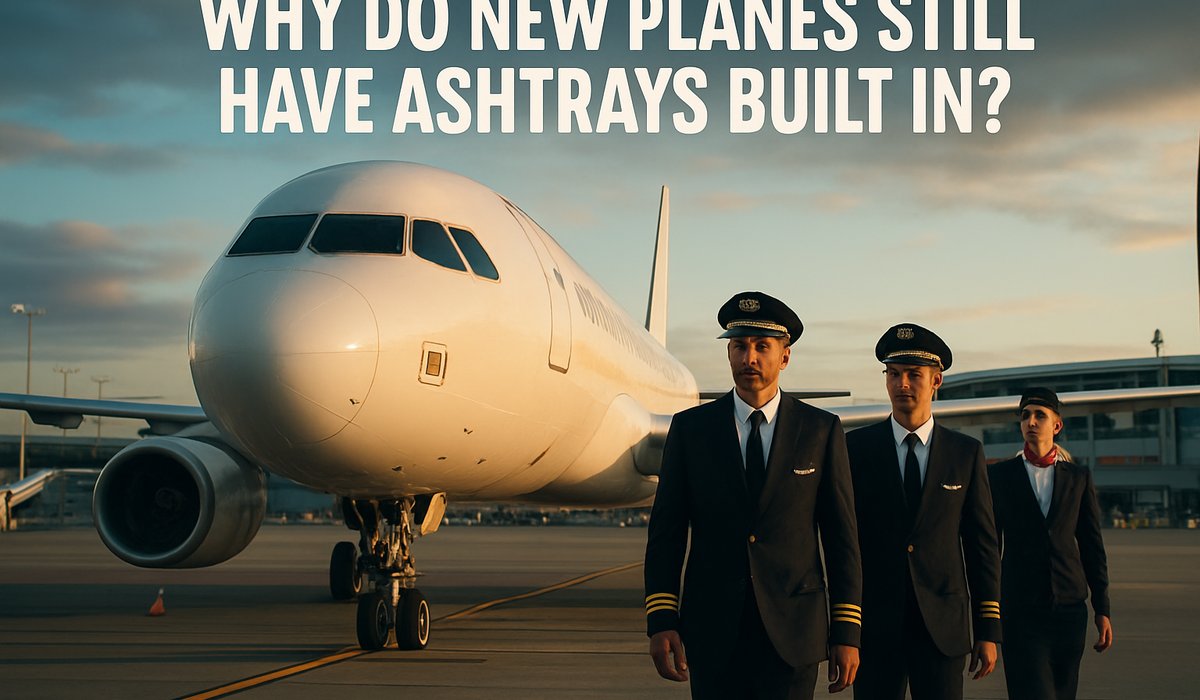
Image generated by AI
Modern Aircraft Still Mandate Ashtrays—Here's Why This Obsolete Relic Remains a Safety Essential
Federal aviation regulations require cigarette receptacles on new planes despite smoking bans, revealing a critical gap between passenger expectations and regulatory reality
The Contradiction Taking Flight
Passengers boarding the latest generation of wide-body aircraft are often struck by a peculiar contradiction. State-of-the-art lavatories gleam with antimicrobial surfaces, motion-sensor fixtures, and ambient lighting that rivals luxury hotel bathrooms. Yet affixed to the door of these ultra-modern facilities sits an anachronistic object: a small, burnished metal ashtray. In an era when smoking has been prohibited on commercial flights for decades, the presence of these receptacles seems illogical—until you understand the regulatory framework that mandates their installation.
Why Aviation Safety Standards Demand Ashtrays
Despite comprehensive smoking bans that have been in place since the 1990s, the Federal Aviation Administration (FAA) continues to require ashtrays on all newly manufactured commercial aircraft. The reasoning is straightforward but often misunderstood: the rule exists as a harm-reduction measure for passengers who smoke illicitly.
Aviation authorities acknowledge that some individuals will attempt to smoke in aircraft lavatories regardless of prohibitions. Without a designated receptacle, these passengers might dispose of cigarettes in waste bins—creating an immediate fire hazard in a confined space at 35,000 feet. By mandating ashtrays, regulators essentially prepare for non-compliance, ensuring that if smoking occurs, it can be contained safely rather than risk catastrophic cabin fires.
"The ashtray requirement reflects realistic safety planning," explains the FAA's approach. Rather than assume perfect passenger compliance, aviation authorities design systems that account for human behavior and potential rule violations.
A Regulatory Holdover With Real-World Logic
This requirement stands as a telling example of how aviation safety standards often prioritize worst-case scenarios over idealized passenger conduct. The ashtray isn't a nostalgic throwback—it's pragmatic engineering rooted in decades of operational experience.
Airlines and aircraft manufacturers comply without question, as the cost and weight implications are negligible compared to the regulatory mandate. The small metal tray has become as essential to modern aircraft certification as emergency exits and oxygen masks.
Industry Perspective
Aircraft manufacturers including Boeing and Airbus incorporate ashtrays into lavatory designs as standard equipment, ensuring compliance with international aviation safety codes. The requirement transcends national borders, reflecting a global consensus among aviation authorities that this safety measure warrants preservation despite changing passenger behaviors and public health standards.
FAQ: Aircraft Ashtrays and Aviation Regulations
Q: Are smoking bans actually enforced on all commercial flights? A: Yes. International regulations prohibit smoking on all commercial passenger flights. Violations carry substantial fines and potential criminal charges.
Q: Why don't airlines simply remove ashtrays to discourage smoking? A: Federal aviation regulations legally require ashtrays on all newly manufactured aircraft, regardless of the smoking ban. Removal would violate certification standards.
Q: How common is in-flight smoking despite the ban? A: Incidents are rare but documented. The ashtray requirement exists precisely because aviation authorities acknowledge that occasional violations will occur despite strict regulations.
Q: Do international airlines follow the same ashtray requirements? A: Yes. The FAA requirement is mirrored by international aviation authorities, making ashtrays a global standard on new aircraft.
Q: Will this regulation ever change? A: Unlikely in the near term. The ashtray requirement remains embedded in aviation safety certification worldwide, with no regulatory movement toward elimination.
Related Travel Guides
-
Ryanair's Longest European Routes Set to Expand With Boeing 737 MAX Fleet in 2026
-
Spirit Airlines Exit: Orlando, Miami, and Newark Set to Lose 21 Million Seats
-
Citation Ascend Impact: How Midsize Jets are Redefining Regional Travel Globally
External Resources
Disclaimer
This article is for informational and educational purposes only. It does not constitute legal, financial, or professional advice. While we strive to provide accurate and up-to-date information, travel policies, regulations, and conditions change rapidly. Always verify information with official sources before making travel decisions. Nomad Lawyer makes no representations about the accuracy, reliability, completeness, or suitability of the information provided. Readers should consult qualified professionals for advice specific to their circumstances. The views expressed in this article are those of the author and do not necessarily reflect the views of Nomad Lawyer.
Kunal K Choudhary
Co-Founder & Contributor
A passionate traveller and tech enthusiast. Kunal contributes to the vision and growth of Nomad Lawyer, bringing fresh perspectives and driving the community forward.
Learn more about our team →