
Boeing 737 MAX Engine Constraints: Why the Airframe Cannot Accommodate Alternative Powerplants
Breaking airline news and aviation industry updates for 2026.

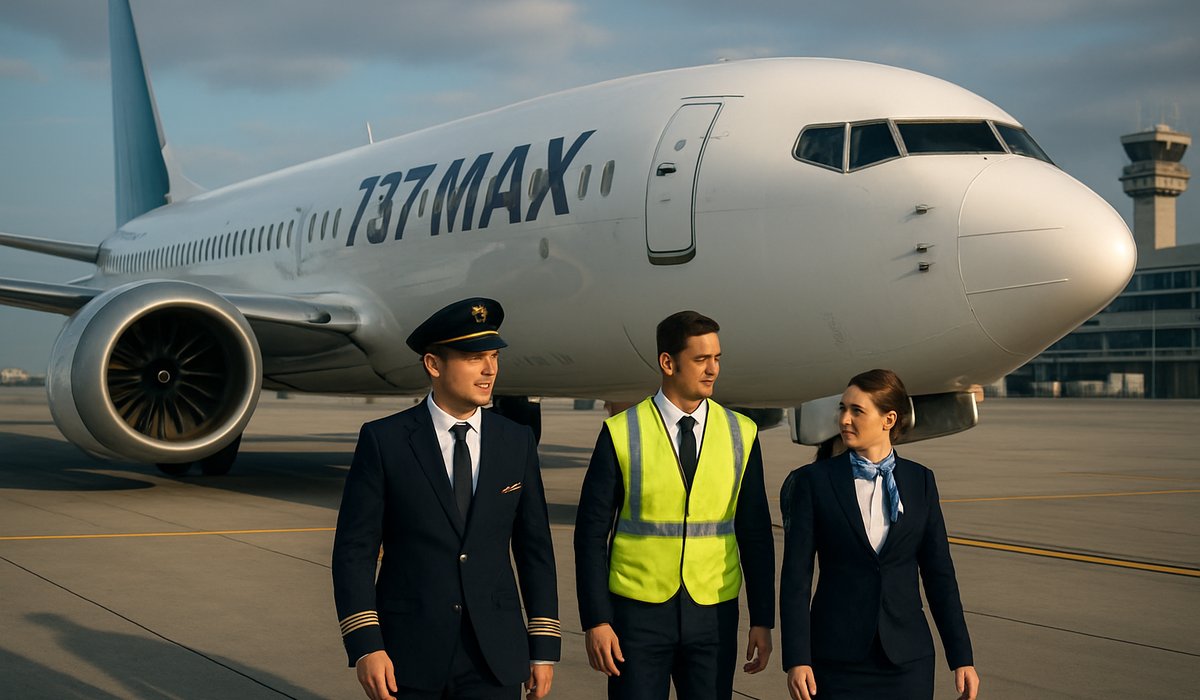
Image generated by AI
Boeing 737 MAX Engine Constraints: Why the Airframe Cannot Accommodate Alternative Powerplants
The aircraft's rigid design legacy limits propulsion options, locking airlines into single-engine supplier dependency
The Engineering Trap of Legacy Design
The Boeing 737 MAX faces a critical constraint that has shaped its entire operational future: its airframe architecture cannot support alternative engine configurations. This fundamental limitation stems from decades of incremental modifications to an aircraft platform first conceived in 1967, creating a rigid structure that severely restricts modernization options.
When Airbus revolutionized narrow-body efficiency with the A320neo family—equipped with dramatically more fuel-efficient CFMI LEAP engines—Boeing confronted an unprecedented competitive challenge. Rather than redesigning the 737 from the ground up, the manufacturer opted to retrofit the established airframe with CFM International's LEAP-1B engines, a decision that would lock the aircraft into a single propulsion pathway for its entire commercial lifespan.
Structural Limitations Define Engine Options
The 737 MAX's compact fuselage geometry and low-slung landing gear configuration, preserved through five decades of evolutionary upgrades, create insurmountable physical constraints. The aircraft's ground clearance and wing-pylon attachment points were engineered specifically for the LEAP-1B engine's dimensions and weight distribution. Any alternative powerplant would require substantial structural modifications—essentially reconstructing the wing assembly, landing gear systems, and fuselage reinforcements.
Engine manufacturers like Rolls-Royce or Pratt & Whitney could theoretically produce competing turbofans, but integrating them would demand engineering changes so extensive that the cost-benefit analysis becomes economically prohibitive. Airlines and Boeing both recognized that such modifications would effectively create an entirely new aircraft platform, negating the manufacturer's cost advantages.
Market Implications and Supplier Dependency
This architectural inflexibility creates lasting consequences for the aviation industry. Airlines operating 737 MAX fleets become permanently dependent on CFM International for engine maintenance, spare parts, and lifecycle support. The absence of competitive engine options eliminates negotiating leverage on service costs and supply chain management—a significant consideration across fleets numbering in the thousands globally.
For Boeing, this constraint also presents long-term vulnerability. Should CFM experience production disruptions or quality issues, the entire 737 MAX supply chain faces disruption with no alternative propulsion solutions available.
FAQ
Can the 737 MAX use Rolls-Royce or Pratt & Whitney engines? No. The aircraft's fuselage geometry and structural design are optimized exclusively for the CFM International LEAP-1B engine. Retrofitting alternatives would require complete airframe reconstruction.
Why didn't Boeing redesign the 737 completely? Launching an entirely new platform would require massive capital investment and delay market entry against Airbus's A320neo. Boeing chose incremental evolution instead.
Does this affect maintenance costs for airlines? Yes. Exclusive dependence on CFM International limits competitive pricing for engine servicing and spare parts availability.
Will future Boeing narrow-body aircraft face similar constraints? Potentially, unless Boeing implements modular design principles that enable multi-engine compatibility from initial development stages.
How does this compare to the Airbus A320neo? The A320neo also uses CFM LEAP engines primarily, but Airbus designed flexibility into its platform architecture for future propulsion options.
Related Travel Guides
- Turkish Airlines Bypasses Middle East Travel Chaos, Restoring Critical Istanbul to Abu Dhabi Route Amidst Widespread Regional Airport Disruptions: Airline News
- Spain Airport Strikes Chaos: British Airways, Lufthansa, Ryanair Stranded Thousands—Easter Travel Nightmare Unfolds Across Madrid, Barcelona, Palma
- 4,421 Flight Delays and 84 Cancellations Cripple US Airports: Chicago, Boston, Miami Hit Hardest on June 6
Disclaimer
This article is for informational and educational purposes only. It does not constitute legal, financial, or professional advice. While we strive to provide accurate and up-to-date information, travel policies, regulations, and conditions change rapidly. Always verify information with official sources before making travel decisions. Nomad Lawyer makes no representations about the accuracy, reliability, completeness, or suitability of the information provided. Readers should consult qualified professionals for advice specific to their circumstances. The views expressed in this article are those of the author and do not necessarily reflect the views of Nomad Lawyer.
Raushan Kumar
Founder & Lead Developer
Full-stack developer with 11+ years of experience and a passionate traveller. Raushan built Nomad Lawyer from the ground up with a vision to create the best travel and law experience on the web.
Learn more about our team →