
Premium Economy Lounge Access Guide 2026: Which Airlines Include Airport Lounges?
An analysis of global airline policies reveals that premium economy lounge access remains a rare and fragmented perk, limited to specific carriers like SAS, JAL, and ANA under strict conditions.

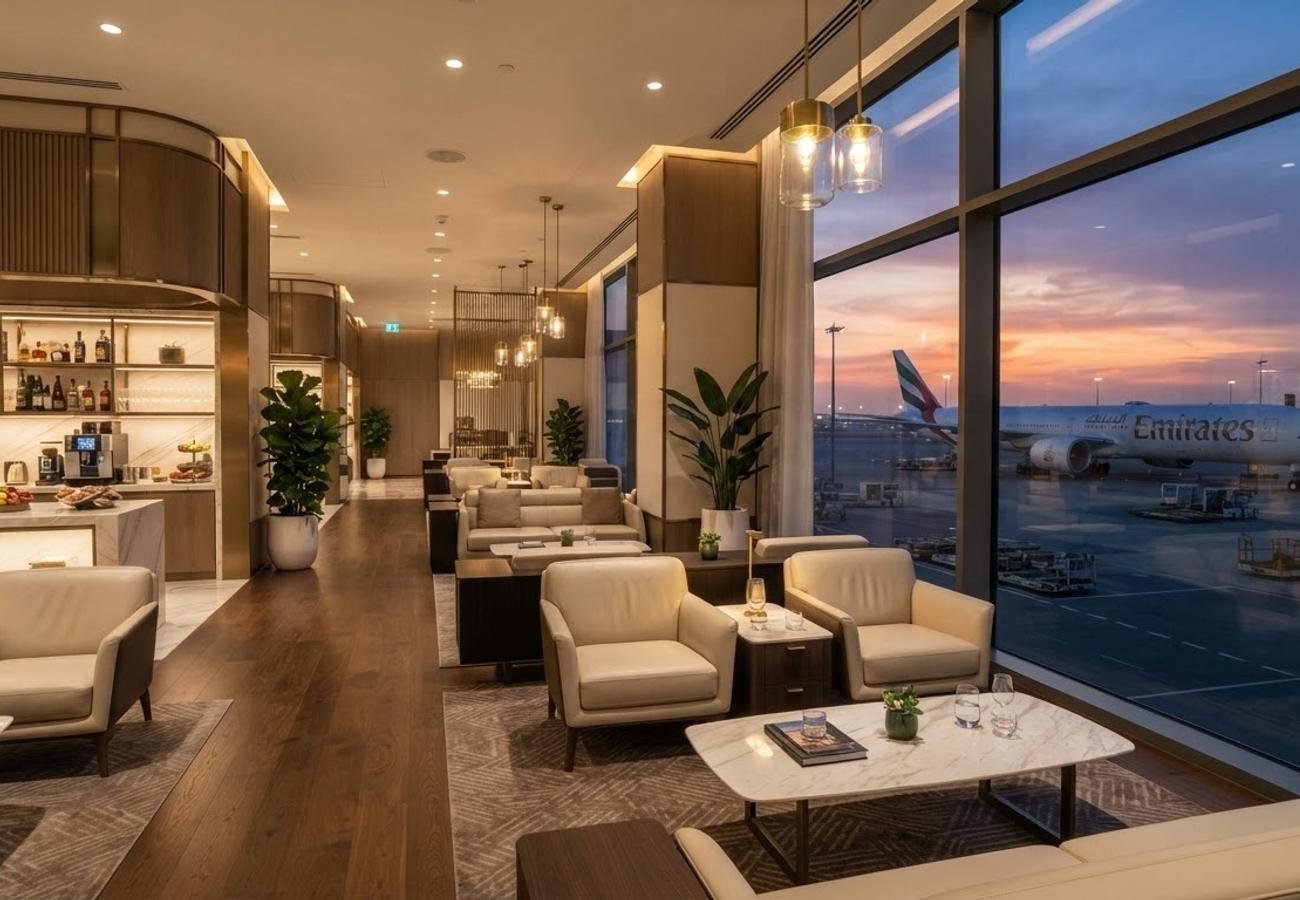
Image generated by AI
While premium economy has become a standard for long-haul travel, airport lounge access remains an inconsistent perk. Most carriers reserve lounge entry for business class or elite status holders, leaving premium economy passengers to pay for access.
The expansion of premium economy cabins—offering wider seats and upgraded dining—has created a distinct middle ground in aviation. However, the ground experience has not kept pace. Industry data indicates that complimentary lounge entry is the exception, not the rule. Even flexible or fully refundable premium economy fares rarely unlock airline-operated lounges by default.
For the majority of travelers, the "premium" designation ends at the aircraft door. To secure pre-departure comfort, passengers typically rely on third-party day passes, credit card memberships, or independent lounge networks.
Regional Variations in Lounge Bundling
A small subset of airlines utilizes lounge access as a competitive differentiator, though these benefits are often restricted by route or booking class.
Scandinavian Airlines (SAS) SAS provides one of the most consistent examples of bundled access via its SAS Plus cabin. On intra-European routes, SAS Plus often serves as the highest service class. In these markets, passengers are entitled to lounge access where SAS or Star Alliance partner lounges are available. This "business-lite" approach targets corporate travelers in Northern Europe who prioritize ground-side flexibility over lie-flat seats. However, access on long-haul routes is more restrictive when a dedicated business class cabin is present.
Japanese Carriers (JAL and ANA) In the Asian market, Japan Airlines (JAL) and All Nippon Airways (ANA) offer conditional benefits:
- Japan Airlines: Premium economy passengers may access business class lounges on eligible international routes and specific booking classes. However, this is described as "limited," as access varies by departure airport and is often unavailable at outstations or on certain codeshare flights.
- All Nippon Airways: ANA provides selective lounge entry for premium economy on international flights. Policy application is inconsistent, frequently defaulting to status-based or membership-based rules depending on the airport.
Middle Eastern and North American Models The approach in these regions is primarily based on loyalty tiers rather than ticket class:
- Emirates: Does not provide automatic systemwide lounge access for premium economy. Instead, the carrier offers discounted or complimentary entry for high-tier Skywards members.
- North American Majors: Carriers utilizing brands like Premium Select, Premium Economy, or Premium Plus focus on onboard comfort. United, for example, offers a reduced lounge fee for Premium Plus travelers rather than complimentary entry.
Premium Economy Lounge Availability Matrix
| Airline | Lounge Access Status | Primary Conditions |
|---|---|---|
| SAS | Included (Regional) | Available on SAS Plus for intra-European routes |
| Japan Airlines | Conditional | Eligible international routes; varies by hub |
| ANA | Selective | International flights; often status-dependent |
| Emirates | Tier-Based | Available via Skywards loyalty tiers |
| United | Discounted | Reduced entry fees for Premium Plus |
Why This Matters: The Logistics of "Premium"
From a logistical perspective, the gap between in-flight luxury and ground-side exclusion creates a fragmented traveler experience. Our analysis of the current route maps suggests that airlines are intentionally decoupling lounge access from the premium economy ticket to protect the "exclusivity" and perceived value of business and first-class fares.
For the traveler, this means the "Premium Economy" label is a marketing term for the seat, not a comprehensive service tier. Relying on a ticket for lounge entry without verifying the specific booking class or route is a high-risk strategy. The rise in lounge congestion has further incentivized carriers to tighten entry criteria, moving toward a "pay-to-play" or "status-only" model.
Forward Outlook
Expect lounge access to remain a tool for loyalty program retention rather than a standard cabin feature. As airlines recalibrate their long-haul fleets, the likelihood of broad premium economy lounge inclusion is low. Travelers should expect a continued shift toward co-branded credit card access and paid memberships as the primary means of securing airport comfort.
The "premium" experience is increasingly split between the air and the ground.
Related Travel Guides
Disclaimer
This article is for informational and educational purposes only. It does not constitute legal, financial, or professional advice. While we strive to provide accurate and up-to-date information, travel policies, regulations, and conditions change rapidly. Always verify information with official sources before making travel decisions. Nomad Lawyer makes no representations about the accuracy, reliability, completeness, or suitability of the information provided. Readers should consult qualified professionals for advice specific to their circumstances. The views expressed in this article are those of the author and do not necessarily reflect the views of Nomad Lawyer.
Raushan Kumar
Founder & Lead Developer
Full-stack developer with 11+ years of experience and a passionate traveller. Raushan built Nomad Lawyer from the ground up with a vision to create the best travel and law experience on the web.
Learn more about our team →