
Air New Zealand's Skynest Bunk Beds: What Travelers Actually Pay Beyond the $292 Headline Price
Breaking airline news and aviation industry updates for 2026.

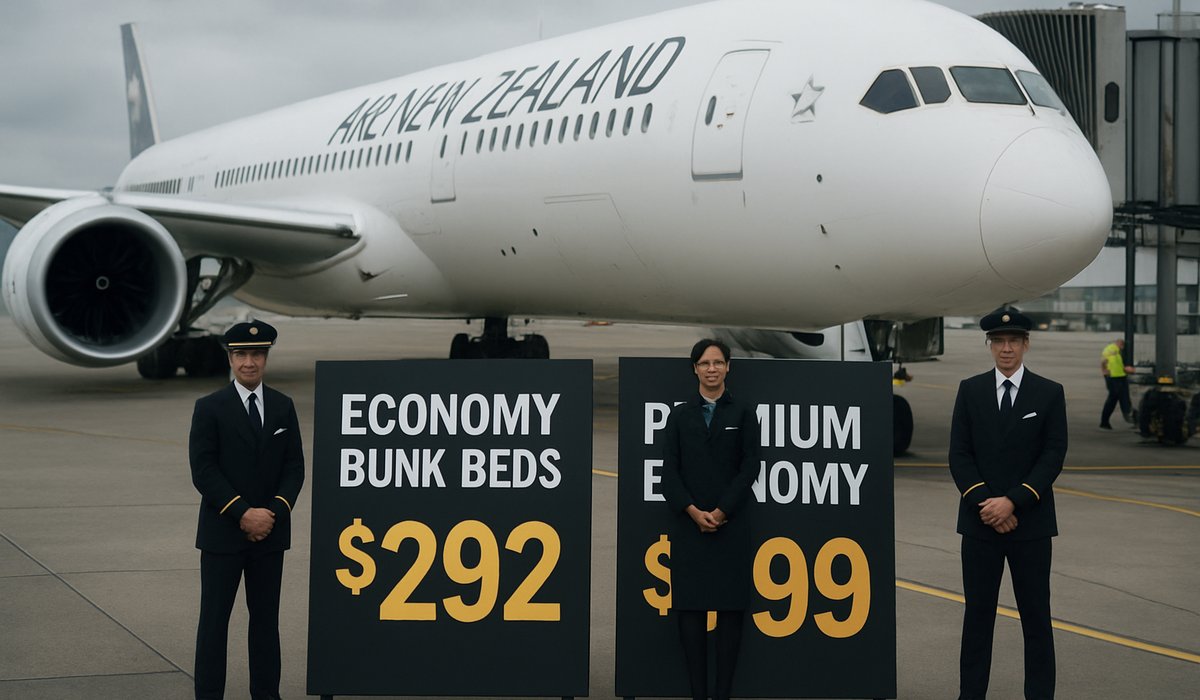
Image generated by AI
Air New Zealand's Skynest Bunk Beds: What Travelers Actually Pay Beyond the $292 Headline Price
The airline's innovative sleep pods sound affordable on the surface, but the true cost tells a different story for long-haul passengers
Breaking Through the Marketing Haze
Air New Zealand has secured global attention with an audacious bet on aircraft cabin innovation: Economy Skynest, a collection of six lie-flat bunk-style sleeping compartments positioned as a game-changing solution for exhausted long-haul travelers. The carrier's aggressive marketing emphasizes an eye-catching entry price of $292 per four-hour rest period, positioning the product as a budget-conscious alternative to traditional premium cabin upgrades. Yet aviation analysts and consumer advocates warn that this headline figure obscures a substantially more complex pricing structure that reveals the true cost of the airline's novel offering.
The Critical Distinction Between Marketing and Reality
The fundamental misunderstanding surrounding Skynest stems from what the product actually is—and what it is not. The sleep pods do not represent a standalone ticket class or cabin upgrade. Rather, they function as an à la carte ancillary service layered atop an existing economy or premium economy base fare. Passengers purchasing a Skynest session are not securing an enhanced seat for their entire flight duration. Instead, they are purchasing access to a four-hour confined sleeping experience, leaving them to occupy their standard economy seat for the remainder of their journey.
Understanding Total Travel Costs
This structural distinction carries profound financial implications. A traveler booking Economy Skynest must first commit to a full economy fare—typically ranging from several hundred to over a thousand dollars depending on route and season—before paying the additional $292 for the sleep pod rental. When calculated holistically, the total investment rivals or exceeds premium economy fares on many Air New Zealand routes, where passengers receive a superior seat configuration for the complete flight duration.
The pricing model highlights a growing trend across the aviation industry: the fragmentation of cabin products into modular, à la carte components. Airlines increasingly disaggregate traditional bundled offerings into discrete, individually priced services—from baggage fees and seat selection charges to in-flight dining and wellness amenities.
Broader Industry Context
Jet fuel costs and inflationary pressures continue reshaping airline revenue strategies. Carriers worldwide are aggressively developing ancillary revenue streams to offset operational expenses, with Sleep-related amenities representing an emerging frontier in premium service monetization.
Air New Zealand's Skynest initiative demonstrates airlines' willingness to experiment with unconventional cabin concepts, yet the pricing reality underscores how passengers must carefully evaluate total journey costs rather than fixating on promotional headline figures.
FAQ: Understanding Air New Zealand's Skynest Pricing
What is the total cost of booking Air New Zealand's Skynest sleep pods? Skynest costs start at $292 per four-hour session, but passengers must purchase a full economy or premium economy ticket first, making the combined expense significantly higher than advertised.
Is Skynest cheaper than upgrading to premium economy? Not necessarily. When adding the $292 pod fee to a base economy fare, the total often matches or exceeds standard premium economy pricing, which provides superior seating for the entire flight.
Can economy passengers use Skynest on all long-haul Air New Zealand flights? Skynest is currently available on select Air New Zealand long-haul routes where the aircraft has been retrofitted with the pod compartments.
Does Skynest replace your economy seat, or do you occupy both? You retain your standard economy seat for the flight duration. Skynest provides access to a bunk pod for only the specified four-hour window.
How does airline ancillary pricing affect overall travel costs? Airlines increasingly fragment traditional bundled cabin offerings into individual add-on charges—baggage, seats, meals, and now sleep services—requiring passengers to calculate cumulative expenses rather than relying on base fares.
Related Travel Guides
Flight Delay Compensation Guide 2026
Understanding Airline Route Changes
Airport Security Process Updated (2026)
External Resources
Disclaimer
This article is for informational and educational purposes only. It does not constitute legal, financial, or professional advice. While we strive to provide accurate and up-to-date information, travel policies, regulations, and conditions change rapidly. Always verify information with official sources before making travel decisions. Nomad Lawyer makes no representations about the accuracy, reliability, completeness, or suitability of the information provided. Readers should consult qualified professionals for advice specific to their circumstances. The views expressed in this article are those of the author and do not necessarily reflect the views of Nomad Lawyer.
Raushan Kumar
Founder & Lead Developer
Full-stack developer with 11+ years of experience and a passionate traveller. Raushan built Nomad Lawyer from the ground up with a vision to create the best travel and law experience on the web.
Learn more about our team →