
Westchester County Airport Faces 15 Cancellations, 11 Delays Across JetBlue, Breeze Airways, Air France July 2026
Westchester County Airport experienced significant operational disruption on July 4, 2026, with 15 flight cancellations and 11 delays affecting regional carriers and impacting hundreds of passengers traveling to New York, Boston, and Washington DC.

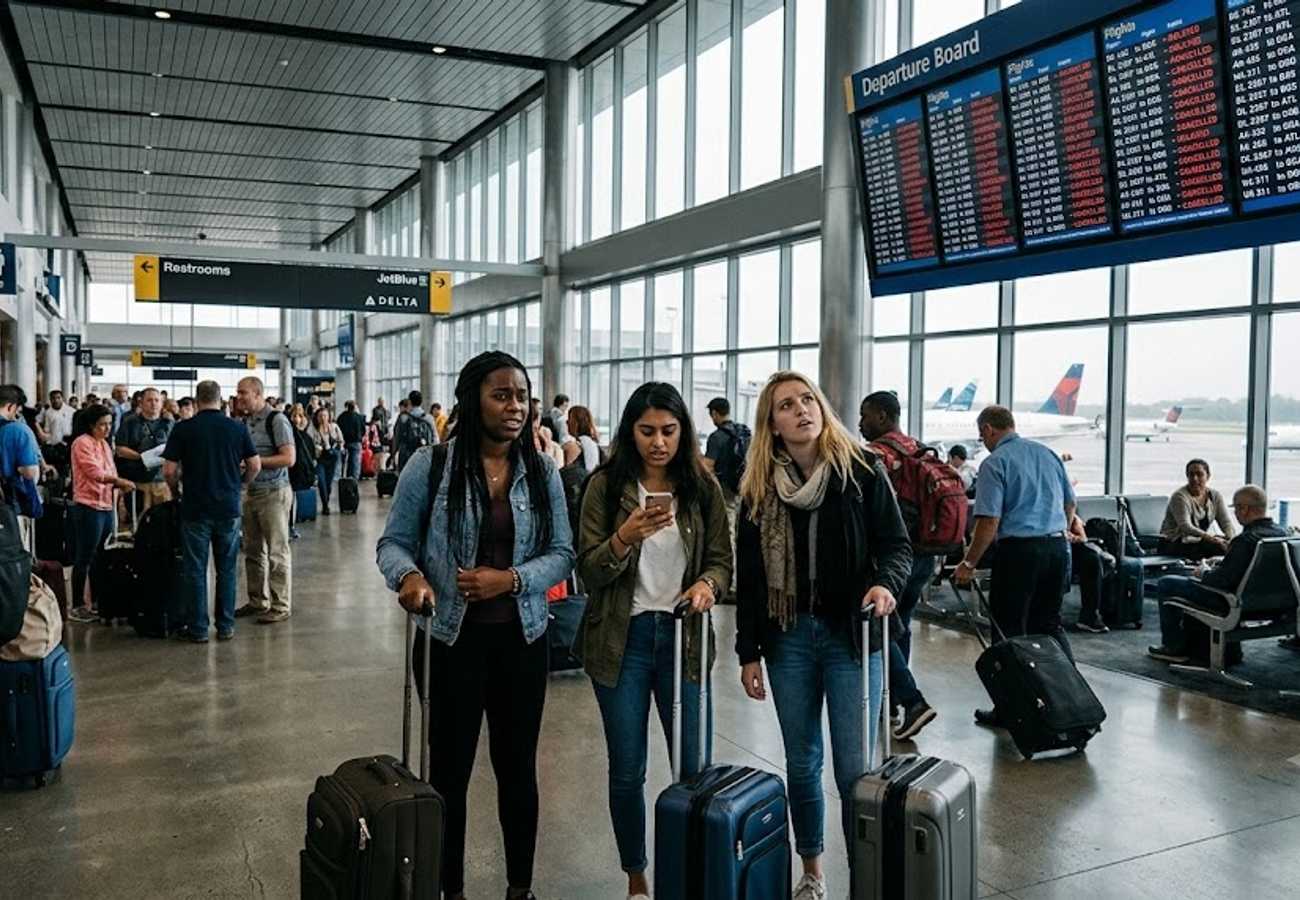
Image generated by AI
Westchester County Airport (HPN) experienced significant operational strain on July 4, 2026, recording 15 flight cancellations and 11 delays across multiple carriers serving the northeastern United States corridor. The disruption affected regional and domestic airlines including JetBlue Airways, Breeze Airways, Air France, and several regional carriers operating commuter services into major hubs including New York (JFK/LGA), Boston (BOS), and Washington DC (DCA).
The concentrated disruption signals systemic scheduling pressure within the US Northeast's secondary airport network, where high-frequency regional operations depend on razor-thin operational margins to maintain connectivity to national and international networks.
Operational Impact: Regional Carrier Network Under Pressure
Tradewind Aviation bore the heaviest operational toll, accounting for 15 of the 26 total disruptions. Additional carriers experiencing delays and cancellations included Endeavor Air (operating as Delta Air Lines regional service), Envoy Air (serving American Airlines), PSA Airlines (American regional operation), and JSX.
These regional carriers form the critical backbone of connectivity between secondary airports and major aviation hubs. Even isolated disruptions at secondary airports cascade rapidly through feeder networks, affecting same-day connections across the eastern seaboard.
Westchester County Airport serves as a primary access point for business and leisure travelers from Westchester County and Connecticut, with particular reliance on high-frequency commuter-style operations that maximize aircraft utilization. This operational model leaves minimal buffer capacity for unplanned disruptions.
Passenger Impact: Hundreds Affected Across Multiple Routes
Based on standard regional aircraft seating configurations (50-90 seats typical for commuter turboprops and regional jets), the 15 cancellations alone impacted several hundred passengers. JetBlue and Breeze Airways delays compounded the disruption, triggering cascading missed connections for passengers traveling beyond the New York metropolitan region.
Affected passengers faced rebooking onto alternate flights or rerouting through nearby John F. Kennedy International Airport (JFK) and LaGuardia Airport (LGA). Business travelers represent the highest-value passenger segment disrupted—Westchester County Airport handles substantial premium corporate traffic due to proximity to major Connecticut and Westchester corporate centers.
Same-day arrival passengers experienced particular operational challenges, with limited alternative routing options during peak midday scheduling windows.
Regional Tourism and Economic Implications
The disruption carries measurable consequences for regional tourism connectivity. Westchester County Airport functions as a supporting gateway for inbound leisure travel to New York State's Hudson Valley tourism circuits and suburban cultural destinations. Cancellations disrupted same-day arrival schedules for time-sensitive tourism activities.
Regional hospitality and event-based tourism operators dependent on same-day arrival passengers face scheduling uncertainty and potential revenue impacts. Such operational instability reduces traveler confidence in domestic short-haul connectivity during peak travel windows—a critical concern during summer 2026 leisure travel season.
From a broader competitive perspective, secondary airport disruptions strengthen the market position of larger primary airports (JFK, LGA, Newark International (EWR)) by demonstrating operational reliability advantages for connecting passengers.
Systemic Network Vulnerability: Northeast Corridor Architecture
Westchester County Airport operates within the densely congested northeastern United States airspace system. Aircraft rotation schedules, crew availability constraints, and slot coordination with New York Terminal Radar Approach Control (TRACON) facilities create tightly coupled operational dependencies.
Regional carriers functioning as feeder operations into Delta Air Lines, American Airlines, and JetBlue networks mean delays at Westchester propagate into wider national and international schedule cascades. A single regional airport disruption can affect hundreds of downstream connections across multiple airlines' networks.
The concentration of cancellations among regional carriers suggests operational challenges at aircraft availability, crew scheduling, or air traffic coordination levels. No official cause determination has been announced by airport authorities or affected carriers.
Real-Time Monitoring and Passenger Recommendations
All operational data referenced in this analysis derives from FlightAware's real-time flight tracking platform. Airlines actively modify schedules and itineraries to maintain safety standards, meaning passenger impact assessments remain subject to continuous real-time updates.
Passengers should monitor official airline communications, review rebooking policies, and maintain flexibility with travel plans. Relying on real-time FlightAware data and official airline notifications rather than airport announcements ensures access to current information regarding schedule modifications.
For passengers experiencing cancellations, reviewing airline-specific rebooking policies and exploring alternate routing through primary New York area airports may accelerate rebooking timelines compared to remaining on standby lists for cancelled regional flights.
Regional airport disruptions expose the vulnerability of densely utilized secondary airport networks—and Westchester County's July 4 incident demonstrates why operational resilience in commuter aviation carries cascading effects across the eastern seaboard.
Related Travel Guides
Disclaimer
This article is for informational and educational purposes only. It does not constitute legal, financial, or professional advice. While we strive to provide accurate and up-to-date information, travel policies, regulations, and conditions change rapidly. Always verify information with official sources before making travel decisions. Nomad Lawyer makes no representations about the accuracy, reliability, completeness, or suitability of the information provided. Readers should consult qualified professionals for advice specific to their circumstances. The views expressed in this article are those of the author and do not necessarily reflect the views of Nomad Lawyer.
Raushan Kumar
Founder & Lead Developer
Full-stack developer with 11+ years of experience and a passionate traveller. Raushan built Nomad Lawyer from the ground up with a vision to create the best travel and law experience on the web.
Learn more about our team →