
American Airlines Pilot Executes Emergency Braking To Avert Collision With Ground Vehicle at Charlotte Airport
Breaking airline news and aviation industry updates for 2026.

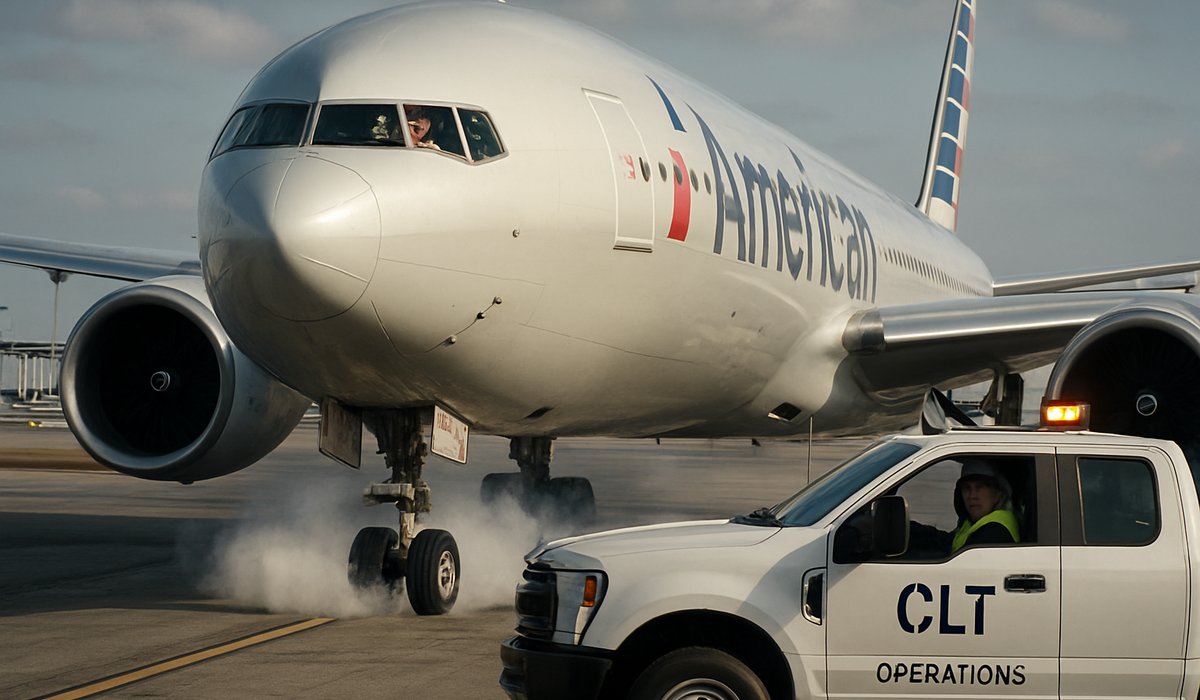
Image generated by AI
American Airlines Pilot Executes Emergency Braking To Avert Collision With Ground Vehicle at Charlotte Airport
Safety incident highlights ongoing concerns about airfield operations coordination at major US aviation hubs
A potentially catastrophic collision was narrowly avoided at Charlotte Douglas International Airport this week when an American Airlines aircraft executing a ground taxi maneuver was forced into emergency braking to evade an airport operations vehicle, according to incident reports filed with aviation authorities.
The near-miss unfolded Wednesday morning as the American Airlines jet was moving across the tarmac at CLT, one of the busiest aviation centers in the southeastern United States. Pilots initiated hard braking procedures to prevent impact with the ground support truck, which occupied an unexpected position along the aircraft's designated taxiway route.
Rising Safety Concerns at Major Airports
The incident represents the latest in a troubling series of airfield safety lapses documented across major US airport complexes. Industry observers emphasize that such ground-level incidents, while often avoided through pilot intervention and modern aircraft systems, underscore vulnerabilities in coordination protocols between flight crews and airport ground operations teams.
Charlotte Douglas International Airport, which handles approximately 44 million passengers annually and serves as a major hub for American Airlines operations, has increasingly been scrutinized for surface movement management following similar near-miss events.
Operational Pressure and Staffing Challenges
Safety analysts attribute a portion of these incidents to broader pressures affecting airport operations—including sustained staffing shortages, increased traffic volume, and compressed turnaround times that leave minimal margin for communication errors. The aviation sector has yet to fully recover its pre-pandemic workforce capacity in ground operations roles.
The Federal Aviation Administration (FAA) investigates such occurrences to identify systemic vulnerabilities and implement corrective measures across airport networks. These investigations typically examine radio communications, surface surveillance systems, and procedural compliance among both aircraft crews and ground personnel.
Industry-Wide Implications
The incident arrives amid heightened focus on airport safety metrics following several high-profile accidents and near-misses globally. Modern aircraft equipped with enhanced ground proximity warning systems have increasingly prevented disasters, yet experts maintain that prevention at the source—through robust coordination protocols—remains the preferred safety strategy.
American Airlines has not issued formal statements regarding operational procedures or personnel retraining initiatives connected to the Wednesday incident.
Frequently Asked Questions
Q: How common are near-miss incidents at US airports? A: The FAA documents hundreds of runway incursions and taxiway conflicts annually, though most are resolved without incident through pilot intervention or ground control alerts.
Q: What safety systems prevent aircraft-vehicle collisions on airport tarmacs? A: Modern airports employ ground radar, visual surveillance, radio communication protocols, and aircraft terrain awareness systems to prevent ground conflicts.
Q: Is Charlotte Douglas Airport considered safe for passengers? A: CLT maintains FAA certification and operates under strict safety protocols; isolated incidents do not indicate systemic airport deficiencies.
Q: What happens after a near-miss incident is reported? A: The FAA investigates root causes and may implement enhanced training, procedure modifications, or equipment upgrades to prevent recurrence.
Q: How does pilot training address emergency braking procedures? A: Commercial pilots receive recurrent training in ground handling emergencies, including rapid braking and evasive taxiing techniques.
Related Travel Guides
Flight Delay Compensation Guide 2026
Understanding Airline Route Changes
Airport Security Process Updated (2026)
External Resources
Disclaimer: Airline announcements, route changes, and fleet information reflect official corporate communications as of April 2026. Schedules, aircraft specifications, and service details remain subject to airline modifications.
Preeti Gunjan
Contributor & Community Manager
A passionate traveller and community builder. Preeti helps grow the Nomad Lawyer community, fostering engagement and bringing the reader experience to life.
Learn more about our team →