
How Washington State Airports Are Restructuring Operations Following a Sudden Sixteen Percent Traveler Throughput Drop in 2026
Following a 16% passenger collapse driven by federal funding lapses, Washington state airports implement advanced crowd protocols and green infrastructure updates.

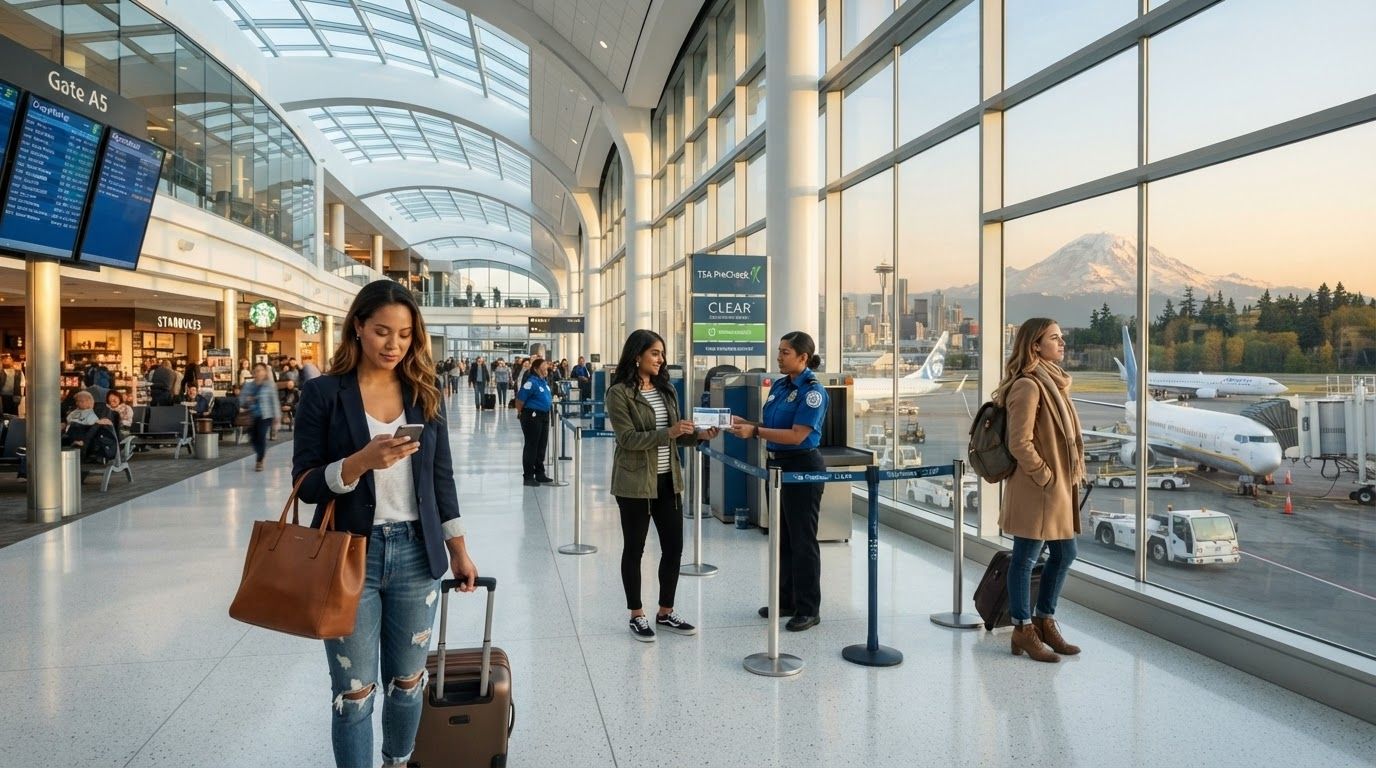
Image generated by AI
Published on July 14, 2026
Washington state transit networks are adapting to operational changes after a federal funding lapse triggered a 16.0% drop in traveler throughput. To manage these operational challenges, major Pacific Northwest gateways like Seattle-Tacoma International Airport (SEA) are implementing new passenger management strategies and sustainability initiatives in 2026.
The Local Trend Revealed
Airports across the evergreen state have recently had to navigate severe operational constraints. Unsealed performance reports from the Bureau of Transportation Statistics indicate that Washington state air hubs experienced a 16.0% collapse in traveler throughput. This operational decline represents the third-worst regional aviation contraction in the United States, placing significant strain on both regional travelers and terminal infrastructure.
This contraction stems directly from a congressional funding deadlock that affected the United States Department of Homeland Security (DHS) during the spring of 2026. Because federal discretionary spending packages were not finalized before the expiration of stopgap allocations, the Transportation Security Administration (TSA) experienced a prolonged funding lapse. This budget freeze impacted not only security checkpoints but also caused scheduling constraints for air traffic controllers under the Federal Aviation Administration (FAA) and officers with Customs and Border Protection (CBP). Under federal shutdown rules, frontline security officers are classified as essential personnel, meaning they are required to report for duty without active pay. The financial strain led to a high volume of unscheduled absences and staff departures, reducing terminal capacity at key facilities.
The impact was felt immediately at prominent regional hubs, including Seattle-Tacoma International Airport (SEA), Spokane International Airport (GEG), and Tri-Cities Airport (PSC) in Pasco. Long security lines regularly extended past baggage claim areas, snaking down concourses and stretching up to three-quarters of a mile during peak morning departures. At Spokane International Airport, checkpoint processing rates dropped from their historical average of 450 passengers per hour per lane down to just 180, leading to a complete gridlock of the main terminal lobby. Major regional carriers, such as Alaska Airlines (which operates its primary hub at Sea-Tac) and Delta Air Lines, had to adjust flight schedules to prevent delay cascades across their networks. The suspension of premium screening services and auxiliary checkpoints further concentrated passenger volumes, forcing all flyers into single, slow-moving general screening queues. In response, regional transit agencies and airport authorities are restructuring terminal check-in flows and prioritizing customer communication to improve wait-time predictability.
Cultural & Environmental Value (Information Gain)
Despite these operational challenges, the Port of Seattle is moving forward with major upgrades to improve terminal efficiency and reduce environmental impact. A key project is the expansion of the C Concourse at Seattle-Tacoma International Airport, which opened in June 2026. Designed to achieve LEED Platinum certification, the expansion is the airport's first all-electric terminal project, utilizing electrochromic glazing to manage heat and a 500-kW solar array to generate renewable energy. The solar array supplies auxiliary power to the concourse gates, while specialized low-flow water fixtures reduce wastewater production by 35% compared to standard airport configurations. The interior design features locally sourced Douglas fir timber harvested from FSC-certified forests on the Olympic Peninsula, directly supporting rural forestry economies in Washington state and demonstrating the region's environmental leadership.
These developments align with the Port of Seattle’s long-term sustainability goals, which are managed through the Sustainable Airport Master Plan (SAMP). The Port has set a target to power all flights departing from SEA with at least a 10% blend of sustainable aviation fuel (SAF) by 2028, with plans to increase this to a 50% blend by 2050. The SAMP has undergone environmental reviews and public workshops in neighboring communities like Burien, Des Moines, and SeaTac, ensuring that local residents can participate in the airport's long-term planning.
Additionally, these initiatives support the local economy. The Washington State Department of Transportation (WSDOT) Aviation Division continues to fund infrastructure grants for smaller airports, ensuring that communities across the state remain connected. The Port of Seattle's terminal updates also prioritize regional businesses, offering local food and retail options that showcase Pacific Northwest culture.
Visitor Insider Tips
For travelers flying through Washington state airports during periods of operational change in 2026, here are several practical tips to help you navigate the terminals:
- Arrive Early for Departures: During periods of high traffic or staffing shortages, arrive at the terminal at least three hours prior to domestic flights and four hours for international flights to allow sufficient time for check-in and security.
- Monitor Wait Times via Mobile Apps: Download the official MyTSA mobile application to track security line wait times in real-time. Combine this with crowdsourced travel updates to identify which checkpoints are experiencing the lowest congestion.
- Utilize the SEA Spot Saver Program: Avoid general security queues by reserving a free screening time slot in advance through the SEA Spot Saver digital platform, which is available at designated checkpoints at Seattle-Tacoma International Airport.
- Monitor Spokane and Pasco Flights Online: For flyers departing from Spokane (GEG) or Pasco (PSC), check the airport's online parking availability monitor and complete your flight check-in 24 hours in advance to bypass check-in desk congestion.
- Verify Travel Insurance Coverage: Review the terms of your travel insurance policy to ensure it offers financial coverage for missed connections or delays resulting from government administrative shutdowns or airport staffing shortages.
- Support Local Dining at the Airport: Explore the regional dining options in the newly expanded C Concourse. Try Pacific Northwest specialties like clam chowder at Salty’s at the SEA, sample local microbrews at Ballard Brew Hall, or visit Beecher’s Handmade Cheese for their famous mac and cheese.
- Explore the World Table District: If you have an extended layover near Seattle-Tacoma International Airport, visit the World Table District along International Boulevard and Military Road. This area features more than 30 independent, multicultural restaurants offering Peruvian, Thai, and Somali specialties.
- Take the Link Light Rail: Reduce road congestion and lower transit emissions by taking the Sound Transit Link Light Rail directly to the airport terminal station, bypassing busy vehicle drop-off zones.
- Consolidate Carry-On Items: To help security staff and speed up the screening process, pack your belongings tightly. Consolidating electronics and liquids into easily accessible compartments helps keep the security lines moving efficiently.
Tourism Outlook
The long-term outlook for aviation in the Pacific Northwest depends on stabilizing the security workforce and completing key terminal upgrades. The Port of Seattle’s Sustainable Airport Master Plan (SAMP) outlines necessary improvements to meet future travel demand while reducing carbon emissions.
Over the coming years, the integration of all-electric terminals and sustainable aviation fuels at Sea-Tac will serve as a model for other regional hubs. By combining advanced passenger flow management with green infrastructure, Washington state airports aim to maintain their role as key gateways for international and domestic travel.
Patience and strategic planning remain the best travel tools for navigating modern West Coast air hubs in 2026.
Related Travel Guides
Disclaimer
This article is for informational and educational purposes only. It does not constitute legal, financial, or professional advice. While we strive to provide accurate and up-to-date information, travel policies, regulations, and conditions change rapidly. Always verify information with official sources before making travel decisions. Nomad Lawyer makes no representations about the accuracy, reliability, completeness, or suitability of the information provided. Readers should consult qualified professionals for advice specific to their circumstances. The views expressed in this article are those of the author and do not necessarily reflect the views of Nomad Lawyer.
Kunal K Choudhary
Co-Founder & Contributor
A passionate traveller and tech enthusiast. Kunal contributes to the vision and growth of Nomad Lawyer, bringing fresh perspectives and driving the community forward.
Learn more about our team →