
Washington Dulles Airport Launches $20 Billion Transformation to Compete With JFK, LAX, O'Hare, Atlanta, SFO, Seattle, and LaGuardia by 2040
Washington Dulles International Airport is undergoing a $20 billion redevelopment to grow from 27 million to 38 million passengers by 2040, joining a historic transformation race among America's largest airports.

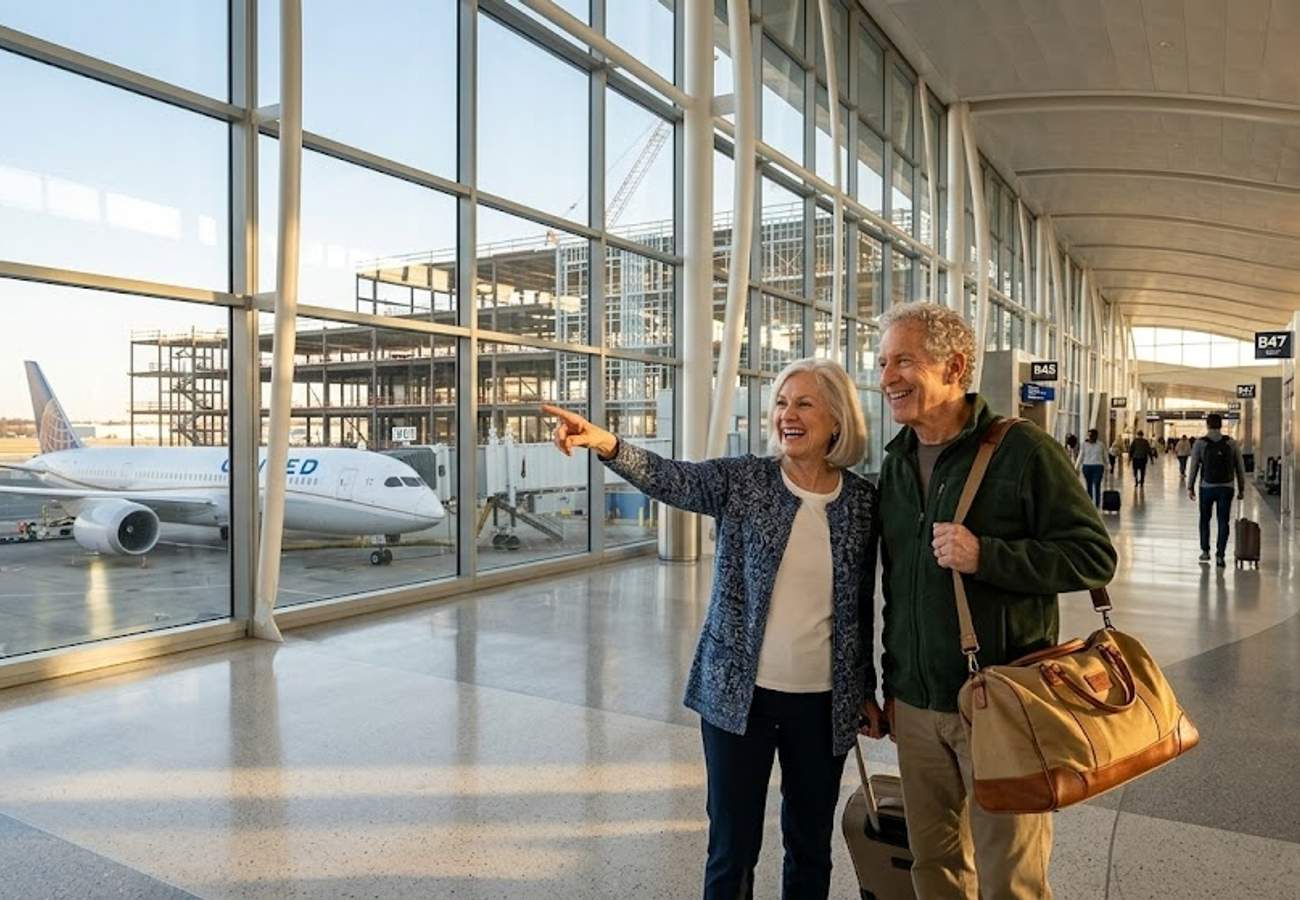
Image generated by AI
[Washington, D.C. — July 30, 2026] Washington Dulles International Airport is undertaking a redevelopment programme valued at more than $20 billion, positioning itself alongside JFK, LAX, LaGuardia, O'Hare, Atlanta, SFO, and Seattle in what industry observers describe as a historic airport transformation race across the United States. The project targets growth from approximately 27 million passengers and 130 contact gates in 2025 to around 38 million passengers and 154 contact gates by 2040, reshaping how international travellers enter the American capital region.
The scale of this investment places Dulles in direct competition with major hub redevelopments underway at John F. Kennedy International Airport in New York, Los Angeles International Airport, LaGuardia Airport, Chicago O'Hare International Airport, Hartsfield-Jackson Atlanta International Airport, San Francisco International Airport, and Seattle-Tacoma International Airport. Each of these facilities is pursuing its own modernization agenda, but Dulles stands apart because of its vast land area and the opportunity to build an integrated travel ecosystem rather than simply adding gates to existing terminals.
Washington Dulles Joins America's Airport Transformation Race
Washington Dulles has occupied a distinctive position among American airports since its opening. The facility was built with long-term expansion in mind, occupying a large site in Virginia that allows for future growth — a significant advantage over urban airports constrained by surrounding development.
Modern aviation, however, has shifted passenger expectations dramatically. Travellers now demand straightforward navigation, shorter transfer times, convenient ground transportation, and comfortable waiting environments. The challenge for Dulles has never been a simple lack of capacity. The airport's traditional design created operational complexity, particularly for passengers moving between different sections of the campus.
The redevelopment strategy addresses these issues through a coordinated approach covering terminals, concourses, transportation systems, baggage facilities, and international passenger services. Rather than treating each component as a separate project, planners are integrating them into a unified system designed to reduce friction at every stage of the passenger journey.
Why Dulles Is Becoming a Strategic Tourism Infrastructure Project
For Washington, D.C. and Virginia, the redevelopment carries significance that extends well beyond aviation infrastructure. Airports shape how visitors experience a destination from the moment they land. They determine how easily international travellers access cultural, political, and economic centres, and they influence how businesses connect globally.
Washington remains one of America's most visited cities, drawing government officials, international organization delegates, university visitors, business travellers, and tourists from across the world. Virginia continues to attract both leisure and business travellers, with destinations ranging from coastal communities to mountain resorts.
According to the airport's long-term planning framework, Dulles is projected to grow from approximately 27 million passengers and 130 contact gates in 2025 toward roughly 38 million passengers and 154 contact gates by 2040. The wider master plan also identifies potential future expansion beyond those figures.
| Metric | 2025 Baseline | 2040 Projection |
|---|---|---|
| Annual Passengers | ~27 million | ~38 million |
| Contact Gates | 130 | 154 |
| Investment Value | — | $20 billion+ |
| Concourse E Square Footage | — | ~435,000 sq ft |
| Concourse E Contact Gates | — | 14 |
For the tourism sector, increased airport capability translates into greater opportunities to welcome visitors from international markets. More efficient infrastructure can support additional airline routes, improve connections, and make the Washington region easier to access from Europe, Asia, the Middle East, and other global markets.
Economic Impact of Building a Stronger Gateway
Large airport projects generate economic activity far beyond the passengers moving through terminals. Construction alone creates employment, supplier networks, and local spending. Once operational, improved facilities attract additional airline service, which brings more visitors who spend on hotels, restaurants, attractions, and regional destinations.
Washington Dulles serves travellers heading to government institutions, international organisations, universities, businesses, and tourism attractions throughout the capital region. A more modern airport environment can improve the competitiveness of Washington, D.C. as an international destination. Visitors arriving from long-haul markets often form their first impression of a destination from their airport experience.
Faster customs processing, clearer movement routes, and improved facilities can help create a more positive impression before visitors even reach the city. The redevelopment also supports Virginia's tourism economy by improving access for international visitors who explore destinations beyond the capital.
The transformation reflects a wider global trend where airports function as economic gateways rather than simple transport facilities. Cities that invest in modern airport infrastructure position themselves to capture a larger share of international travel demand.
United Airlines Growth Strategy Aligns With Dulles Expansion
Although the airport transformation extends beyond any single carrier, United Airlines remains a central factor in Dulles' future development because of its extensive operations at the airport. United uses Washington Dulles as a significant connection point for both domestic and international routes.
As global aviation becomes increasingly competitive, airlines require airports that can provide efficient connections and modern facilities. The redevelopment supports United Airlines' long-term operational needs by creating infrastructure designed for future passenger growth and changing aircraft requirements.
Modern airport investment allows airlines to improve reliability, reduce passenger friction, and offer stronger services for different traveller segments. International passengers making long-distance journeys increasingly expect comfortable waiting areas, premium services, efficient transfers, and reliable connections — not just transportation from one city to another.
The airport's planned improvements support this shift by creating facilities that better match the requirements of a global airline network.
New Design Focuses on Reducing Travel Friction
One of the most important themes behind the Dulles redevelopment is reducing unnecessary complexity. Large hub airports can become difficult environments when passengers need multiple transfers between arrival areas, security zones, and departure gates.
The transformation aims to create a more connected layout where passengers move naturally through the airport. This includes improvements to internal transportation systems, expanded passenger connections, and redesigned facilities that make navigation easier.
A major element of this strategy involves reducing dependence on older transportation methods. Dulles has historically used mobile lounges and specialised vehicles to move passengers around the airport campus. While these systems played an important role in the airport's history, modern airport design favours automated rail connections and direct walking routes.
The redevelopment plans include expanded AeroTrain connections and improved passenger circulation infrastructure. For travellers, these changes could mean fewer complicated transfers and a more predictable airport experience from curb to gate.
Concourse Development Creates Foundation for Growth
A major part of Washington Dulles' future involves replacing and upgrading passenger facilities that no longer meet modern expectations. The current Concourse C and D complex remains central to United Airlines operations but requires significant redevelopment to support future growth.
The planned improvements are expected to introduce more efficient passenger spaces, improved amenities, and infrastructure better suited for modern aircraft operations. An important early step is the development of Concourse E, which represents a visible sign of the airport's future direction.
The new facility will provide approximately 435,000 square feet, including 14 aircraft contact gates, expanded concession areas, and a large airline club facility. Unlike older airport models focused mainly on capacity, newer facilities are designed around passenger experience. Travellers increasingly value comfortable seating, dining choices, retail options, and easier access to connecting flights.
Concourse E provides a preview of how future Dulles facilities are expected to operate, combining capacity growth with improved comfort and operational efficiency.
International Arrivals Upgrade Positions Dulles as Global Entry Point
A major focus of the Washington Dulles transformation is improving the experience for international visitors arriving in the United States. As one of the country's important overseas gateways, Dulles handles large numbers of passengers entering from global markets and connecting to destinations across America.
The redevelopment plans include improvements to customs processing, baggage systems, and passenger circulation areas. The objective is to create a more efficient arrival experience where international travellers can move through the airport with fewer delays and clearer connections to their onward destinations.
International arrivals are especially important for Washington, D.C. because many visitors travel to the capital for government business, diplomatic meetings, academic conferences, and cultural tourism. A smoother entry process can reduce the stress of international travel and help visitors begin their stay on a positive note.
Impact Analysis
The $20 billion redevelopment positions Washington Dulles to compete with the most ambitious airport transformation projects in the United States. JFK is pursuing its own multi-billion-dollar overhaul, LAX continues its modernization programme, and Atlanta, O'Hare, SFO, and Seattle are all investing heavily in new terminals and improved passenger facilities.
Dulles brings a unique advantage to this competition: available land for expansion. While airports like LaGuardia face severe space constraints, Dulles can build outward, allowing planners to design facilities that integrate rail connections, road access, and terminal layouts without the compromises that constrain urban airports.
The risk, however, lies in execution. Large-scale airport projects often face construction delays, budget overruns, and operational disruptions during the transition period. Passengers travelling through Dulles during the redevelopment phase may experience temporary inconveniences as older facilities are replaced.
Why This Matters
For the traveller, this redevelopment means a fundamentally different airport experience within the next decade. If you have flown through Dulles in recent years, you may have encountered the mobile lounges, long walking distances, and congested transfer areas that have defined the airport's operational reputation. The planned AeroTrain expansion and Concourse E construction signal a shift toward the kind of seamless, rail-connected passenger experience that travellers already expect at airports like Munich, Singapore, or Doha.
From a logistical standpoint, the growth from 27 million to 38 million passengers represents a 40 percent increase in throughput. That level of expansion requires not just more gates but entirely new systems for baggage handling, security processing, and customs clearance. International travellers arriving from Europe, Asia, or the Middle East should expect faster entry processing once the new facilities come online.
For the Washington region's tourism economy, the stakes are considerable. A modern airport that handles international arrivals efficiently can influence airline route decisions, potentially attracting new long-haul services that connect the capital to emerging markets. Hotels, restaurants, and attractions throughout Virginia and the District of Columbia stand to benefit from increased international visitor flows.
The partnership context — with JFK, LAX, LaGuardia, O'Hare, Atlanta, SFO, and Seattle all pursuing their own transformation programmes — creates a competitive landscape where airports that deliver better passenger experiences will attract more airline investment and more traveller traffic. Dulles is betting $20 billion that its land advantage and integrated planning approach will give it an edge in that race.
The next time you land at Washington Dulles, the airport you walk through may look nothing like the one travellers remember today.
Related Travel Guides
Disclaimer
This article is for informational and educational purposes only. It does not constitute legal, financial, or professional advice. While we strive to provide accurate and up-to-date information, travel policies, regulations, and conditions change rapidly. Always verify information with official sources before making travel decisions. Nomad Lawyer makes no representations about the accuracy, reliability, completeness, or suitability of the information provided. Readers should consult qualified professionals for advice specific to their circumstances. The views expressed in this article are those of the author and do not necessarily reflect the views of Nomad Lawyer.
Kunal K Choudhary
Co-Founder & Contributor
A passionate traveller and tech enthusiast. Kunal contributes to the vision and growth of Nomad Lawyer, bringing fresh perspectives and driving the community forward.
Learn more about our team →