
Vietnam Navy Military: Why A-6 Intruders Remained Essential Despite 84 Losses
The U.S. Navy's vietnam navy military operations relied heavily on the A-6 Intruder despite 84 aircraft losses during Vietnam War campaigns. Its unmatched all-weather precision bombing made it irreplaceable for naval strike missions.

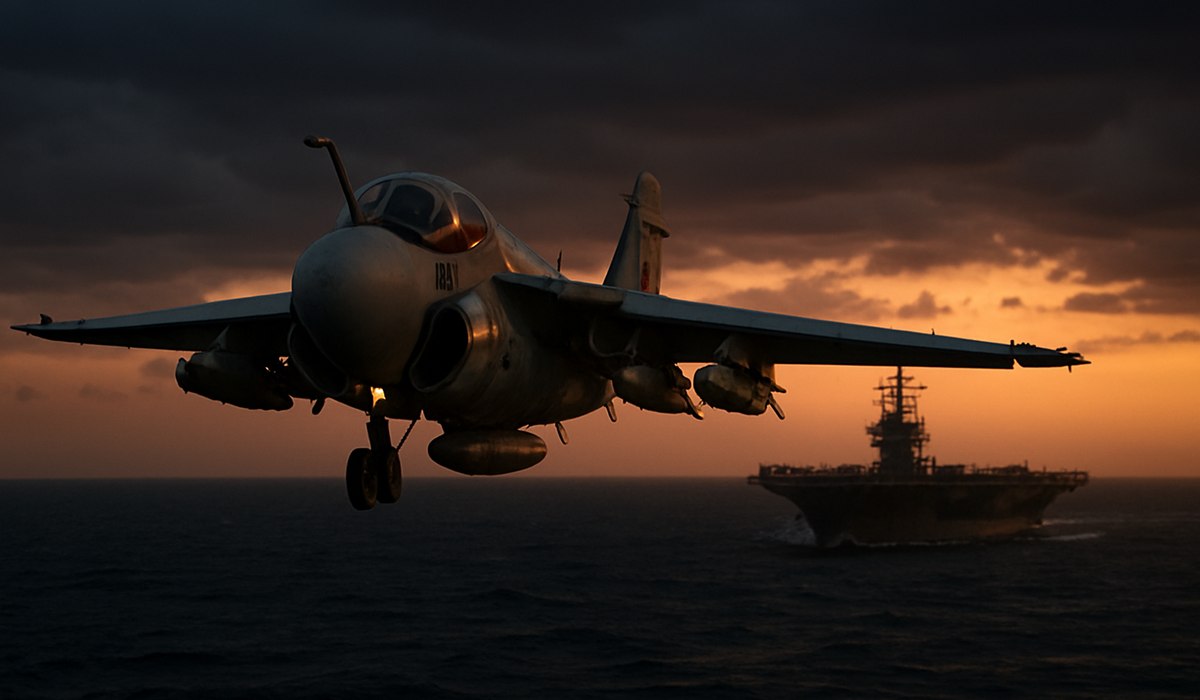
Image generated by AI
The A-6 Intruder: Cornerstone of Vietnam Navy Military Operations
The A-6 Intruder represented a quantum leap in naval aviation capability, even as the vietnam navy military community absorbed devastating losses throughout the Southeast Asian conflict. Despite eighty-four aircraft destroyed in combat, the U.S. Navy continued deploying this twin-engine strike bomber because no alternative platform matched its all-weather bombing precision. From 1963 through the mid-1990s, the Intruder became the backbone of carrier-based strike operations, fundamentally changing how naval aviators conducted warfare in darkness and poor visibility. The aircraft's integrated electronic display systems allowed pilots and bombardier-navigators to execute pinpoint strikes under conditions that grounded conventional bombers.
The A-6 Intruder: A Multi-War Naval Stalwart
The Grumman Aerospace-built Intruder earned legendary status within the vietnam navy military establishment through its extraordinary versatility and reliability. Navy and Marine Corps crews flew this aircraft across four decades and multiple theaters of operation, from Southeast Asia to the Persian Gulf. The Intruder's design philosophy emphasized capability over aesthetics—its unconventional appearance masked revolutionary technology. The aircraft featured a fifty-three-foot wingspan and twin Pratt and Whitney turbojets delivering six hundred forty-seven miles-per-hour cruise speeds. Its five hardpoints accommodated eighteen thousand pounds of ordnance, including conventional bombs, cluster munitions, and specialized anti-radiation missiles.
Unlike sleeker attack platforms, the Intruder prioritized crew survivability and mission success. The side-by-side seating arrangement for pilot and bombardier-navigator fostered exceptional crew coordination. This configuration proved invaluable during complex strike packages requiring real-time communication and decision-making. The aircraft could penetrate at low altitude to evade surface-to-air missile radar systems, then pop up to release ordnance with devastating accuracy. Naval aviators quickly recognized that the Intruder's strengths transcended traditional performance metrics—it delivered results when other aircraft returned to base unflyable.
All-Weather Strike Capability and Advanced Electronics
The vietnam navy military gained an unprecedented advantage when A-6 Intruders introduced integrated electronic display systems to carrier operations. These revolutionary avionics allowed bombardier-navigators to construct accurate targeting pictures in complete darkness or cloud cover. The system synthesized radar imagery, inertial navigation data, and terrain mapping information into a cohesive tactical display. This capability proved transformative for danger-close air support missions where accuracy separated successful strikes from tragic friendly-fire incidents.
The A-6E variant, the final production model, represented the apex of Intruder development. Enhanced sensors, upgraded processors, and improved displays extended operational effectiveness throughout the 1980s and early 1990s. The aircraft served as a "pathfinder," enabling follow-on bombers to attack targets after electronic warfare elements had suppressed enemy air defenses. This role demonstrated how superior vietnam navy military technology multiplied force effectiveness across entire strike packages. Pilots reported exceptional confidence in the Intruder's capabilities, knowing the aircraft would deliver ordnance to designated coordinates regardless of weather conditions. The Naval History and Heritage Command documented extensive operational records confirming the Intruder's unmatched precision in adverse conditions.
Accuracy in Danger-Close and Night Missions
Danger-close air support—bombing and strafing within one thousand meters of friendly forces—demanded extraordinary accuracy to prevent casualties among ground troops. The A-6 Intruder excelled in this demanding role, earning praise from Army and Marine Corps commanders dependent on aerial firepower. The bombardier-navigator's integrated display system allowed visual identification of target coordinates before weapons release, a significant advantage over gravity-delivered ordnance from higher altitudes. Night operations multiplied the Intruder's tactical value. Vietnamese and North Vietnamese forces often attacked under darkness, expecting air support availability to disappear with daylight. The vietnam navy military adapted doctrine to maintain continuous coverage, inserting Intruders into night strike rotations. Pilots returned repeatedly to targets identified by forward air controllers, delivering precise ordnance that devastated enemy positions.
The aircraft's capability to fly low and fast toward targets minimized exposure to anti-aircraft fire during approach phases. Upon reaching bomb-run coordinates, crews executed programmed maneuvers that exploited terrain masking and radar dead zones. Modern surface-to-air missiles required radar guidance systems that Intruder electronic warfare specialists disrupted using chaff and jamming pods. This layered defensive approach reduced aircraft loss rates compared to unprotected bombers. Over thirty-two years of operational service, the Intruder accumulated an impressive combat record despite intense enemy opposition.
Operational Specifications and Performance
| Parameter | Specification | Combat Significance |
|---|---|---|
| Wingspan | 53 feet | Enhanced lift for heavy weapon loads |
| Total Length | 55 feet | Compact carrier deck footprint |
| Maximum Takeoff Weight | 58,600 pounds | Accommodated full ordnance complement |
| Cruise Speed | 647 mph | Fast transit to distant targets |
| Combat Range | 878 nautical miles | Extended strike radius from carriers |
| Hardpoints | 5 stations | Flexible munitions configuration |
| Ordnance Capacity | 18,000 pounds | Sustained bombing effectiveness |
| Engines | 2 Pratt & Whitney J52-P-8B turbojets | Redundant power for reliability |
| Crew | Pilot + Bombardier-Navigator | Optimized crew coordination |
| Vietnam Losses | 84 aircraft | Balanced against irreplaceable capability |
The A-6E Intruder variants incorporated numerous upgrades that extended operational effectiveness throughout the vietnam navy military community. The initial A-6A entered service in February 1963 with Attack Squadron 42 (VA-42), establishing operational proficiency standards. The A-6B variant focused on surface-to-air missile suppression, carrying anti-radiation missiles that targeted enemy radar systems. The A-6C development during Southeast Asian operations added electro-optical sensors enabling accurate target identification and engagement of moving vehicles at night. These progressive enhancements demonstrated Grumman Aerospace's commitment to maintaining technological superiority across evolving threat environments.
Combat Losses and Defensive Challenges
Enemy forces recognized the Intruder's lethality and prioritized its destruction. Eighty-four A-6 airframes were lost during Vietnam operations, with forty-five attributed to hostile action. Ten aircraft fell to surface-to-air missiles, while fifty-six experienced destruction from various ground-fire sources. Sixteen losses resulted from non-combat incidents including mechanical failures and operational accidents. North Vietnamese Air Force MiG-17, MiG-19, and MiG-21 fighters occasionally intercepted Intruders during transit, though the aircraft's defensive armament and tactical maneuvers provided adequate protection for most encounters.
The vietnam navy military accepted these losses as acceptable cost-exchange for capabilities no alternative platform provided. Aircraft attrition rates, while significant, remained lower than unprotected bombers operating in similar threat environments. The Intruder's redundant systems and structural strength increased crew survivability compared to lighter aircraft. Even when damaged, many Intruders returned to carrier decks, enabling repairs and subsequent combat redeployment. This operational resilience justified continued investment in the platform despite escalating losses as enemy air defenses improved throughout the conflict.
Post-Vietnam Operational Success
The A-6 Intruder's utility extended far beyond Southeast Asia, demonstrating sustained relevance across successive military interventions. During 1983 Lebanon operations, Syrian defenders shot down a single Intruder, capturing the bombardier-navigator while the pilot was killed. The aircraft maintained an unblemished record during Operation Eldorado Canyon
Disclaimer
This article is for informational and educational purposes only. It does not constitute legal, financial, or professional advice. While we strive to provide accurate and up-to-date information, travel policies, regulations, and conditions change rapidly. Always verify information with official sources before making travel decisions. Nomad Lawyer makes no representations about the accuracy, reliability, completeness, or suitability of the information provided. Readers should consult qualified professionals for advice specific to their circumstances. The views expressed in this article are those of the author and do not necessarily reflect the views of Nomad Lawyer.
Preeti Gunjan
Contributor & Community Manager
A passionate traveller and community builder. Preeti helps grow the Nomad Lawyer community, fostering engagement and bringing the reader experience to life.
Learn more about our team →