
Five US Military Aircraft Still Play Critical Roles in 2026 Defense
Five US military aircraft still play essential roles in national defense strategy through 2026. Legacy platforms and modern fighters balance Cold War capabilities with contemporary combat needs amid evolving threats.

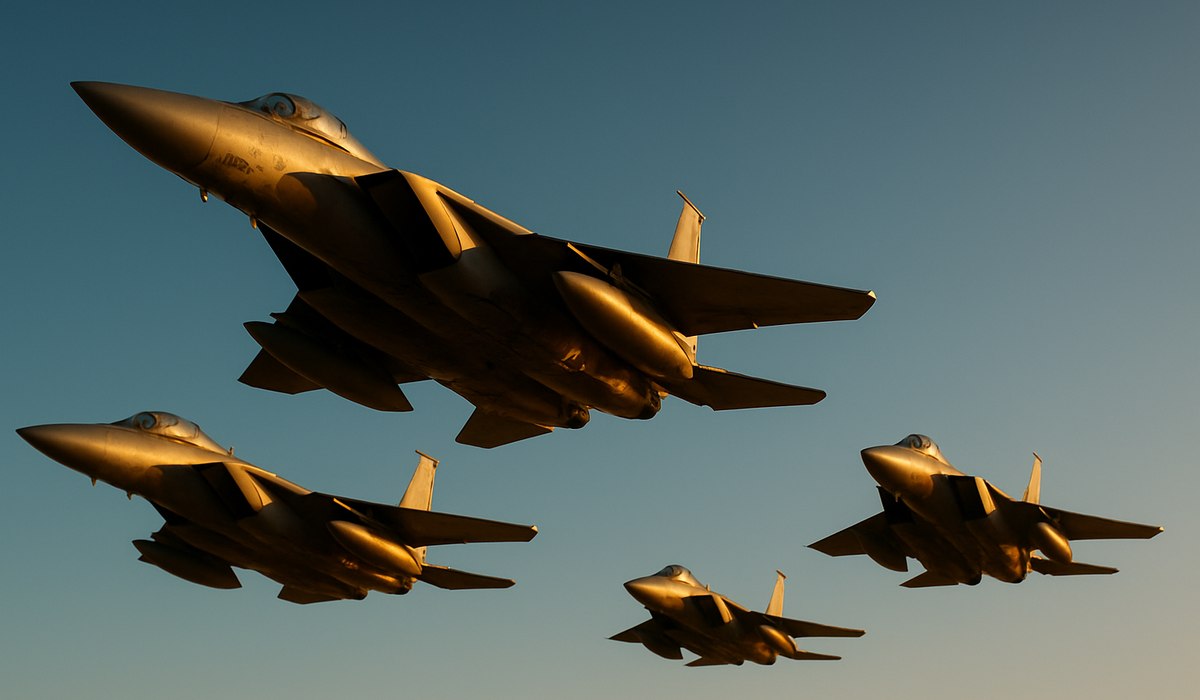
Image generated by AI
US Military Platforms Continue Shaping 2026 Defense Doctrine
Five aircraft continue shaping US defense doctrine in 2026, balancing Cold War-era platforms with modern combat capabilities as technological advancement accelerates. The United States maintains an unparalleled fleet of military aircraft that project power globally while simultaneously defending American airspace and supporting allied nations across Europe, Asia, and beyond. These platforms—ranging from aging workhorses to cutting-edge fighters—remain indispensable despite modernization efforts and emerging drone technology. Understanding why aircraft still play such critical roles in contemporary defense strategy reveals the complexity of national security planning and the substantial investment required to maintain air superiority across multiple operational domains.
The F-16: Aging Workhorse Remains Indispensable
The General Dynamics F-16 Fighting Falcon continues to anchor US air defense capabilities, even as the platform approaches its fifth decade of service. First deployed in 1979, the F-16 aircraft still play vital roles in homeland defense, training new pilots, and supporting forward-deployed operations. The US Air Force maintains over 1,000 F-16s across active duty, National Guard, and reserve components. Continuous modernization efforts extend the F-16's relevance through avionics upgrades, sensor improvements, and enhanced electronic warfare capabilities. Maintenance costs remain reasonable compared to fifth-generation alternatives, making the F-16 economically sustainable for sustained operations. Recent upgrades include improved cockpit displays and network-centric warfare integration, allowing aging airframes to operate alongside advanced platforms.
Legacy Aircraft Modernization Challenges
Extending the service life of older military platforms presents complex technical and budgetary challenges. The F-15 Eagle and F-15E Strike Eagle, operational since 1976 and 1986 respectively, require substantial investment to remain competitive against evolving threats. Engineers face decisions about structural integrity limits, component obsolescence, and the cost-benefit analysis of refurbishment versus replacement. Aircraft still play indispensable roles in defense strategy, yet maintaining 1970s-era platforms demands sophisticated sustainment programs. The US military invests billions annually in depot-level maintenance, avionics modernization, and structural repair programs. These initiatives ensure legacy aircraft can operate safely and effectively, though newer platforms like the F-35 Lightning II eventually will assume greater operational responsibility. Transitioning force structure requires careful planning to maintain continuous air superiority during the replacement process.
Strategic Deployment and Homeland Defense
American military aircraft operate across two distinct but complementary mission sets: forward defense of allied territories and direct homeland protection. The US traditionally positions fighter squadrons in Europe, South Korea, and Japan to deter aggression and reassure partners. Simultaneously, North American Aerospace Defense Command maintains aircraft on continuous alert to detect and intercept unauthorized aircraft approaching American airspace. The F-22 Raptor and F-35 Lightning II represent the technological apex of this dual-mission approach, offering stealth, sensor fusion, and advanced weapons integration. However, older aircraft still play crucial roles in training, backup defense, and sustained operations that don't require fifth-generation capabilities. Air National Guard units across the continental United States provide rapid-response capabilities, maintaining readiness with a combination of modernized legacy systems and newer platforms.
The Future of US Air Superiority
Defense planners face a strategic inflection point as aircraft fleet composition shifts toward fifth and sixth-generation platforms. The Next Generation Air Dominance program explores future fighter concepts, while current platforms receive continuous incremental improvements. Aircraft will still play central roles in defense strategy throughout the 2030s, but force structure evolution demands difficult modernization decisions. Unmanned systems increasingly supplement manned aviation, yet pilot expertise and real-time decision-making continue to provide irreplaceable value in complex operational environments. Budget constraints force military leadership to maximize existing platform capabilities rather than wholesale fleet replacement. Advanced pilot training programs, sensor network improvements, and weapons system integration extend the operational utility of established aircraft designs well beyond original service projections.
Key Data Points: Military Aircraft in US Defense
| Aircraft Platform | In Service Since | Active Inventory | Primary Role | Status 2026 |
|---|---|---|---|---|
| F-16 Fighting Falcon | 1979 | 1,100+ | Multi-role fighter, homeland defense | Modernized, extended service |
| F-15 Eagle/Strike Eagle | 1976/1986 | 300+ | Air superiority, strike operations | Substantial upgrades ongoing |
| F-22 Raptor | 2005 | 185 | Air dominance, stealth operations | Peak operational capability |
| F-35 Lightning II | 2015 | 500+ | Multi-role fighter, sensor network | Expanding global deployment |
| B-52 Stratofortress | 1955 | 70+ | Strategic bombardment, homeland patrol | Scheduled through 2050s |
What This Means for Travelers
Commercial aviation operates within airspace managed by the Federal Aviation Administration, working collaboratively with military air traffic control centers. Understanding military aviation's role in national defense explains certain airspace restrictions, flight delays, and emergency procedures travelers may experience.
Actionable Takeaways for Air Travelers:
- Monitor FlightAware for military training activity affecting commercial routes, particularly near major air bases
- Check FAA notices regarding temporary flight restrictions associated with military exercises
- Understand that military aircraft operations may cause departure delays or route modifications on commercial flights
- Review US DOT consumer protections if military-related delays affect your itinerary
- Allow extra travel time when flying near installations hosting significant military aviation operations
- Maintain flexible booking options when traveling in regions experiencing increased defense readiness exercises
Frequently Asked Questions
Why do older military aircraft remain in service instead of being retired?
Retiring operational aircraft requires enormous capital expenditure for replacement platforms. Older designs like the F-16, despite age, perform effectively after modernization and cost less annually to operate than fifth-generation alternatives. The US military strategically extends service life while gradually transitioning to newer platforms, balancing capability needs against budgetary constraints.
How does military aviation affect commercial flights?
Military training operations, exercises, and aerial refueling missions create temporary flight restrictions and airspace coordination requirements. The FAA publishes notices of these activities, which may result in commercial flight delays, reroutes, or departure holds. Forward planning by airlines minimizes passenger impact, though occasional disruptions remain unavoidable.
Which aircraft will replace aging F-16s and F-15s?
The F-35 Lightning II gradually assumes missions from legacy platforms as production increases and pilot training expands. Additionally, the Next Generation Air Dominance program explores sixth-generation concepts for deployment in the 2030s. This transition occurs over decades rather than years due to training, sustainment, and budgetary constraints.
Do military aircraft training flights affect air quality near airports?
Military jets consume significant fuel and produce emissions similar to commercial aviation. High-frequency training operations near populated areas may contribute to localized air quality impacts. However, dedicated military ranges and restricted airspace minimize exposure to civilian communities in most scenarios.
Related Travel Guides
- Suffolk Wildfire Triggers Major Incident Near Sizewell Nuclear Power Station Prompting Holiday Evacuations 2026
- Taiwan High Speed Rail Upgrades Fleet with Japan-Developed N700ST Trains
- United Kingdom Travel Warning Escalates as Historic June Heat, UKHSA Red Health Alerts, NHS Critical Incidents in Portsmouth, Norwich and Southampton, and Rail Disruption Challenge Summer Tourism
Disclaimer
This article synthesizes publicly available information from the US Department of Defense, Federal Aviation Administration, and defense industry publications regarding military aircraft operations and national defense strategy. Aircraft inventories, deployment schedules, and modernization timelines reflect conditions as of April 2026. Military capabilities and defense doctrine evolve continuously;
Disclaimer
This article is for informational and educational purposes only. It does not constitute legal, financial, or professional advice. While we strive to provide accurate and up-to-date information, travel policies, regulations, and conditions change rapidly. Always verify information with official sources before making travel decisions. Nomad Lawyer makes no representations about the accuracy, reliability, completeness, or suitability of the information provided. Readers should consult qualified professionals for advice specific to their circumstances. The views expressed in this article are those of the author and do not necessarily reflect the views of Nomad Lawyer.
Raushan Kumar
Founder & Lead Developer
Full-stack developer with 11+ years of experience and a passionate traveller. Raushan built Nomad Lawyer from the ground up with a vision to create the best travel and law experience on the web.
Learn more about our team →