
Vietnam Forges Landmark 5-Year Mastercard Alliance for Cashless Tourism Amid $200 Oil Shock and Strait of Hormuz Blockade: How US-Iran Conflict Volatility Accelerates Digital Travel Corridors
As the $200 oil crisis and Strait of Hormuz blockade disrupt global aviation, Vietnam partners with Mastercard (2026-2030) to launch a cashless tourism revolution following record VND 1 quadrillion revenues.

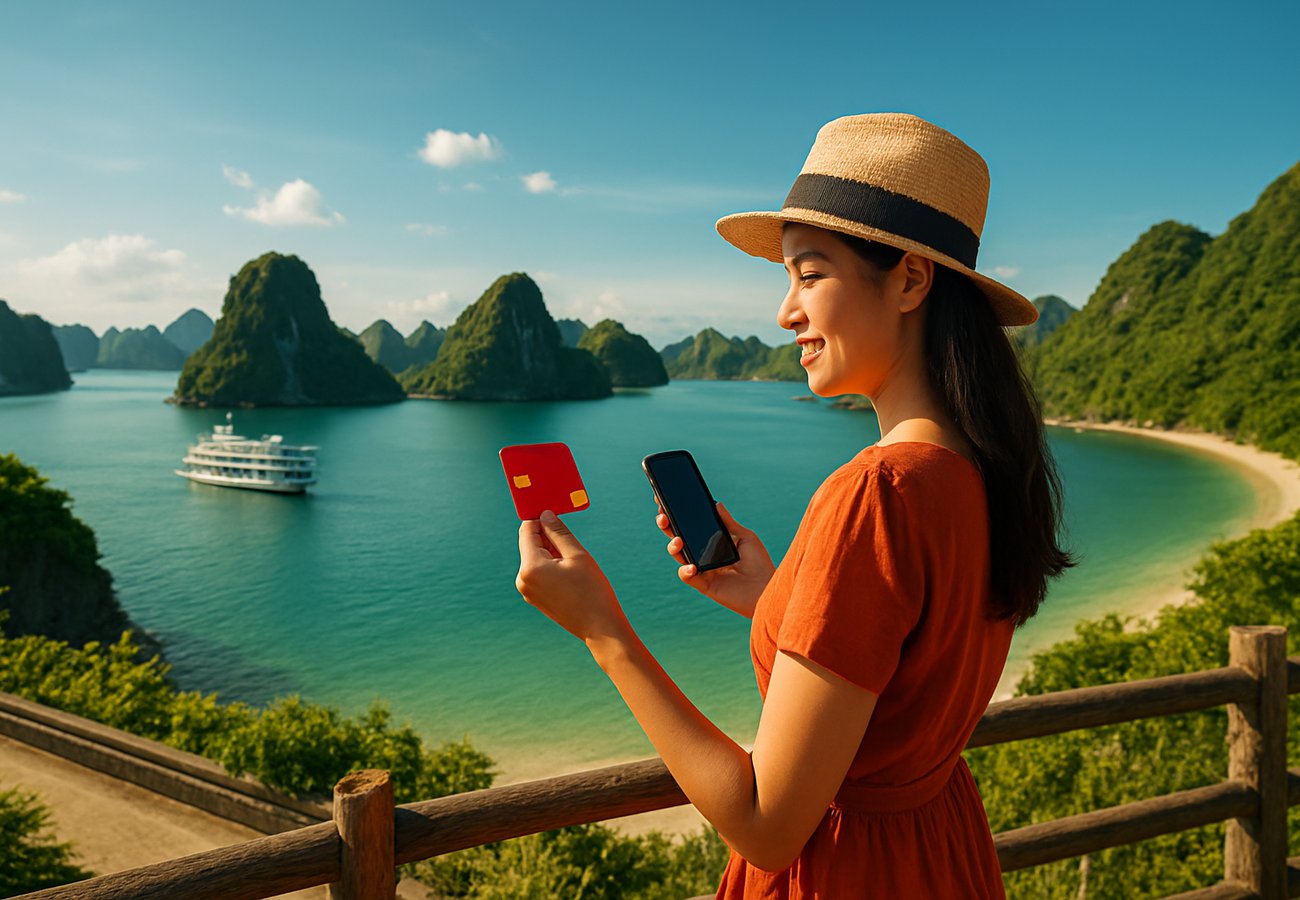
Image generated by AI
The Southeast Asian digital economy is executing a major strategic reset. Confronted by an unprecedented $200 per barrel oil shock and the military blockade of the Strait of Hormuz, Vietnam has launched a historic digital transformation, finalizing a powerful five-year strategic partnership with Mastercard (2026-2030) to build a fully cashless travel ecosystem.
Announced on Friday by the Vietnam National Authority of Tourism (VNAT), this groundbreaking alliance aims to deploy advanced contactless payments, mobile wallets, digital ticketing, and multi-language travel portals across the country's tourism networks. As the escalating US-Iran conflict drives international aviation costs to historic heights and limits global flight capacities, Vietnam is leveraging its massive VND 1 quadrillion (approx. US$38 billion) in tourism revenue to establish itself as a highly secure, frictionless, and low-risk safe haven for global travelers. While major Gulf states like Saudi Arabia, the United Arab Emirates (UAE), and Qatar work to secure energy corridors in the Middle East, Hanoi is ensuring its tourism economy remains fully protected through advanced financial technology.
Expanded Overview: Vietnam’s Cashless Counter-Offensive Amidst Severe Fuel Squeezes
The ongoing global energy crisis has forced a complete reorganization of international trade and travel logistics. The naval blockade of the Strait of Hormuz—the world’s most critical maritime oil corridor, handling roughly 20% of global petroleum transit—has taken millions of barrels of crude off the market, sending fuel prices soaring.
For the international aviation and tourism sectors, this fuel crisis has led to significantly higher long-haul ticket prices and reduced flight capacities. Despite these severe headwinds, Vietnam achieved a record-breaking performance in 2025, welcoming 21 million international visitors (a 20% increase compared to 2024) and servicing a total of 137 million travelers. With a growth rate that outpaces both the global tourism average of 5% and the Asia-Pacific regional average of 8%, the Vietnamese government is utilizing its partnerships to build a highly efficient, tech-driven, and resilient tourism sector.
Geopolitical Context: Persian Gulf Volatility and the Shift to Digital Safe Havens
The military standoff between the United States and Iran in the Persian Gulf has disrupted major trade corridors and airspace, keeping global energy markets highly volatile.
This conflict has directly impacted major Middle Eastern oil producers—including Saudi Arabia, the UAE, Qatar, Kuwait, Oman, and Bahrain—who are working hard to protect their energy supply lines and secure alternative shipping channels. In this climate of high volatility, Vietnam has positioned itself as a secure, culturally rich, and highly welcoming alternative. By investing in regional transport infrastructure, community-based hospitality, and state-of-the-art cashless systems, the country is offering a safe travel destination that bypasses high-risk geopolitical areas, providing a model of sustainable travel resilience.
Global Energy Impact: Squeezed Airlines and the Pivot to Seamless Travel
With oil prices firmly established at $200 per barrel, airlines are under intense pressure to optimize their operations. Jet fuel costs have forced carriers to raise airfares, making long-distance flights a premium purchase and prompting travelers to choose destinations where they can get the most value for their money.
| Key Tourism Performance Metric | 2024 Base | 2025 Record Actuals | 2026-2030 Strategic Target |
|---|---|---|---|
| International Visitors | 17.5 Million | 21 Million (+20% Growth) | Continued expansion via cashless corridors. |
| Total Travelers Serviced | 114 Million | 137 Million | Seamless digital ticketing integration. |
| Annual Tourism Revenue | VND 800 Trillion | VND 1 Quadrillion ($38 Billion) | Transforming tourism into an economic powerhouse. |
| Comparative Sector Growth | APAC Average: 8% | Vietnam: 20% (Global Leader) | Defying global economic headwinds. |
By eliminating payment friction, implementing real-time currency conversions, and promoting contactless payments, Vietnam is successfully capturing the premium segment of the global travel market, ensuring stable economic growth despite high international fuel prices.
Shipping & Trade Impact: Cape of Good Hope Detours and Localized Sourcing
The ongoing Strait of Hormuz blockade has forced cargo fleets to bypass the Suez Canal and route around Africa’s Cape of Good Hope, sending maritime insurance rates soaring by over 500% and delaying global shipments of luxury resort supplies.
To bypass these supply chain bottlenecks, hospitality operators in Vietnam are focusing on localized sourcing. Hotels, luxury resorts, and restaurants in Da Nang, Nha Trang, and Phu Quoc are sourcing food, building materials, and organic spa products directly from Vietnamese agricultural cooperatives, local farms, and regional workshops. This focus on localized logistics has protected the country's hospitality industry from import inflation, keeping luxury travel packages highly competitive while ensuring that tourism revenues remain directly within local communities.
Regional Impact: Strategic Trade and Digital Innovation in Southeast Asia
The five-year partnership between VNAT and Mastercard is designed to make Vietnam's tourism sector highly resilient and competitive through several key initiatives:
- Accelerated Cashless Payments: Expanding the use of contactless cards, QR codes, and mobile wallets across hotels, restaurants, transportation systems, and local craft markets to ensure a secure, frictionless visitor experience.
- Multi-Channel International Marketing: Launching joint, data-driven promotional campaigns using Mastercard’s global marketing network to showcase Vietnam's diverse cultural and natural attractions to high-value travelers.
- Advanced Data Analytics: Utilizing Mastercard's advanced payment data analytics to track tourist spending patterns, helping VNAT and local businesses design highly personalized travel products and experiences.
- Knowledge-Sharing & Training: Organizing workshops, seminars, and skills-development programs for local tourism professionals, hotels, and travel operators to help them succeed in the digital economy.
Restoring Order: How Digital Transformation Benefits Local Communities
By partnering with Mastercard, the Vietnamese government is actively supporting local travel businesses and rural communities:
- Supporting Local Crafts: Helping small business owners, traditional artisans, and homestay hosts accept digital payments, giving them direct access to international tourist spending.
- Enhancing Tourism Management: Providing local tourism authorities with real-time spending and visitor flow data to prevent overcrowding and promote sustainable travel in culturally sensitive areas.
- Upgrading Infrastructure: Supporting the development of smart-city infrastructure, high-speed internet networks, and automated digital tourism kiosks in popular destinations like Ha Long Bay, Hoi An, and Sapa.
Industry Analysis: A Masterclass in Technological Resilience
Southeast Asian travel and economic experts emphasize that Vietnam’s current digital partnership is a masterclass in technological resilience during a global energy crisis.
By actively prioritizing cashless payments, global marketing collaborations, and localized supply chains, Vietnam is successfully transforming its tourism sector into a high-tech, resilient model that thrives independently of traditional long-haul travel networks, ensuring stable economic growth and high-quality visitor experiences.
What Happens Next: Future Scenarios and Travel Outlook
- Prolonged Energy Conflict: If Persian Gulf tensions remain high and oil prices stay at $200/bbl, the demand for highly efficient, secure, and digital-friendly destinations will continue to rise. Vietnam's focus on seamless, cashless travel is expected to see sustained growth well into 2027.
- Diplomatic De-escalation: If international diplomatic efforts successfully resolve the US-Iran conflict and stabilize global fuel prices, the state-of-the-art payment systems, advanced digital services, and international partnerships developed during this crisis will continue to provide Vietnam with a massive competitive advantage.
Conclusion
Vietnam’s bold digital partnership with Mastercard represents a major milestone for the Southeast Asian travel industry. As the Strait of Hormuz blockade and $200 oil prices continue to disrupt traditional travel markets, the country has shown that investing in high-tech, sustainable, and cashless travel is the ultimate defense against global economic volatility. By investing in local communities, implementing advanced payment technologies, and partnering with global financial leaders to promote responsible travel, Vietnam is successfully securing its position as a leading, resilient destination for global travelers seeking seamless and authentic travel experiences.
Key Takeaways
- Five-Year Alliance: Vietnam’s National Authority of Tourism (VNAT) finalized a strategic partnership with Mastercard for the 2026-2030 period.
- Cashless Revolution: The collaboration focuses on deploying advanced contactless payments, mobile wallets, and digital ticketing across Vietnam’s travel networks.
- Record Revenues: Vietnam’s tourism sector generated a record VND 1 quadrillion (approx. US$38 billion) in revenue in 2025.
- Eurasian Demand: Vietnam welcomed 21 million international visitors in 2025, outperforming the Asia-Pacific regional tourism growth average.
- Resilience Strategy: The digital integration helps insulate local hospitality and travel businesses from rising fuel costs and global supply chain disruptions.
FAQ: Vietnam Travel & Geopolitical Volatility 2026
Is it safe to travel to Vietnam right now? Yes, Vietnam is entirely safe and peaceful. The country offers a highly secure, welcoming, and technologically advanced environment, making it an excellent destination for international eco-tourists and family travelers.
Can I use cashless payments throughout Vietnam? Yes, thanks to VNAT's new partnership with Mastercard, contactless cards, QR codes, and mobile wallets are widely accepted at hotels, restaurants, transport networks, and local shops across popular tourist hubs.
What is the benefit of the VNAT-Mastercard partnership? The partnership accelerates digital transformation, introduces state-of-the-art payment security, tracks visitor spending trends to improve services, and trains local tourism professionals in modern digital tools.
Related Travel Guides
Disclaimer
This article is for informational and educational purposes only. It does not constitute legal, financial, or professional advice. While we strive to provide accurate and up-to-date information, travel policies, regulations, and conditions change rapidly. Always verify information with official sources before making travel decisions. Nomad Lawyer makes no representations about the accuracy, reliability, completeness, or suitability of the information provided. Readers should consult qualified professionals for advice specific to their circumstances. The views expressed in this article are those of the author and do not necessarily reflect the views of Nomad Lawyer.
Kunal K Choudhary
Co-Founder & Contributor
A passionate traveller and tech enthusiast. Kunal contributes to the vision and growth of Nomad Lawyer, bringing fresh perspectives and driving the community forward.
Learn more about our team →