
Thailand Launches Massive Crackdown on Unruly Tourists Amid $200 Oil Shock and Strait of Hormuz Blockade: How US-Iran Conflict Volatility Forces Shift to Culturally Sensitive High-Value Travel
As the $200 oil crisis and Strait of Hormuz blockade impact global travel, Thailand introduces a strict cultural and legal crackdown on misbehaving foreign tourists to protect its tourism reputation.

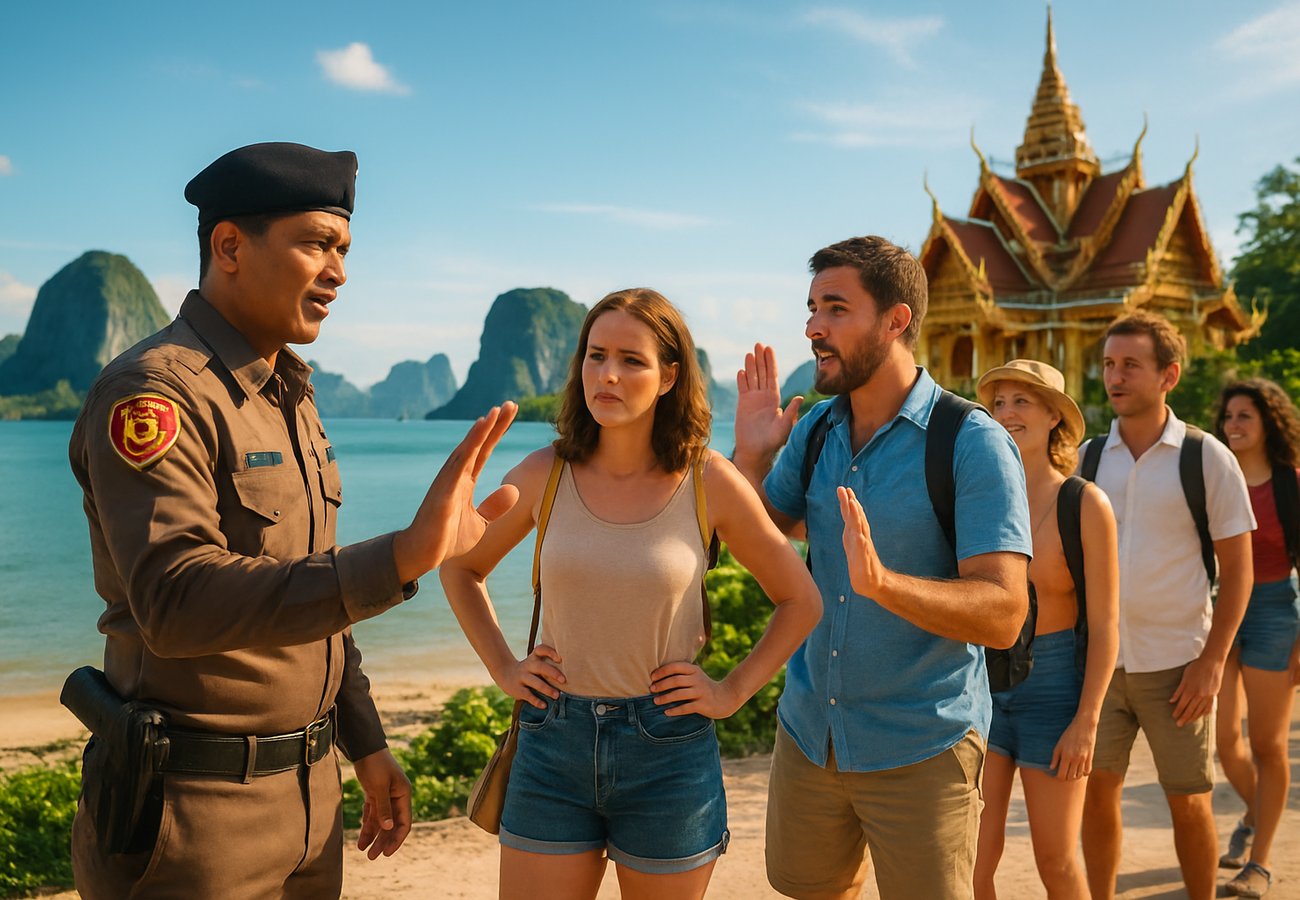
Image generated by AI
The Southeast Asian travel sector is executing a major strategic reset. Confronted by an unprecedented $200 per barrel oil shock and the military blockade of the Strait of Hormuz, Thailand’s government has launched a comprehensive legal and cultural crackdown on misbehaving foreign tourists to protect its national reputation.
Instructed by the Ministry of Interior, provincial authorities across major tourist hubs—including Bangkok, Pattaya, and Phuket—are strictly enforcing public decency laws, introducing heavy fines, deportation, and blacklisting for unruly visitors. As the escalating US-Iran conflict drives aviation fuel costs to historic heights and limits global flight capacities, Thailand is actively cleaning up its tourism sector, moving away from low-value mass tourism to focus on attracting respectful, high-value travelers. While major Gulf states like Saudi Arabia, the United Arab Emirates (UAE), and Qatar work to secure energy corridors in the Middle East, Bangkok is ensuring its cultural integrity remains fully protected during this period of global economic volatility.
Expanded Overview: Thailand Protects Its Cultural Heritage Amidst Global Fuel Squeezes
The ongoing global energy crisis has forced a complete reorganization of international travel and logistics. The naval blockade of the Strait of Hormuz—the world’s most critical maritime oil corridor, handling roughly 20% of global petroleum transit—has taken millions of barrels of crude off the market, sending fuel prices soaring.
For the international aviation and tourism sectors, this fuel crisis has led to significantly higher long-haul ticket prices and reduced flight capacities. Despite these severe headwinds, Thailand welcomed a record-breaking 21 million international tourists in 2025. However, this massive influx of visitors has also led to an alarming increase in public misbehavior and disrespect for local customs. To address these challenges and ensure the long-term sustainability of its tourism industry, the Thai government is implementing strict behavioral guidelines, ensuring that tourism continues to contribute positively to the economy without compromising the nation’s core cultural values.
Geopolitical Context: Persian Gulf Volatility and the Shift to High-Value Destinations
The military standoff between the United States and Iran in the Persian Gulf has disrupted major trade corridors and airspace, keeping global energy markets highly volatile.
This conflict has directly impacted major Middle Eastern oil producers—including Saudi Arabia, the UAE, Qatar, Kuwait, Oman, and Bahrain—who are working hard to protect their energy supply lines and secure alternative shipping channels. In this climate of high volatility, Thailand has positioned itself as a secure, culturally rich, and highly welcoming alternative. By investing in regional transport infrastructure, community-based hospitality, and strict law enforcement, the country is offering a safe travel destination that bypasses high-risk geopolitical areas, providing a model of sustainable travel resilience.
Global Energy Impact: Squeezed Airlines and the Pivot to Mindful Eco-Tourism
With oil prices firmly established at $200 per barrel, airlines are under intense pressure to optimize their operations. Jet fuel costs have forced carriers to raise airfares, making long-distance flights a premium purchase and prompting travelers to choose destinations where they can get the most value for their money.
| Key Tourist Hub (Thailand) | 2025 Visitor Influx | Primary Enforcement Focus |
|---|---|---|
| Bangkok | High-volume urban arrivals | Respect at sacred temples, public decency, and transport order. |
| Phuket | Premium beachfront tourism | Strict beach regulations, public conduct, and water safety. |
| Pattaya | High-density entertainment zones | Public decency, noise control, and curbing disruptive actions. |
| Chiang Mai | Cultural and spiritual travel | Etiquette at ancient monasteries, eco-tourism, and forest protection. |
By enforcing strict behavioral rules and promoting mindful, respectful travel, Thailand is successfully capturing the premium segment of the global travel market, ensuring stable economic growth despite high international fuel prices.
Shipping & Trade Impact: Cape of Good Hope Detours and Localized Sourcing
The ongoing Strait of Hormuz blockade has forced cargo fleets to bypass the Suez Canal and route around Africa’s Cape of Good Hope, sending maritime insurance rates soaring by over 500% and delaying global shipments of luxury resort supplies.
To bypass these supply chain bottlenecks, hospitality operators in Thailand are focusing on localized sourcing. Hotels, luxury resorts, and restaurants in Phuket and Bangkok are sourcing food, building materials, and organic spa products directly from Thai agricultural cooperatives, local farms, and regional workshops. This focus on localized logistics has protected the country's hospitality industry from import inflation, keeping luxury travel packages highly competitive while ensuring that tourism revenues remain directly within local communities.
Regional Impact: Strategic Trade and Cultural Integrity in Southeast Asia
The comprehensive crackdown on unruly tourist behavior has received overwhelming support from local communities, business owners, and regional tourism boards:
- Strict Legal Enforcement: Tourists caught committing acts of public indecency, disrespecting Buddhist sacred sites, or engaging in public nudity will face heavy fines, deportation, or immediate escort back at entry points like international airports and seaports.
- Broad Educational Campaigns: In partnership with international airlines, travel agencies, and online booking platforms, the government has launched multi-language educational campaigns to inform visitors about proper etiquette and Thai customs before they arrive.
- Support for Local Businesses: Local residents and business owners in Bangkok, Pattaya, and Phuket emphasize that maintaining a clean, respectful, and orderly environment is essential for preserving the local economy and social harmony.
Restoring Order: Core Elements of Thailand’s Tourist Behavior Directives
Under the new directives issued by the Ministry of Interior, Thailand has put in place several legal and communication measures to deter disruptive behavior:
- Visible Cultural Signage: Ramping up multi-language signage and information booths at popular tourist sites, detailing appropriate dress codes and behavioral expectations, especially in sacred areas.
- Immigration Monitoring: Empowering immigration and port authorities to actively monitor visitor conduct and deny entry or re-entry to individuals with a history of disruptive behavior.
- Provincial Task Forces: Establishing dedicated task forces in major cities to assist local police in enforcing public decency laws and providing guidance to international tourists.
- Promoting Responsible Travel: Encouraging hotels and tour operators to implement their own initiatives to reinforce the message of cultural respect, ensuring the safety and comfort of both visitors and locals alike.
Industry Analysis: A Strategic Reset for Sustainable Growth
Southeast Asian travel and economic experts emphasize that Thailand’s current crackdown is a strategic reset designed to ensure long-term tourism sustainability during a global energy crisis.
By actively prioritizing cultural respect, strict law enforcement, and localized supply chains, Thailand is successfully transforming its tourism sector into a high-quality, resilient model that thrives independently of low-value mass tourism, ensuring stable economic growth and high-quality visitor experiences.
What Happens Next: Future Scenarios and Travel Outlook
- Prolonged Energy Conflict: If Persian Gulf tensions remain high and oil prices stay at $200/bbl, the travel industry will continue to favor high-value, secure, and respectful travel options. Thailand's focus on cultural preservation and eco-conscious travel is expected to see sustained growth well into 2027.
- Diplomatic De-escalation: If international diplomatic efforts successfully resolve the US-Iran conflict and stabilize global fuel prices, the state-of-the-art infrastructure, upgraded services, and cultural respect campaigns developed during this crisis will continue to provide Thailand with a massive competitive advantage.
Conclusion
Thailand’s bold crackdown on unruly tourists represents a major milestone for the Southeast Asian travel industry. As the Strait of Hormuz blockade and $200 oil prices continue to disrupt traditional travel markets, the country has shown that protecting its cultural integrity and promoting sustainable travel is the ultimate defense against global economic volatility. By investing in local communities, enforcing strict behavioral guidelines, and partnering with global airlines and platforms to educate visitors, Thailand is successfully securing its position as a leading, resilient destination for global travelers seeking authentic and respectful travel experiences.
Key Takeaways
- Major Policy Shift: The Thai government launched a comprehensive crackdown on foreign tourists engaging in disruptive and inappropriate behavior.
- Strict Penalties: Unruly tourists face severe legal consequences, including heavy fines, deportation, blacklisting, and denial of re-entry at immigration points.
- Local Support: The crackdown has received overwhelming support from local residents and business owners in Bangkok, Pattaya, and Phuket.
- Educational Push: Thailand is implementing multi-language signage and partnering with international airlines and travel platforms to educate visitors.
- Resilient Growth: Despite the $200/bbl oil shock and Strait of Hormuz blockade, Thailand is focusing on high-value, respectful travelers after welcoming 21 million visitors in 2025.
FAQ: Thailand Travel & Geopolitical Volatility 2026
Is it safe to travel to Thailand right now? Yes, Thailand is entirely safe and peaceful. The government's new measures are designed to ensure a safe, respectful, and orderly environment for all international visitors and local residents.
What behavioral rules must I follow when visiting temples in Thailand? When visiting Buddhist temples, travelers must dress modestly (covering shoulders and knees), remove shoes before entering temple buildings, remain quiet, and refrain from taking disrespectful photos or touching sacred objects.
What are the consequences for violating public decency laws in Thailand? Tourists found guilty of public indecency, nudity, or causing disturbances at sacred sites face heavy fines, deportation, blacklisting, and a ban from entering the country.
Related Travel Guides
Disclaimer
This article is for informational and educational purposes only. It does not constitute legal, financial, or professional advice. While we strive to provide accurate and up-to-date information, travel policies, regulations, and conditions change rapidly. Always verify information with official sources before making travel decisions. Nomad Lawyer makes no representations about the accuracy, reliability, completeness, or suitability of the information provided. Readers should consult qualified professionals for advice specific to their circumstances. The views expressed in this article are those of the author and do not necessarily reflect the views of Nomad Lawyer.
Kunal K Choudhary
Co-Founder & Contributor
A passionate traveller and tech enthusiast. Kunal contributes to the vision and growth of Nomad Lawyer, bringing fresh perspectives and driving the community forward.
Learn more about our team →