
Aviation Updates: Vietnam Deploys Military to Accelerate $4.6B Long Thanh Mega-Airport to Eradicate Regional Travel Chaos
As catastrophic logistical bottlenecks severely paralyze rival Asian transit grids, Vietnam executes a massive military-backed construction blitz to launch Long Thanh International Airport by December 2026.

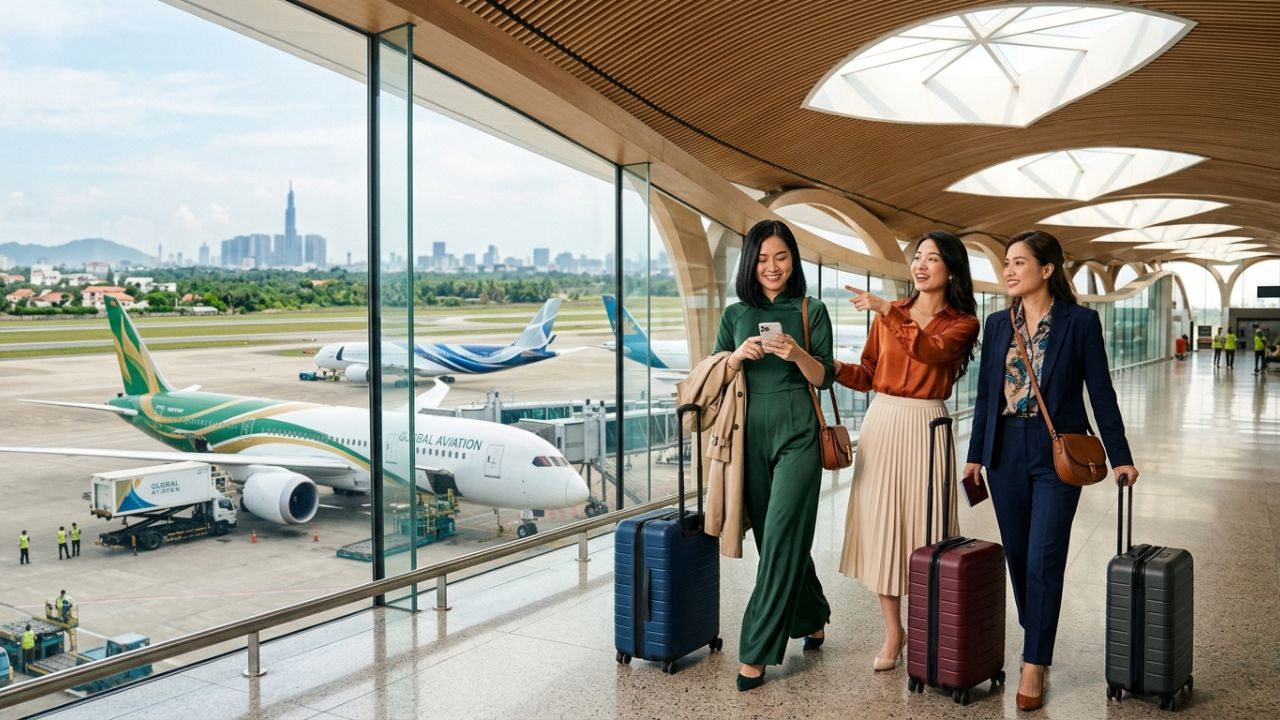
Image generated by AI
Aviation Updates: Vietnam Deploys Military to Accelerate $4.6B Long Thanh Mega-Airport to Eradicate Regional Travel Chaos
As extreme operational friction and suddenly compounding infrastructure bottlenecks continue to terrorize standard travel itineraries across Southeast Asia, Vietnam is executing a highly aggressive, military-backed construction campaign to seize dominance of the regional transit grid.
Image generated by AI
As high-impact airline news platforms rapidly issue continuous, grim aviation updates regarding the intense fragility of aging Asian transit networks, Vietnam is actively reshaping the entire future of Southeast Asian aviation. Amidst widespread rolling travel chaos, severe airport disruptions, and devastatingly frequent flight cancellations paralyzing massively overcrowded regional primary hubs, the Airports Corporation of Vietnam (ACV) has officially launched a highly aggressive 180-day construction acceleration campaign. Their absolute prime objective: to guarantee the massive Long Thanh International Airport (LTH) executes a flawless commercial debut precisely in December 2026. Recognizing the severe vulnerability of heavily congested gateways across Singapore, Thailand, Malaysia, and Indonesia, Vietnam has significantly intensified its infrastructure drive, deploying specialized military engineering units in late June 2026 to violently prevent labor shortages from delaying progress on the massive 4,000-metre Code-F runway and the distinctive lotus-themed passenger terminal.
Expanded Overview: The $4.66 Billion Strategic Masterplan
To fully comprehend the sheer scale of this strategic network victory, aviation analysts must closely examine how Vietnam is rapidly constructing a massive, highly efficient fortress to protect international passengers from the terrifying scheduling collapses currently plaguing legacy networks.
Located exactly 40 kilometres east of Ho Chi Minh City, the colossal Long Thanh International Airport occupies a massive 5,000 hectares, making it one of the absolute largest airport developments in the entire region. Operating under an aggressive timeline, the massive project has already surpassed 77% completion under its initial Phase 1 development, fueled by a staggering $4.66 billion investment. While this highly critical first phase will officially deliver an initial operational capacity of 25 million passengers annually, the ultimate long-term vision extends far beyond its opening phase. The highly engineered master plan is explicitly designed to aggressively accommodate 100 million passengers and 5 million tons of cargo each year, firmly placing Vietnam among the world’s most ambitious aviation infrastructure developers.
Once fully operational, Long Thanh has been rigidly scheduled to instantly absorb between 70% and 80% of all international flights currently operating through the severely congested, heavily disrupted Tan Son Nhat Airport (SGN). This massive redistribution of international traffic is expected to substantially, violently improve passenger processing efficiency, directly reducing agonising immigration waiting times from approximately 90 minutes down to around 45 minutes during absolute peak periods.
Section-Wise Breakdown: The Battle for Southeast Asia
Vietnam’s highly aggressive expansion directly challenges the established dominance of four massive Southeast Asian aviation powerhouses, sparking a brutal regional infrastructure war.
Singapore (Changi Airport): Singapore continues to demonstrate exceptional operational efficiency despite the massive regional threat. Changi currently serves approximately 65 million passengers each year and handles a massive 3.74 million departing seats every single month. Instead of solely competing on physical size, Singapore is relying heavily on its highly automated border processing systems and the continued global reputation of Singapore Airlines, while actively developing its Mega Terminal 5 expansion to add another 50 million passengers by the mid-2030s.
Thailand (Suvarnabhumi Airport): Thailand continues investing heavily across its 3,280-hectare primary hub, which currently operates approximately 3.60 million departing seats each month. However, rather than relying solely on Bangkok, Thailand is heavily executing a decentralized strategy, expanding secondary regional airports into international gateways to strategically distribute tourism traffic more evenly and reduce severe hub congestion. Thailand's long-term planning aims to increase its passenger capacity to approximately 150 million travelers annually.
Malaysia (Kuala Lumpur International Airport - KLIA): Malaysia possesses an enduring competitive advantage through the enormous physical scale of KLIA. Covering nearly 10,000 hectares (nearly 100 square kilometres), KLIA possesses the absolute largest airport land area anywhere in Southeast Asia. Operating approximately 3.64 million departing seats each month, KLIA maintains an ultimate structural capacity of 100 million passengers. Furthermore, its Kuala Lumpur–Changi route has officially become the fifth busiest international air corridor globally.
Indonesia (Soekarno-Hatta Airport): Indonesia remains the absolute undisputed heavyweight of Southeast Asia by overall seat capacity. More than 27% of the entire ASEAN aviation market is heavily controlled by Indonesian airlines and airports. Passenger traffic is expanding at a massive annual growth rate of approximately 7.4%, prompting Indonesian carriers to prepare for the introduction of at least 1,000 additional aircraft. Expansion plans at Jakarta’s Soekarno-Hatta Airport continue to heavily target more than 100 million passengers to support this staggering domestic and international demand.
Flight Details: Southeast Asia Mega-Hub Aviation Matrix
To ensure international travelers and commercial aviation analysts can accurately track the incredibly precise operational telemetry of this massive regional infrastructure war, the verified expansion data has been consolidated into the mandatory matrix below.
| Country / Airport | Current/Initial Passenger Capacity Target | Monthly Departing Seats | Key Infrastructure Metric |
|---|---|---|---|
| Vietnam (Long Thanh - LTH) | 25 Million (Phase 1) → 100 Million | N/A (Under Construction) | 5,000 Hectares, $4.66B Phase 1 |
| Singapore (Changi) | 65 Million → +50 Million (T5 mid-2030s) | ~3.74 Million | Automated Border Processing |
| Malaysia (KLIA) | 100 Million (Structural Capacity) | ~3.64 Million | ~10,000 Hectares (ASEAN's Largest) |
| Thailand (Suvarnabhumi) | 150 Million (Long-term Goal) | ~3.60 Million | 3,280 Hectares |
| Indonesia (Soekarno-Hatta) | 100+ Million | >27% ASEAN Market Share | 7.4% Annual Passenger Growth |
Passenger Impact: The Ground Transport Bottleneck
Despite unprecedented airside construction speed, highly critical ground transport infrastructure continues violently lagging behind, threatening to create severe localized travel chaos immediately upon opening.
While airside completion is heavily secured for December 2026, travellers are currently heavily expected to reach Long Thanh International Airport primarily by highway, with highly variable journey times estimated between 45 and 60 minutes. The absolute absence of a highly efficient, operational airport rail connection has officially emerged as the project’s most significant long-term vulnerability. Dedicated rail infrastructure remains severely under development and is explicitly not expected to become operational until well after 2026 or 2027. This severe delay has created massive concerns regarding long-term accessibility, particularly as international passenger volumes rapidly spike following the transfer of international operations from Tan Son Nhat.
Conclusion: A New Era of Aviation Dominance
Ultimately, Vietnam’s highly aggressive, military-supported progress at Long Thanh International Airport has undeniably intensified the regional contest for absolute aviation supremacy. As Southeast Asia officially enters a massive new era of airport development, competition is increasingly being violently shaped not only by terminal size and runway capacity but also by ground connectivity, automated operational efficiency, and long-term infrastructure planning. By fiercely targeting a December 2026 launch, Vietnam is actively positioning itself as one of the absolutely most ambitious emerging aviation powers on the planet, compelling neighboring mega-hubs in Singapore, Thailand, Malaysia, and Indonesia to drastically accelerate their own long-term survival strategies.
Key Takeaways
- Massive New Gateway: Long Thanh International Airport (LTH) will officially launch in December 2026, located exactly 40 kilometers east of Ho Chi Minh City.
- Military Acceleration: ACV has launched an aggressive 180-day acceleration campaign, deploying military engineering units to finish the 4,000-metre Code-F runway.
- Massive Investment: Phase 1 utilizes a $4.66 billion investment across 5,000 hectares to initially handle 25 million passengers, aiming for a final 100 million capacity.
- Traffic Shift: LTH will heavily absorb 70% to 80% of international flights from the congested Tan Son Nhat Airport (SGN), halving immigration wait times.
- Regional Competition: Vietnam is aggressively challenging established mega-hubs in Singapore (Changi), Malaysia (KLIA), Thailand (Suvarnabhumi), and Indonesia (Soekarno-Hatta).
FAQ: Long Thanh International Airport Expansion
When will the new Long Thanh International Airport open? Backed by an aggressive 180-day construction campaign, Long Thanh International Airport is rigidly scheduled for a commercial debut in December 2026.
Where is the new airport located? The massive 5,000-hectare aviation facility is located exactly 40 kilometres east of Ho Chi Minh City, Vietnam.
How will the new airport impact current flights into Vietnam? Once operational, Long Thanh is explicitly scheduled to absorb between 70% and 80% of all international flights currently operating through the heavily congested Tan Son Nhat Airport (SGN).
How will passengers travel to Long Thanh Airport? Initially, travelers will rely entirely on highway transport (estimated 45-60 minutes). A dedicated rail connection is currently delayed and will not be operational until after 2026 or 2027.
Related Travel Guides
- South Korea’s Jeju Air Implements Unpaid Leave as Soaring Jet Fuel Costs Threaten Low-Cost Travel and Summer Tourism in 2026
- US Ultra-Low-Cost Carrier Avelo Airlines Suspends All Tuesday Operations Through Summer 2026
- United Airlines Marks 35 Years of Continuous Heathrow Operations
Disclaimer: This article is strictly for informational and aviation planning purposes. The specific infrastructure telemetry (December 2026 launch, 5,000 hectares, 4,000-metre Code-F runway, 100 million long-term capacity) and competitor hub statistics are based on verified Airports Corporation of Vietnam (ACV) and regional aviation announcements available at the time of publication. Southeast Asian infrastructure timelines, specific airline relocation schedules, and ground transport connectivity are highly dynamic and subject to immediate modification by the operating authorities and government regulators. Passengers planning international travel to Ho Chi Minh City from late 2026 onwards should explicitly verify their exact arrival airports and ground transportation options prior to departure.
Disclaimer
This article is for informational and educational purposes only. It does not constitute legal, financial, or professional advice. While we strive to provide accurate and up-to-date information, travel policies, regulations, and conditions change rapidly. Always verify information with official sources before making travel decisions. Nomad Lawyer makes no representations about the accuracy, reliability, completeness, or suitability of the information provided. Readers should consult qualified professionals for advice specific to their circumstances. The views expressed in this article are those of the author and do not necessarily reflect the views of Nomad Lawyer.
Kunal K Choudhary
Co-Founder & Contributor
A passionate traveller and tech enthusiast. Kunal contributes to the vision and growth of Nomad Lawyer, bringing fresh perspectives and driving the community forward.
Learn more about our team →