
Venezuela's Amuay Refinery Forced Offline After Earthquake Blackout: What It Means for Regional Travel and Fuel Stability in 2026
A devastating earthquake-triggered power blackout shut down Venezuela's largest refinery, exposing critical vulnerabilities in energy infrastructure and raising serious concerns for regional travel connectivity and fuel availability across Latin America.

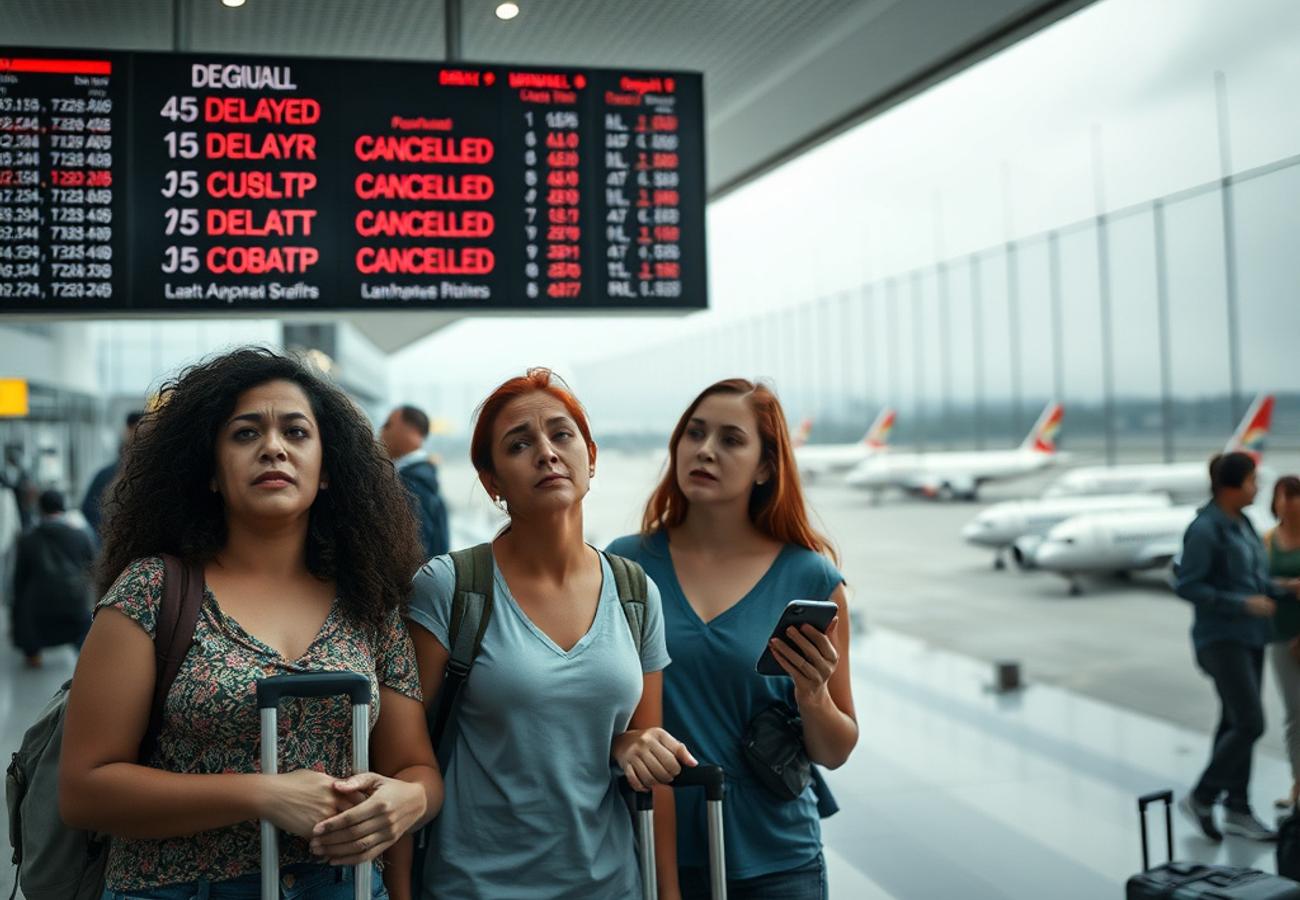
Image generated by AI
The Blackout That Stopped a Nation's Fuel Pipeline
On June 29, 2026, a powerful earthquake triggered a catastrophic power failure across Venezuela's energy infrastructure, forcing an immediate emergency shutdown of the country's largest refining facility: the Amuay refinery. The incident exposed vulnerabilities that extend far beyond Venezuela's borders—threatening fuel stability, airline operations, and travel connectivity across the entire Latin American region.
When the grid collapsed, crude distillation units at Amuay halted simultaneously. Workers at the 645,000-barrel-per-day facility confirmed that operations ground to a stop within minutes, forcing a precautionary suspension to prevent equipment damage and safety hazards. The real story wasn't just the shutdown—it was what the shutdown revealed about a system barely holding together.
Reddit: "If major refineries start failing regularly due to infrastructure issues, we're looking at serious fuel shortages that could ground regional flights. This is bigger than just Venezuela." — r/travel
Why This Refinery Matters More Than You Think
The Amuay refinery isn't just another industrial facility. It's part of the Paraguana Refining Center, the backbone of Venezuela's fuel production system, capable of handling approximately 955,000 barrels per day across multiple installations. Before the earthquake, Amuay alone was processing roughly 137,000 barrels per day—fuel destined for domestic consumption, regional distribution, and critical transport operations.
When Amuay goes dark, the ripple effects are immediate and severe. Domestic fuel availability tightens. Transportation networks face supply constraints. Regional airlines that depend on stable fuel sourcing suddenly face uncertainty. What happened on June 29 wasn't an isolated incident—it was a stark reminder that Venezuela's energy system operates on a knife's edge.
The El Palito refinery, with a processing capacity of approximately 146,000 barrels per day, faces equally serious challenges. Located in central Venezuela and operating alongside the Moron Petrochemical Complex, El Palito has struggled to return to stable operations as power supply fluctuations continue to plague the region.
The Power Grid Fails, Everything Else Falls Apart
Here's what most travel journalists miss: refineries aren't like hotels or airports that can simply adjust staffing and operations. They require continuous, uninterrupted electricity to function safely. When the grid fails, even for hours, the restart process is extraordinarily complex and time-sensitive.
The electricity interruption affected multiple operational units simultaneously, halting crude distillation processes across the facility. Once power was restored later that day, restart procedures had to begin—but these aren't quick flip-the-switch operations. Restart protocols in large-scale refineries must unfold in phases to avoid technical risks, equipment damage, and safety hazards. Full recovery of production capacity requires additional time beyond simple power restoration.
The underlying problem isn't a one-time earthquake. It's systematic infrastructure fragility. Limited water availability in key regions has further complicated power plant performance. Damaged electricity generation and distribution systems continue to strain under industrial demand. Aging infrastructure, already stressed before the seismic events, now faces cascading pressures that recovery teams struggle to manage.
Why Crude Exports Are Stable (But Domestic Fuel Isn't)
Here's the paradox nobody's discussing: Venezuela's crude oil production and export flows remain relatively stable. International shipments continue. National revenue from exports hasn't collapsed. This creates a false sense of security.
But domestically? The story is completely different.
While upstream production functions at consistent levels, downstream refining infrastructure remains acutely vulnerable to external shocks. This structural imbalance explains why travelers and logistics operators face fuel supply uncertainty even when crude exports appear unaffected. Refineries can't export unrefined crude at the margins needed to meet domestic demand—and without stable refining operations, domestic fuel availability becomes precarious.
For regional airlines, this translates into one uncomfortable reality: fuel sourcing becomes less predictable, potentially forcing costly sourcing from alternative suppliers or delaying routes altogether.
What This Means for Travel in 2026
The immediate travel implications are serious but manageable. Regional carriers operating across the Caribbean, Colombia, and Central America are diversifying fuel sourcing strategies. However, if similar disruptions occur at other critical facilities—or if recovery at Amuay extends beyond current projections—regional aviation costs will spike.
Tourism-dependent economies across Latin America could face secondary effects: higher operational costs for airlines translate to ticket price increases, reduced route frequency, and potential service suspensions on lower-margin routes. Travelers planning Caribbean vacations or regional business trips should monitor developments closely. Fuel costs directly impact airfare pricing, and Venezuelan refinery instability is a variable that airlines explicitly track.
For travelers in Venezuela itself, domestic mobility faces genuine constraints. Ground transportation depends heavily on fuel availability. Intercity buses, taxis, and delivery networks all face supply pressure if refining operations remain disrupted. Tourism activity, already challenged by broader economic factors, faces additional operational headwinds.
The Recovery Timeline: Still Uncertain
As of late June 2026, operational teams continue the phased restart of critical infrastructure at Amuay. Full operational capacity remains weeks away. Maintenance crews are focused on stabilizing systems to prevent further interruptions during recovery—but underlying vulnerabilities remain unresolved.
The broader challenge transcends immediate recovery: the national power grid lacks the resilience to support heavy industrial demand under stress conditions. Without sustained, long-term infrastructure strengthening, similar disruptions represent a genuine recurring risk. Another significant earthquake, extended power outages, or continued water supply limitations could trigger cascading failures across the refining network.
Industry observers remain cautious. The combination of earthquake damage, electricity instability, and regional water shortages creates a complex operational environment where multiple critical systems must function simultaneously. Any disruption in one area creates delays across the entire production chain.
What Travelers Should Know Right Now
If you're planning regional travel across Latin America, three things matter:
First, monitor airline announcements for fuel surcharges or route suspensions. Venezuelan refinery instability directly impacts carrier operational costs, and airlines will adjust pricing accordingly.
Second, build flexibility into Caribbean and northern South American travel plans. Fuel supply uncertainty could affect route availability on shorter notice than typical airline scheduling allows.
Third, understand that domestic Venezuelan travel faces genuine constraints. Ground transportation fuel availability is genuinely uncertain. If you're traveling within Venezuela, anticipate that fuel-dependent services may face supply challenges.
The recovery continues, but the vulnerability remains. Venezuela's energy infrastructure crisis isn't ending in July 2026—it's entering a critical phase where stability will require sustained investment and operational discipline that the system has not yet demonstrated.
This is what happens when critical infrastructure meets natural disaster: the dominoes fall faster than anyone expects.
Related Travel Guides
Disclaimer
This article is for informational and educational purposes only. It does not constitute legal, financial, or professional advice. While we strive to provide accurate and up-to-date information, travel policies, regulations, and conditions change rapidly. Always verify information with official sources before making travel decisions. Nomad Lawyer makes no representations about the accuracy, reliability, completeness, or suitability of the information provided. Readers should consult qualified professionals for advice specific to their circumstances. The views expressed in this article are those of the author and do not necessarily reflect the views of Nomad Lawyer.
Kunal K Choudhary
Co-Founder & Contributor
A passionate traveller and tech enthusiast. Kunal contributes to the vision and growth of Nomad Lawyer, bringing fresh perspectives and driving the community forward.
Learn more about our team →