
Tourists Emptied into Sabah: China and South Korea Defy Rising Airfares to Flood Malaysian Borneo
Completely shattering the deterrent of skyrocketing global airfares, massive waves of tourists from China, South Korea, and Taiwan are violently surging into the pristine eco-hubs of Sabah, Malaysia.

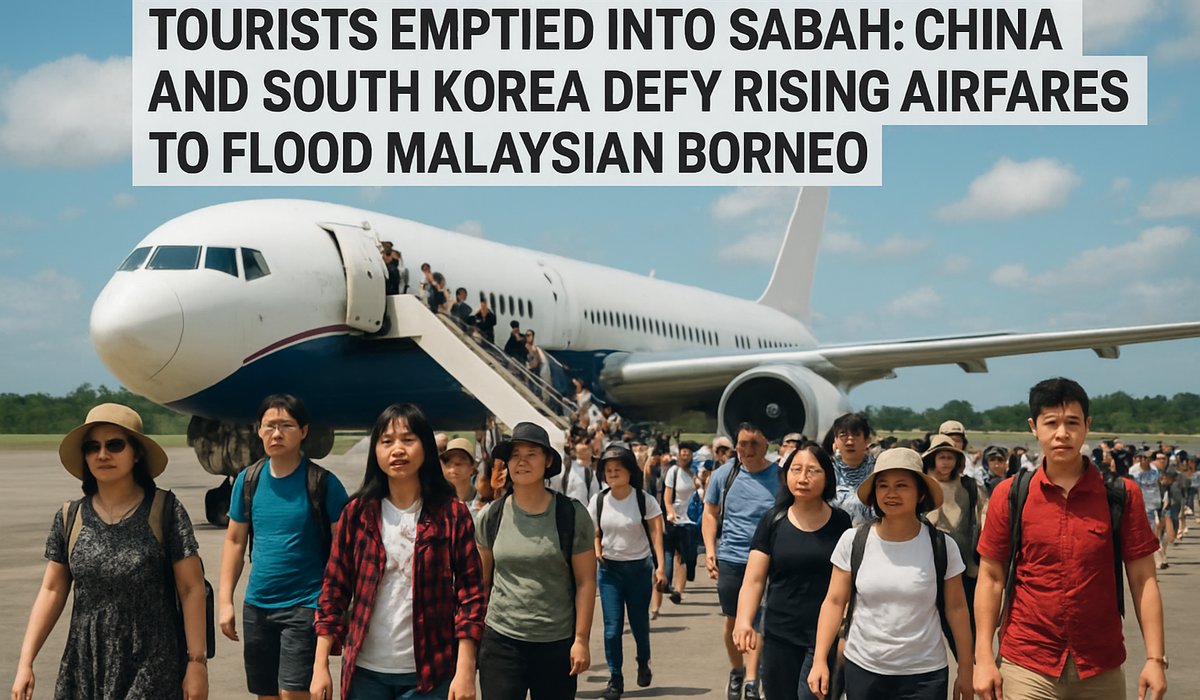
Image generated by AI
The Undeniable Gravity of Malaysian Borneo
Completely defying the intense downward pressure of massive global fuel costs and aggressively escalating ticket prices, international travelers from primary Asian markets—specifically China, Brunei, South Korea, Indonesia, and Taiwan—are continuing to flood relentlessly into Sabah, Malaysia. As global geopolitical tension and severe inflation effectively cast a shadow over long-haul international travel, the state of Sabah (occupying the northern portion of the island of Borneo) has mathematically emerged as an invincible beacon for luxury eco-tourism. The sheer density of its raw natural beauty, ancient wildlife, and rich indigenous heritage has proven so incredibly alluring that the traditional financial deterrent of "high airfare" has been entirely negated.
The resilience of the Sabah tourism sector is staggering. Despite the economic strain, mega-carriers like AirAsia, Malaysia Airlines, and Singapore Airlines refuse to pull capacity. Instead, they are actively maintaining—and in several cases aggressively expanding—their high-frequency flight routes into Kota Kinabalu. For the Asian luxury and adventure demographic, Sabah provides an unparalleled "Wilderness Proximity." It mathematically offers world-class scuba diving (Sipadan) and towering alpine climbing (Mount Kinabalu) accessible via incredibly short, direct flights from major tech hubs like Seoul and Shanghai, making the expensive ticket price highly justifiable.
The Aviation Lifeline of the Eco-State
The sheer volume of tourists arriving (over 3.7 million logged in 2025, with massive growth projected for 2026) is entirely predicated on absolute airline stability.
While airfares are undeniably high, carriers like AirAsia have utilized Sabah as a primary anchor point in their post-pandemic network recovery. The airlines recognize that the demand curve for "authentic nature" is completely inelastic against price for affluent East Asian travelers. By guaranteeing steady, high-volume airlift capability, these airlines have effectively insulated the local hospitality industry. Consequently, the luxury eco-lodges and river safari operators in Sabah are reporting incredibly healthy profit margins, completely untethered from the financial crisis suffocating urban tourism destinations elsewhere.
The Sabah Tourism Influx (Primary Markets)
| Source Market | Primary Motivation for Sabah Travel | Airline Facilitation |
|---|---|---|
| China / Taiwan | Extreme eco-tourism and high-end seafood | High-frequency direct flights into Kota Kinabalu (BKI) |
| South Korea | Luxury beach resorts and world-class golf | Direct wide-body routes on premium carriers |
| Brunei / Indonesia | Deep cultural ties and cross-border trade | Massive regional short-haul connectivity |
What Guests Get
- Redefining the 'Value' of the ticket — realizing that paying a premium airfare to visit Sabah ensures direct access to some of the most highly protected, pristine rainforests mathematically remaining on earth.
- The 'Safe Adventure' dynamic — grasping that Sabah offers the extreme, visceral aesthetic of the deep jungle completely paired with highly developed, safe Malaysian civil infrastructure.
- Micro-economic resilience — understanding that the tourist influx directly funds critical conservation efforts required to protect highly endangered species like the Bornean Orangutan.
What This Means for Travelers
If you are planning an expedition to Sabah in 2026: You must accept the reality of the airfare landscape. Do not delay your booking expecting a massive "flash sale" from carriers like Malaysia Airlines. Because the planes arriving from Seoul and Shanghai are mathematically flying at near 100% capacity, flight prices are virtually guaranteed to remain locked at premium tiers. If you are operating on a strict budget, you must book your flights a minimum of four to six months in advance to secure the absolute lowest fare buckets.
Securing the Golden Permits: The influx of deep-pocketed regional tourists has resulted in massive bottlenecks for strictly regulated natural attractions. If your goal is to hike Mount Kinabalu or dive the legendary sheer drop-offs at Sipadan Island, you are aggressively competing with thousands of South Korean and Chinese tourists for mathematically capped daily permits. You absolutely must secure your specific diving or climbing passes through a certified operator before you even purchase your expensive airline ticket.
FAQ: Navigating Sabah Tourism
Why are airfares to Sabah so expensive right now? The surge in pricing is a combination of massive global increases in aviation fuel costs, sustained inflationary pressures, and the incredibly high, inelastic demand from major affluent Asian markets.
Is it safe to travel to eastern Sabah? The western regions (like Kota Kinabalu and the mountain) are incredibly safe. The far eastern coast (near the Sulu Sea) has historically faced specific geopolitical security alerts; however, the Malaysian government maintains a massive, highly visible security apparatus (ESSCOM) to protect the luxury dive resorts.
Do I fly into Kuala Lumpur to get to Sabah? Not necessarily. While Kuala Lumpur (KUL) is a massive transit hub, Kota Kinabalu International Airport (BKI) possesses its own immense international network, offering direct flights to dozens of major cities across East Asia without requiring a domestic transfer.
External Resources
- Sabah Tourism Board
- Kota Kinabalu International Airport
- Mount Kinabalu Park
- Sipadan Diving Authority
Related Travel Guides
The Ultimate Kinabalu Climb: Securing Permits and Training
Disclaimer
This article is for informational and educational purposes only. It does not constitute legal, financial, or professional advice. While we strive to provide accurate and up-to-date information, travel policies, regulations, and conditions change rapidly. Always verify information with official sources before making travel decisions. Nomad Lawyer makes no representations about the accuracy, reliability, completeness, or suitability of the information provided. Readers should consult qualified professionals for advice specific to their circumstances. The views expressed in this article are those of the author and do not necessarily reflect the views of Nomad Lawyer.
Raushan Kumar
Founder & Lead Developer
Full-stack developer with 11+ years of experience and a passionate traveller. Raushan built Nomad Lawyer from the ground up with a vision to create the best travel and law experience on the web.
Learn more about our team →