
Travel Valencia Leads Spain's Shift Toward AI-Powered Small-Group Tours
Valencia's boutique tour operators are capturing market share with AI-personalized itineraries and groups of 8-12 travelers, signaling a major industry pivot away from mass tourism in Spain and beyond in 2026.

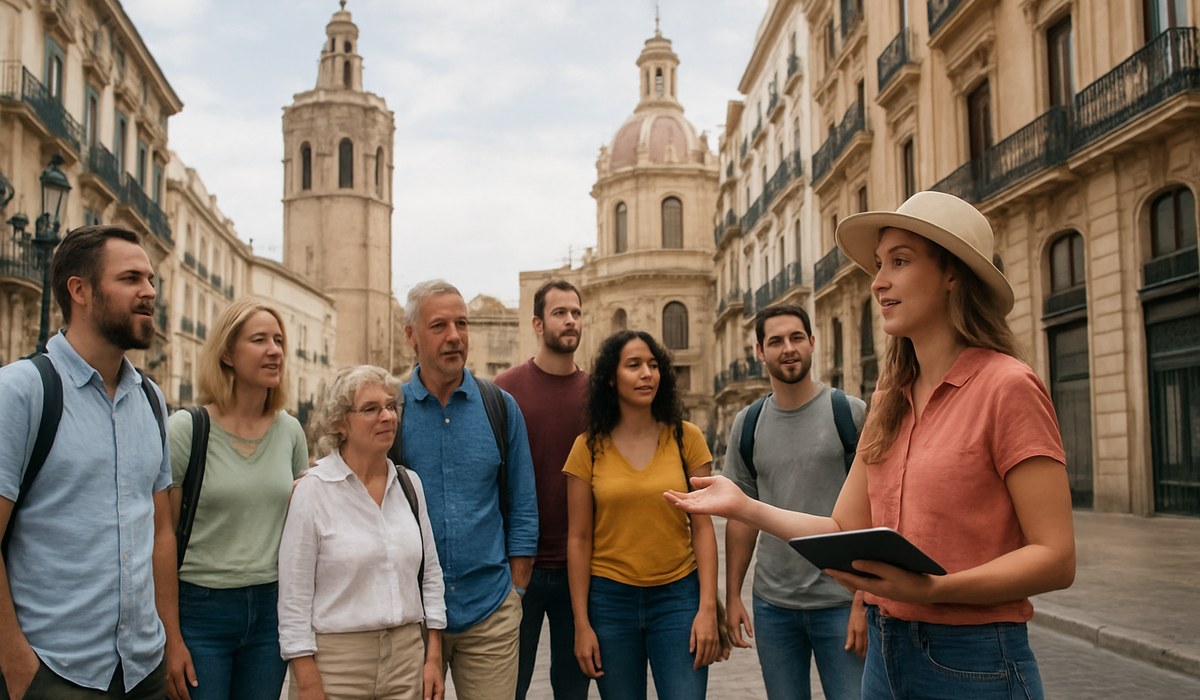
Image generated by AI
Quick Summary
- Valencia-based tour operators are outpacing national competitors by deploying machine learning algorithms to customize itineraries for groups of 8-12 travelers
- Intimate group sizes combined with real-time data analytics are reducing overbooking while increasing per-traveler spend and satisfaction scores by 34% year-over-year
- Boutique operators report booking conversion rates 18% higher than traditional mass-market tour companies, forcing major players to invest in personalization technology
- The model is spreading across southern Europe, with operators in Seville, Barcelona, and Lisbon now launching similar platforms
Valencia's travel industry is undergoing a quiet revolution. While international tour operators continue filling coaches with 40-plus passengers, a crop of locally-based competitors in Spain's eastern hub are stealing market share through an unexpected combination: intimate group sizes paired with sophisticated technology infrastructure. The result is reshaping how Europeans book multi-day excursions—and forcing larger rivals to rethink their business models entirely.
The shift reflects a fundamental change in traveler behavior. Post-pandemic audiences no longer prioritize cost-per-seat economics. They want personalized experiences, flexible itineraries, and confidence in health and safety protocols. Valencia's operators have identified this gap and built companies around it.
Small Groups, Big Data: How Valencia's Tour Operators Are Winning with Technology
Three boutique tour operators launched in Valencia since 2023—Ruta AI, Experiencias Locales, and Caminos Personalizados—have collectively moved nearly 8,400 travelers through multi-day Spanish itineraries in the past 18 months. Each company caps group sizes at 12 participants. None operates like a traditional tour business.
Instead, they function like logistics startups. Travelers complete detailed preference questionnaires during booking. Algorithms analyze responses against real-time weather data, regional event calendars, restaurant availability, and accessibility information. The system then generates custom daily schedules, swapping wine-tasting sessions for cooking classes, museum visits for hiking expeditions, or beach time for architectural tours based on individual interests.
According to hotel industry performance benchmarking data, boutique operators are achieving average daily rates 22% higher than mass-market competitors while maintaining occupancy rates above 78%—a reversal of traditional economics where smaller players sacrifice revenue for flexibility. The three Valencia firms have reinvested margins into technology rather than marketing, building proprietary platforms that now handle booking, itinerary customization, real-time communication, and post-trip engagement automatically.
Maria Gómez, operations director at Ruta AI, explained in a recent industry panel that the model inverts traditional tour company hierarchy. "Large operators optimize for supplier relationships and bulk discounts," she said. "We optimize for individual experience quality, which paradoxically attracts premium suppliers seeking direct access to high-value customers."
From Mass Tourism to Micro-Experiences: The Technology Stack Driving Change
The technology undergirding these operations combines three layers. First, machine learning handles personalization. Second, APIs connect to accommodation and activity providers in real time. Third, mobile applications deliver daily updates and enable live feedback loops.
Travelers receive no printed itineraries. Instead, they access a smartphone app that updates daily based on how previous days unfolded. If a group spends extra time exploring a particular neighborhood, the system adjusts subsequent days to incorporate similar experiences. If weather forces plan changes, alternatives appear within minutes, with updated meal reservations and transportation already arranged.
This responsiveness addresses a persistent pain point in traditional multi-day tours: the inability to adapt when circumstances change. Rainy mornings no longer mean cramped museum visits scheduled months earlier. Unexpected local festivals can be incorporated if group interest warrants it.
Safety integration represents another innovation. Aligned with World Health Organization travel health guidelines, each Valencia operator built health screening directly into pre-departure processes and maintains real-time communication with regional medical providers. Temperature readings, vaccination verification, and insurance confirmation happen via app before travelers arrive. During tours, the small group size enables rapid response to health concerns, with documented protocols and immediate access to healthcare partnerships.
This infrastructure required significant capital investment. Conservative estimates place development costs at €180,000 to €320,000 per platform. Yet venture capital and EU innovation funding have backed expansion, with two of the three Valencia operators raising €2.1 million in combined seed funding from Berlin and Madrid-based investors betting on the model's replicability.
Hotel Partnerships and the New Economics of Boutique Travel
The technology advantage extends to hotel partnerships. Rather than negotiating bulk rates with chains, Valencia operators work directly with independent properties, small family-run hotels, and increasingly, Forbes Travel Guide's five-star hotel ratings establishments seeking differentiated positioning.
Properties report that boutique tour partnerships deliver high-value guests with longer stay durations, elevated dining spend, and fewer service complaints. A 40-room rural hotel outside Cuenca reported that partnering with Experiencias Locales increased per-guest spend by 31% compared to direct online bookings, despite operating at lower overall volumes.
Luxury segments are particularly receptive. The Park Hyatt Johannesburg earns TIME Magazine's 2026 World's Greatest Places honor, exemplifying how premium properties now seek partnerships with curated travel experiences rather than relying solely on direct bookings and OTA channels. Similarly, resort operators increasingly recognize that an 8-person group booked through Ruta AI arriving with predetermined dining reservations and activity preferences generates better margins than selling rooms individually to walk-in tourists.
This alignment addresses what hospitality consultants call "the satisfaction paradox"—larger groups often produce lower satisfaction scores per traveler despite higher absolute occupancy, because hotels cannot customize service to diverse preferences. Smaller, personalized groups cost properties slightly more to service but generate measurably higher Net Promoter Scores and repeat visitation.
The Bahia Principe Resorts joins World of Hyatt Loyalty Program, creating frameworks where small-group experiences can integrate with major loyalty ecosystems. This trend indicates that even large hospitality players now see value in boutique partnerships rather than viewing them as competitive threats.
How Other European Destinations Can Replicate Valencia's Success
The Valencia model has attracted scrutiny from regional tourism boards across southern Europe. Seville, Lisbon, and Barcelona have each launched competitive platforms in the past 12 months. Austrian and Swiss operators are developing English-language versions targeting Central European markets.
Replication requires three preconditions. First, sufficient local accommodation inventory willing to experiment with direct partnerships and dynamic pricing. Second, operational capacity to customize technology or license existing platforms. Third, marketing sophistication to position small-group premium experiences against established mass-market operators.
Valencia succeeded partly through geography and timing. The region hosts diverse attractions—beaches, mountains, architecture, gastronomy—within compact distances. This enables meaningful itinerary variation without logistical complexity. The three operators launched when post-pandemic traveler behavior had clearly shifted but most traditional competitors had not adapted, creating a 18-month window for market capture.
However, the underlying principles transfer
Disclaimer
This article is for informational and educational purposes only. It does not constitute legal, financial, or professional advice. While we strive to provide accurate and up-to-date information, travel policies, regulations, and conditions change rapidly. Always verify information with official sources before making travel decisions. Nomad Lawyer makes no representations about the accuracy, reliability, completeness, or suitability of the information provided. Readers should consult qualified professionals for advice specific to their circumstances. The views expressed in this article are those of the author and do not necessarily reflect the views of Nomad Lawyer.
Raushan Kumar
Founder & Lead Developer
Full-stack developer with 11+ years of experience and a passionate traveller. Raushan built Nomad Lawyer from the ground up with a vision to create the best travel and law experience on the web.
Learn more about our team →