
Uzbekistan and Kyrgyzstan Propose Joint Tourism Routes and Border Fast-Tracks in 2026
Uzbekistan and Kyrgyzstan are negotiating a 2026–2027 cooperation plan to streamline Central Asia border travel through group fast-tracks and international checkpoint designations.

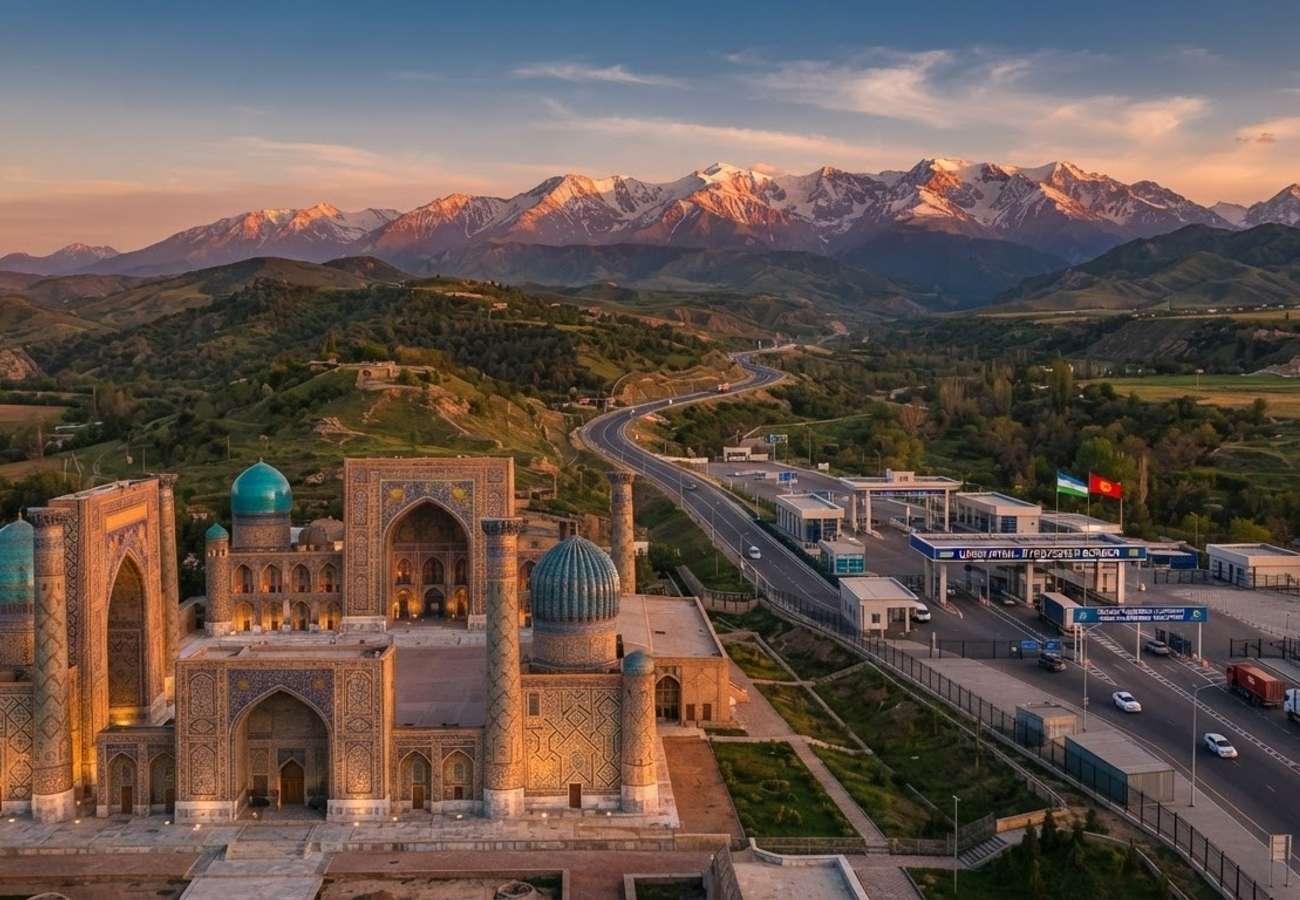
Image generated by AI
Foreign tourism arrivals in Uzbekistan surged by 22.6% between January and July 2026 compared to the same period in 2025, with Kyrgyzstan serving as the primary driver of this growth. This massive uptick in cross-border movement has triggered high-level diplomatic discussions on July 15, 2026, aimed at transforming the current fragmented border experience into a streamlined, regional tourism corridor.
The Trend in Numbers: Central Asian Mobility Shifts
The push for deeper integration is not based on speculation but on significant volume shifts. Between January and July 2026, Uzbekistan recorded 7,749,308 foreign tourists. Of these, 2,177,108 arrivals originated from Kyrgyzstan, meaning a single neighboring country accounts for 28.1% of all foreign tourism entering Uzbekistan.
The flow in the opposite direction is equally telling. From January to June 2026, approximately 3.5 million Uzbek citizens traveled abroad for tourism. A staggering 1,547,589 of those travelers entered Kyrgyzstan, representing 44.2% of Uzbekistan's total outbound tourism for that period. These figures indicate that the "Silk Road" corridor is no longer just a historical concept but a high-traffic modern reality.
To manage this volume, the two nations are considering a cooperation plan for 2026–2027. The proposed framework includes:
- Tourist Group Fast Track: A prioritized processing system for organized tour groups to reduce border wait times.
- International Status Upgrades: Reclassifying specific checkpoints to allow third-country nationals (non-citizens of either nation) to cross at more locations.
- Joint Itineraries: The creation of multi-country holiday packages that blend Uzbekistan's urban architectural history with Kyrgyzstan's alpine nature destinations.
Comparative Context: Regional Integration Benchmarks
The current proposals represent an evolution of a policy shift that began on September 1, 2023, when citizens of both nations were permitted to cross borders using only national identity cards for stays up to 60 days. However, a critical data gap exists between bilateral citizen travel and international tourist travel. While locals enjoy identity-card access, foreign passport holders remain subject to standard, often slower, immigration protocols.
The following table illustrates the current state of cross-border movement versus the proposed 2026–2027 enhancements.
| Feature | Current Status (2023-2026) | Proposed Status (2026-2027) | Impact Level |
|---|---|---|---|
| Citizen Entry | ID Card (up to 60 days) | Maintain ID Card Access | Stable |
| Foreign Tourist Entry | Standard Passport Control | Group Fast-Track Lanes | High |
| Checkpoint Access | Limited International Points | Expanded International Status | Medium |
| Itinerary Planning | Separate National Bookings | Joint Multi-Country Packages | High |
| Border Processing | First-Come, First-Served | Prioritized Organized Groups | Medium |
This shift mirrors broader trends seen in the World Tourism Organization (UNWTO) reports regarding regional clusters, where countries consolidate border policies to compete as a single destination "bloc" rather than individual markets.
What This Means for Travelers
For the individual nomad or leisure traveler, it is essential to distinguish between proposed policy and active law. As of September 2026, no new visa exemptions or passport-free entries have been implemented for international visitors.
Actionable Advice for Q4 2026 and 2027:
- Maintain Standard Documentation: Do not attempt to cross borders without a valid biometric passport. The ID-card privilege is strictly for Uzbek and Kyrgyz citizens.
- Leverage Organized Tours: If the "Tourist Group Fast Track" is ratified, booking through licensed operators will become significantly more efficient than solo travel. Keep an eye on IATA updates regarding regional travel documentation.
- Plan for Buffer Time: Until the international status of checkpoints is formally expanded and published, stick to the primary, well-known border crossings to avoid being turned away at local-only checkpoints.
Forward Projection: The 2027 Outlook
Based on the current trajectory of 22.6% year-over-year growth in arrivals, the current border infrastructure is likely to reach a breaking point without these interventions. The proposed permanent tourism working group suggests that the 2026–2027 plan is the first phase of a larger strategic alignment.
We expect to see a rise in "hybrid" tourism products—packages that offer seamless transfers from the mosques of Samarkand to the shores of Lake Issyk-Kul. If the joint investment projects mentioned in the July discussions materialize, we will likely see improved road infrastructure and standardized hospitality training across the border region, potentially increasing the average length of stay for international tourists from 7-10 days to 14-21 days.
FAQ: Central Asia Border Travel 2026
Can I use an ID card to travel between Uzbekistan and Kyrgyzstan? No. This privilege is exclusively for citizens of Uzbekistan and Kyrgyzstan. All other international travelers must use a valid biometric passport.
Will border wait times decrease soon? A "Tourist Group Fast Track" has been proposed, but it is not yet operational. Until a formal implementation timetable is released, expect standard processing times.
Are there new visa-free rules for 2027? No new visa or passport arrangements were announced in the July 2026 meetings. Current visa requirements for both countries remain in effect.
Which routes are becoming "international"? The government is currently assessing which checkpoints will receive international status. No specific list of approved checkpoints has been published yet.
The shift from bilateral convenience to international accessibility marks the beginning of a new era for Silk Road mobility.
Related Travel Guides
Disclaimer
This article is for informational and educational purposes only. It does not constitute legal, financial, or professional advice. While we strive to provide accurate and up-to-date information, travel policies, regulations, and conditions change rapidly. Always verify information with official sources before making travel decisions. Nomad Lawyer makes no representations about the accuracy, reliability, completeness, or suitability of the information provided. Readers should consult qualified professionals for advice specific to their circumstances. The views expressed in this article are those of the author and do not necessarily reflect the views of Nomad Lawyer.
Kunal K Choudhary
Co-Founder & Contributor
A passionate traveller and tech enthusiast. Kunal contributes to the vision and growth of Nomad Lawyer, bringing fresh perspectives and driving the community forward.
Learn more about our team →