
USA Fossil Travel Revolution 2026: Exploring White Sands, Badlands, and Dinosaur National Monument
From Ice Age footprints in New Mexico to Jurassic giants in Utah, the USA is transforming paleontology into a family adventure for Earth Science Week 2026.

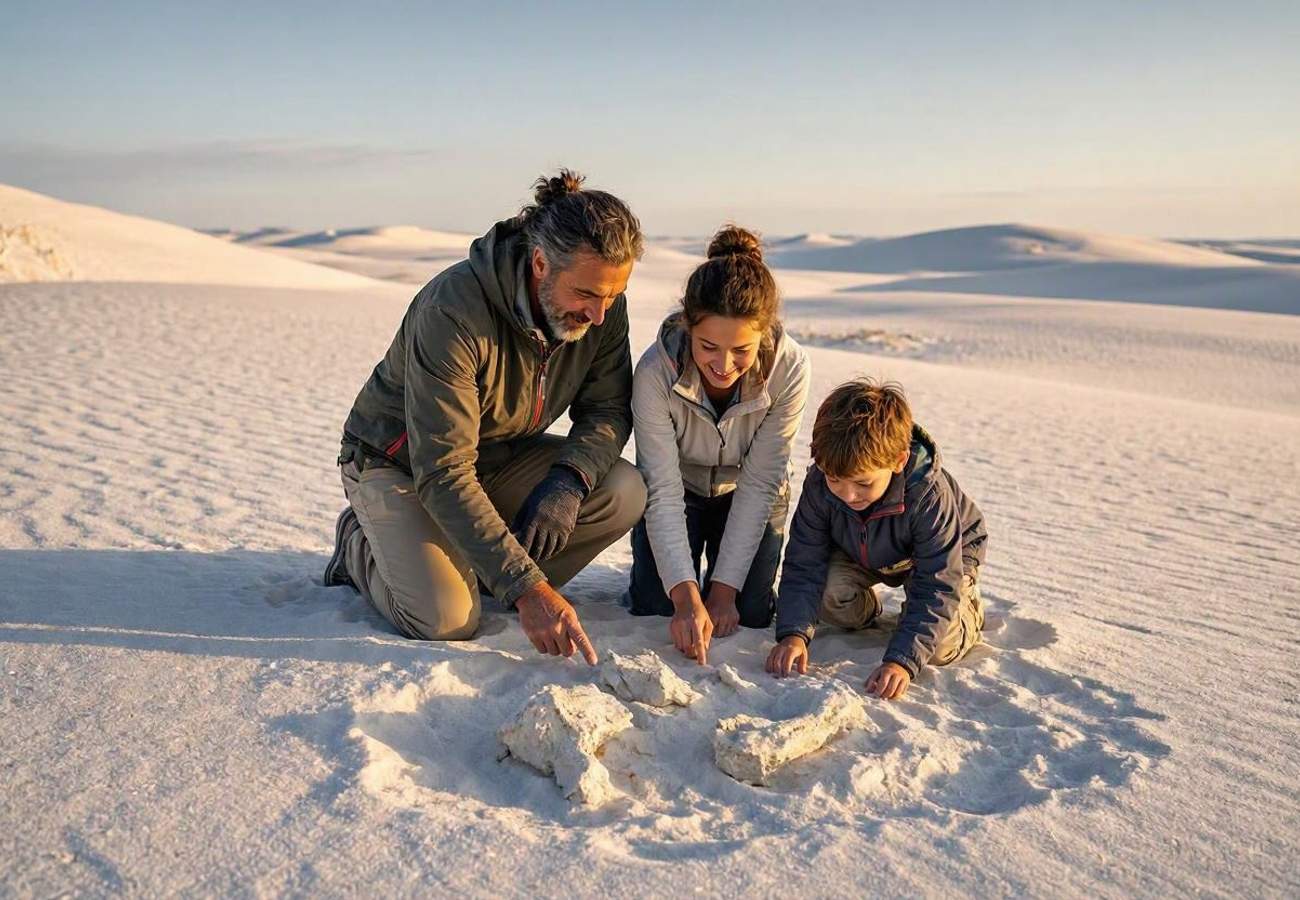
Image generated by AI
Human beings and Ice Age megafauna shared the New Mexico desert at least 21,000 to 23,000 years ago—a revelation that transforms a simple trip to the dunes into a journey through deep time. While most visitors flock to the American Southwest for the aesthetics of the desert, a shift is occurring in how families engage with the land. This October, the focus moves from mere sightseeing to "fossil travel," where the earth itself serves as the primary exhibit.
The 2026 Earth Science Movement
The travel calendar for October 2026 is being anchored by Earth Science Week, running from 11 to 17 October. The thematic focus this year, "Critical Minerals for a Thriving Society," bridges the gap between ancient geological formations and modern daily life. The peak of this celebration is National Fossil Day on Wednesday, 14 October, which has sparked a surge in interest for destinations that offer tangible connections to the prehistoric world.
Rather than relying on textbooks, a new wave of family tourism is prioritizing "in-situ" experiences—seeing fossils exactly where they were deposited millions of years ago. This movement is most evident in the National Park Service's strategic highlighting of specific sites that blend natural beauty with rigorous science.
White Sands: More Than Just Gypsum
For 2026, White Sands National Park has been elevated to a position of national prominence, serving as the official inspiration for the National Fossil Day artwork. While the park is famous for its blindingly white gypsum dunes, the real draw for the culturally curious is the Tularosa Basin. Long before the dunes existed, this region was a lush expanse of wetlands and grasslands.
The site is a goldmine for those interested in the Pleistocene epoch. Evidence of mammoths, dire wolves, giant ground sloths, and ancient camels persists beneath the surface. Most significantly, the park preserves some of the oldest evidence of human presence in North America.
To make the most of a visit in late October, timing is everything. The park offers sunset strolls on select Fridays, Saturdays, and Sundays through 17 October. For those who prefer the nocturnal side of nature, a ranger-led presentation on fossilized footprints is scheduled for 25 October as part of the Full Moon Night programme, followed by a moonlight hike on 26 October.
Jurassic Giants and Ancient Mammals
Moving north and west, the border of Utah and Colorado hosts the Dinosaur National Monument. This site avoids the "museum feel" by keeping fossils in their original rock matrix. The Quarry Exhibit Hall is the centerpiece, featuring a wall containing roughly 1,500 dinosaur bones. Visitors encounter species such as Diplodocus, Apatosaurus, Allosaurus, and Stegosaurus without the barrier of a glass case; in some areas, the fossils are even tactile.
The monument celebrates a historical milestone on 4 October, marking the anniversary of its creation in 1915 to safeguard the Carnegie Quarry. While the formal geology lectures typically wrap up in September, the Fossil Discovery Trail—a 1.2-mile path connecting the visitor center to the Quarry—remains a primary draw for active families.
In South Dakota, Badlands National Park offers a different narrative. While not a dinosaur destination, it is one of the world's premier sites for late Eocene and early Oligocene mammal fossils. The park provides a window into the world that emerged after the dinosaurs vanished, featuring a Fossil Preparation Lab where the public can observe the meticulous process of cleaning and preserving ancient remains.
The Urban Fossil Experience: Chicago
For those who cannot venture into the wilderness, Chicago has integrated paleontology into the city break. The Field Museum is currently hosting the Pokémon Fossil Museum through April 2027, using popular culture to introduce younger audiences to the science of fossils. This exhibition sits alongside the legendary SUE, the T-rex that remains one of the most complete skeletons of its kind. Additionally, the "After the Age of Dinosaurs" exhibit, running until January 2027, explores the biological recovery following the asteroid impact.
| Destination | State | 2026 Science Hook | Key Activities | Planning Note |
|---|---|---|---|---|
| White Sands | New Mexico | National Fossil Day (Oct 14) | Moonlight hikes, footprint talks | Check Missile Range closures |
| Dinosaur Nat. Mon. | UT/CO | 1915 Anniversary (Oct 4) | Quarry Exhibit Hall, Junior Ranger | Check road access to Quarry |
| Badlands | South Dakota | Ancient Mammal Beds | Fossil Exhibit Trail, Prep Lab | Pack layers for cold nights |
| Field Museum | Illinois | Pokémon Fossil Museum | SUE the T-rex, post-asteroid exhibit | Best for urban-based trips |
Visitor Insider Tips
Timing and Access: If you are visiting White Sands, the most critical tip is to monitor the National Park Service alerts. Because the park is adjacent to the White Sands Missile Range, temporary closures are common and happen without long-term notice. Always verify access on the morning of your visit.
Etiquette and Law: In the Badlands and Dinosaur National Monument, the "look but don't touch" rule is legally enforced. Removing fossils or rocks is strictly prohibited. A fossil's value to science is tied to its "provenance"—the exact spot it was found. Moving a stone can destroy thousands of years of data.
Packing for the High Desert: October in the Badlands and Utah is deceptive. While midday sun can feel warm, temperatures plummet the moment the sun dips. Bring high-quality thermal layers and wind-resistant gear, especially for the Fossil Exhibit Trail in South Dakota.
Transport Hacks: For the Dinosaur National Monument, remember that the Quarry Exhibit Hall is separate from the main visitor center. Ensure your vehicle is fueled and you have downloaded offline maps, as cellular service is spotty between the two hubs.
Cultural and Environmental Context
The rise of fossil tourism creates a delicate tension between public access and preservation. In places like the Tularosa Basin, the footprints are fragile. The National Park Service must balance the educational value of these sites with the risk of erosion and human impact.
Furthermore, these sites are often located on lands with deep indigenous history. The intersection of paleontology (the study of ancient life) and archaeology (the study of human history) reminds visitors that the land is a layered record. By promoting "leave no trace" ethics, these parks are attempting to shift the visitor mindset from "collector" to "steward," ensuring that the 1,500 bones in the Carnegie Quarry remain for another century.
FAQ: Visiting US Fossil Sites 2026
What is the best time to visit these parks? October is ideal due to mild temperatures and events like Earth Science Week. However, late September is also excellent for avoiding the peak autumn crowds.
Do I need a special permit to see the fossils? No, the major exhibits like the Quarry Exhibit Hall and the Fossil Exhibit Trail are open to the general public. Only professional paleontological research requires permits.
Is White Sands safe for solo travelers? Yes, but it is essential to stay on marked paths and inform someone of your itinerary, as the dunes can be disorienting and cell service is limited.
How do I get to Dinosaur National Monument from a major hub? The closest major hubs are Denver or Salt Lake City. You will need a rental car, as the monument is remote and not accessible by public transit.
The earth does not keep its secrets forever, but it demands respect from those who come seeking them.
Related Travel Guides
Disclaimer
This article is for informational and educational purposes only. It does not constitute legal, financial, or professional advice. While we strive to provide accurate and up-to-date information, travel policies, regulations, and conditions change rapidly. Always verify information with official sources before making travel decisions. Nomad Lawyer makes no representations about the accuracy, reliability, completeness, or suitability of the information provided. Readers should consult qualified professionals for advice specific to their circumstances. The views expressed in this article are those of the author and do not necessarily reflect the views of Nomad Lawyer.
Preeti Gunjan
Contributor & Community Manager
A passionate traveller and community builder. Preeti helps grow the Nomad Lawyer community, fostering engagement and bringing the reader experience to life.
Learn more about our team →