
USA Aviation Crisis 2026: 6,750 Flight Delays and 283 Cancellations Hit Chicago and New York Hubs
Severe weather and traffic congestion triggered 6,750 flight delays and 283 cancellations across the USA, with Chicago O'Hare and LaGuardia facing the heaviest operational disruptions.

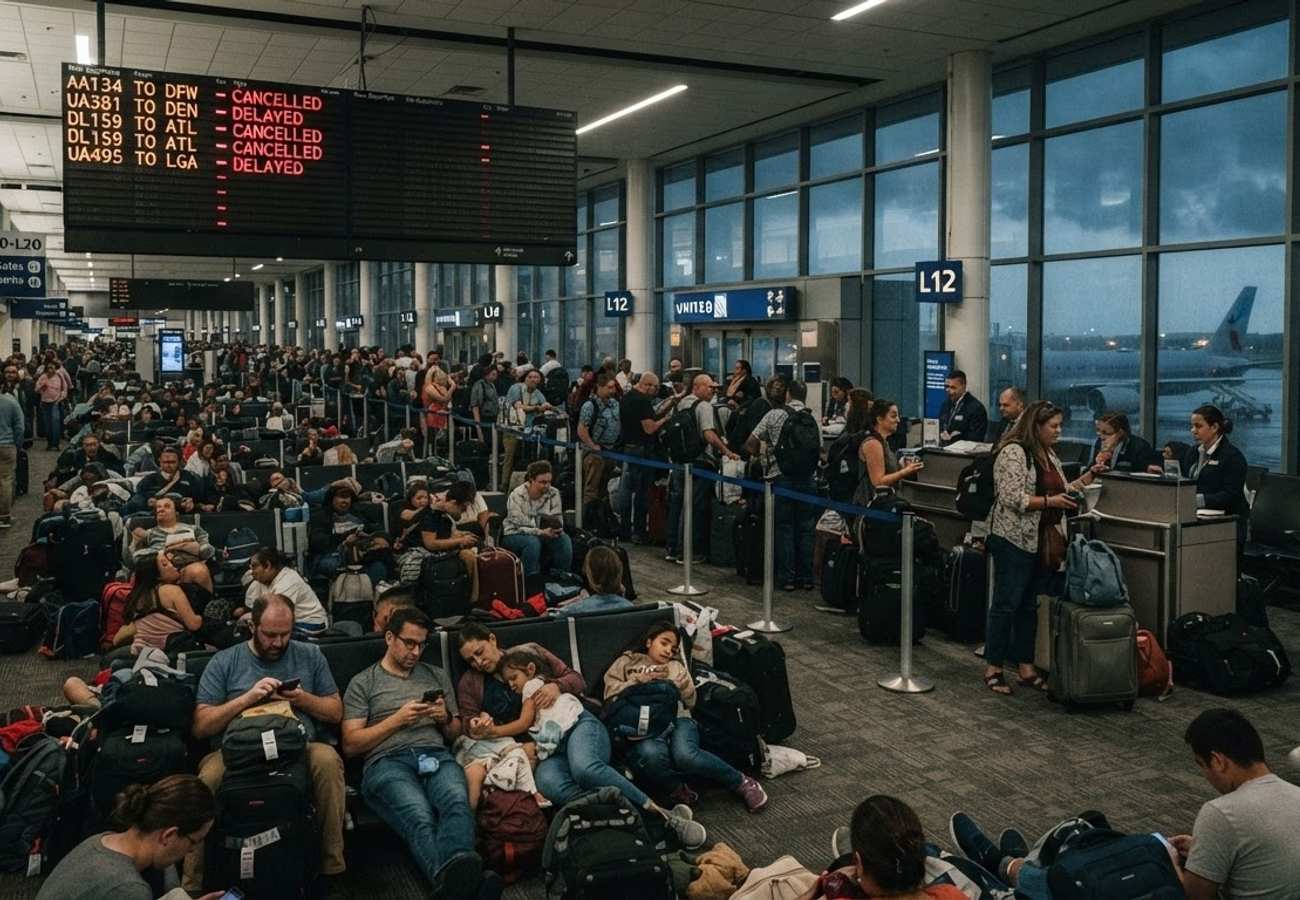
Image generated by AI
Widespread operational failures across the United States have resulted in 6,750 flight delays and 283 cancellations, paralyzing key hubs in the Midwest and Northeast.
The US aviation network is currently struggling under a combination of severe weather, traffic-management restrictions, and extreme airport volume. Major carriers—specifically Southwest, American, United, and Delta—are reporting significant schedule slippage, while regional operators like Republic and Endeavor Air are seeing high cancellation rates.
The disruption is concentrated in critical corridors. Chicago O’Hare is currently the epicenter of delay pressure, while New York's LaGuardia has recorded the highest volume of outright cancellations.
Operational Impact by Airport
Current data indicates a fragmented recovery. While some hubs are seeing a downward trend in delays, others are experiencing increasing congestion due to persisting weather patterns.
- Chicago O’Hare: 1,078 delays and 18 cancellations. Thunderstorms are the primary driver, with average departure delays of 45 minutes.
- Boston Logan: 491 delays and 56 cancellations. Low ceilings have pushed average ground delays to 136 minutes.
- LaGuardia: 472 delays and 82 cancellations. Traffic-management initiatives and weather are driving 15-minute delays that are currently increasing.
- Philadelphia Intl: 435 delays and 11 cancellations. Thunderstorms are causing 30-minute delays, though conditions are improving.
- JFK: 357 delays and 36 cancellations. High airport volume is the sole driver for ground delays averaging 110 minutes.
- San Francisco: 353 delays and 11 cancellations. Low ceilings are resulting in 52-minute ground delays.
- Newark Liberty: 292 delays and 18 cancellations.
- Detroit Metro: 281 delays and 9 cancellations. Thunderstorms are causing 15-minute delays, with conditions worsening.
- Reagan National: 275 delays and 15 cancellations.
- Orlando: 274 delays and 7 cancellations. Weather and traffic management are causing 30-minute delays.
- Fort Lauderdale: 192 delays and 8 cancellations.
Carrier Performance and Disruption Metrics
The burden of these disruptions is not evenly distributed across the industry. Southwest Airlines is currently managing the highest volume of delayed aircraft, while regional partners are seeing more aggressive cancellation trends.
| Airline | Total Delays | Total Cancellations |
|---|---|---|
| Southwest | 1,160 | Not Specified |
| American Airlines | 882 | 4 |
| United | 701 | 27 |
| Delta Air Lines | 562 | 5 |
| Republic | 448 | 46 |
| JetBlue | 347 | 39 |
| Endeavor Air | 229 | 65 |
Why This Matters: The Logistics Analysis
From a logistical perspective, this data reveals a dangerous fragility in the US hub-and-spoke model. When "anchor" airports like Chicago O'Hare (1,078 delays) and JFK (110-minute average delays) seize up, the ripple effect creates a systemic failure across the entire national network.
For travelers, the real impact is not just the initial delay but the "compounding effect." A 45-minute delay in Chicago often results in a missed connection in New York, where ground delays are already exceeding 100 minutes. This creates a bottleneck that exceeds the capacity of airline rebooking systems.
Our analysis suggests that the high cancellation rates for regional carriers—specifically Endeavor Air (65 cancellations) and Republic (46 cancellations)—indicate that airlines are prioritizing main-line aircraft over regional feeds to protect high-revenue long-haul routes. If you are on a regional connection, your flight is statistically more likely to be cancelled than a primary trunk route.
Forward Outlook
Expect continued volatility in the Northeast and Midwest corridors over the next 48 hours. The persistence of "low ceilings" in Boston and San Francisco suggests that visibility issues will continue to throttle takeoff and landing intervals.
Passengers should prioritize digital check-ins and monitor the "Airport Volume" status at JFK and Newark, as these are currently capacity-constrained rather than weather-constrained, meaning delays will persist even if the skies clear.
Systemic instability remains the primary risk for US domestic travel this week.
Related Travel Guides
Disclaimer
This article is for informational and educational purposes only. It does not constitute legal, financial, or professional advice. While we strive to provide accurate and up-to-date information, travel policies, regulations, and conditions change rapidly. Always verify information with official sources before making travel decisions. Nomad Lawyer makes no representations about the accuracy, reliability, completeness, or suitability of the information provided. Readers should consult qualified professionals for advice specific to their circumstances. The views expressed in this article are those of the author and do not necessarily reflect the views of Nomad Lawyer.
Kunal K Choudhary
Co-Founder & Contributor
A passionate traveller and tech enthusiast. Kunal contributes to the vision and growth of Nomad Lawyer, bringing fresh perspectives and driving the community forward.
Learn more about our team →