
Foreign World Cup Fans Ditch Coastal Hubs for Authentic American Tailgates in the Heartland
International soccer tourists are driving massive economic windfalls across the U.S. interior as they abandon sanitized coastal cities in favor of authentic, grassroots American hospitality.

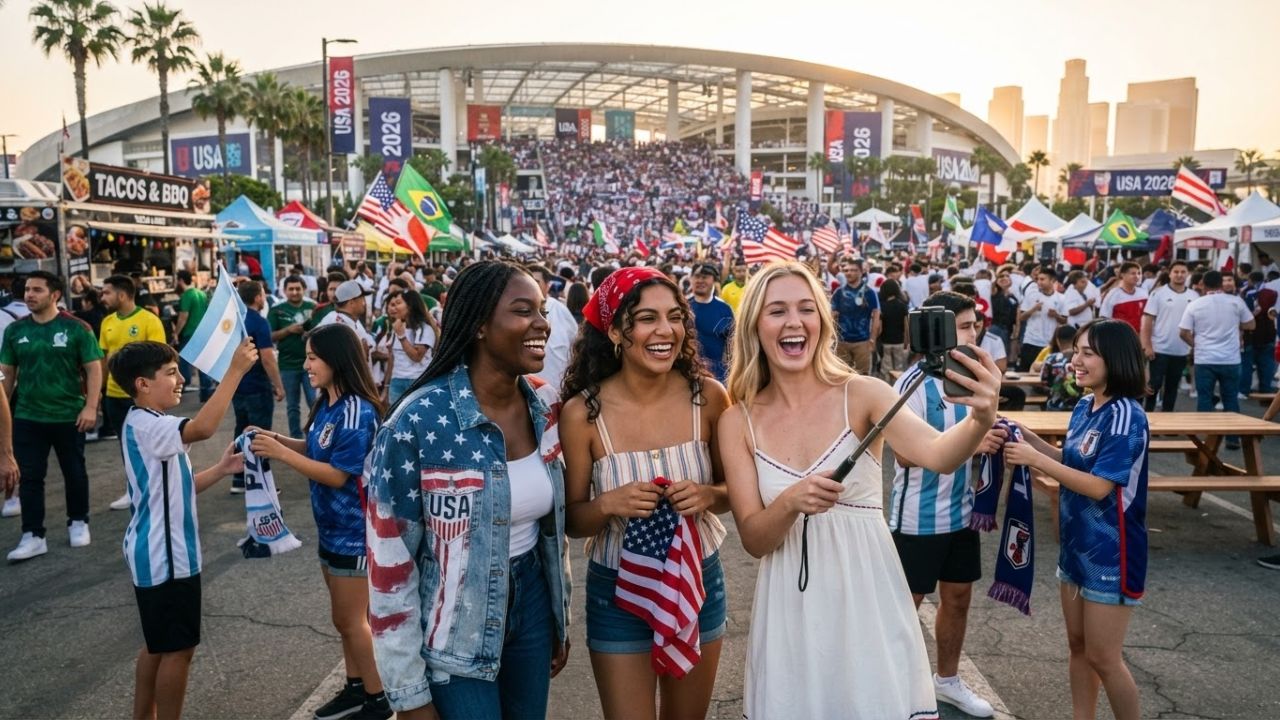
Image generated by AI
[Kansas City, July 3] — A massive structural shift in U.S. inbound tourism is currently unfolding alongside the 2026 FIFA World Cup. Millions of international soccer fans are aggressively pivoting away from highly sanitized, corporate fan environments in favor of raw, unscripted regional American subcultures. Foreign visitors from Europe, Asia, and South America are pouring into the sun-drenched tailgating lots of Texas and Florida, as well as the deep heartland fan zones of Kansas City. These international crowds are actively discovering a deeply human, aggressively warm brand of local hospitality that is completely shattering their pre-existing stereotypes of the American interior.
The multi-city architecture of the 2026 tournament was explicitly designed by organizers to decentralize traffic and showcase the sprawling geographic diversity of North America. According to formal tourism metrics tracked by the National Travel and Tourism Office (NTTO), this strategy is succeeding spectacularly. The geographic distribution of high-stakes matches has successfully pushed international travelers far outside the traditional, highly saturated coastal holiday corridors of New York and Los Angeles, forcing a direct collision with authentic regional cultures.
Heartland and "MAGA-Country" Hospitality Goes Viral
As high-profile matches play out across deeply distinct political and cultural landscapes—including major Southern metropolises and Midwestern strongholds—global social media platforms have been flooded with viral footage of unprecedented cross-cultural exchanges. Visitors are openly detailing their shock at the overwhelming warmth radiating from local "heartland" and "MAGA-country" subcultures.
Rather than facing political friction, international tourists are being directly invited into massive, distinctly American-style barbecues, local country music venues, and elaborate pre-game tailgate parties. These highly localized, community-driven events feel completely alien to standard European or South American soccer traditions, yet they are proving wildly popular among foreign demographics desperate for authentic cultural immersion.
Grassroots Integration Trumps Corporate Fan Parks
For the international jet-setter, this deep dive into localized American culture has entirely redefined the standard sports transit itinerary. Visitors report an incredibly festive, high-energy atmosphere where local hosts are executing massive, organic outreach efforts to ensure foreigners feel physically safe and thoroughly entertained.
Data compiled by regional travel bureaus clearly indicates that host cities prioritizing grassroots community integration over highly sterile, corporate FIFA fan parks are recording significantly higher scores in overall traveler sentiment. By leaning heavily into distinct local identities—from authentic Texas line-dancing events to traditional Florida beachside fan zones—these municipalities have successfully transformed potentially polarizing regional environments into massive, long-term tourism victories.
Navigating the U.S. Interior During the Knockout Stages
Navigating this sprawling network of U.S. host cities requires international travelers to adopt a highly strategic approach to regional transit and stadium safety protocols. Municipal transport boards and federal agencies have aggressively updated their guidance to prevent logistical gridlock as the tournament enters its intense knockout phases.
To ensure seamless movement and cultural safety, visitors must strictly adhere to the following operational parameters:
- Embrace Regional Transit Variations: Travelers must rely heavily on local rideshare networks and specialized match-day shuttles; expecting uniform, European-style heavy rail systems in sprawling Southern hubs will guarantee missed flights and delays.
- Proactive Fan Zone Registration: Many cities are executing free, community-led cultural festivals alongside official FIFA events. Visitors must check local municipal tourism portals in advance to secure digital access codes.
- Observe Local Venue Guidelines: Stadium security architecture remains highly rigid across all 50 states. International patrons must meticulously review specific clear-bag policies and strict entry restrictions before attempting to breach the outer stadium perimeters.
Key Facts Breakdown
- The Event: Millions of foreign tourists are exploring the U.S. interior for the 2026 FIFA World Cup.
- Tourism Shift: The NTTO reports massive traffic moving away from traditional coastal hubs (New York/Los Angeles).
- Cultural Hotspots: Texas, Florida, and Kansas City are experiencing massive influxes of foreign visitors.
- Viral Trend: Heartland and "MAGA-country" subcultures (barbecues, tailgates, line-dancing) are dominating international social media feeds.
- Traveler Sentiment: Regional travel bureaus report higher satisfaction in cities offering grassroots integration rather than corporate fan parks.
- Transit Advice: Rely on rideshare and localized shuttles rather than expecting uniform train infrastructure.
Why This Matters
Our analysis of the NTTO data reveals a permanent shift in how the United States will market itself to international leisure travelers. For decades, inbound U.S. tourism marketing relied almost exclusively on the coastal monopolies of New York, Miami, and Los Angeles. However, the viral success of grassroots tailgating in Kansas City and Texas proves that modern international travelers actively crave unscripted cultural immersion over sanitized urban sightseeing. By organically showcasing regional hospitality, these interior states are executing a brilliant brand-building strategy that will drive sustained international leisure travel long after the tournament concludes. This proves that authentic, localized human hospitality remains the single most powerful tool in the global tourism arsenal, easily outperforming massive corporate marketing budgets.
Industry Outlook
Market trends suggest that international aviation networks will begin rapidly realigning to service these newly validated interior markets. Over the next 36 months, expect foreign legacy carriers to launch new direct routes into secondary U.S. hubs, bypassing the severe air traffic congestion of the Eastern Seaboard entirely. Furthermore, global destination marketing organizations (DMOs) will fundamentally alter their promotional playbooks. Moving forward, state tourism boards across the Midwest and the South will heavily weaponize their unique sports tailgating and barbecue cultures to attract high-yield European and Asian tourists year-round. Domestically, the success of these community-led fan zones guarantees that future U.S.-hosted mega-events (like the 2028 Los Angeles Olympics) will place a massive premium on local neighborhood integration over isolated, highly secured corporate compounds.
Related Travel Guides
- World Cup Tourists Spark Massive U.S. Retail Frenzy Over American Ranch Dressing
- How Resident Advisor is Structurally Redefining Global Nightlife Tourism
- Bumbayé Festival de Verano Drives Massive Cultural Tourism Surge to Cali
- European Aviation Faces Total Meltdown as New Biometric Border Checks Trigger Five-Hour Queues
- DFW Airport Faces 1.75 Million Passenger Meltdown as July 4th Collides With FIFA World Cup
Disclaimer
This article is for informational and educational purposes only. It does not constitute legal, financial, or professional advice. While we strive to provide accurate and up-to-date information, travel policies, regulations, and conditions change rapidly. Always verify information with official sources before making travel decisions. Nomad Lawyer makes no representations about the accuracy, reliability, completeness, or suitability of the information provided. Readers should consult qualified professionals for advice specific to their circumstances. The views expressed in this article are those of the author and do not necessarily reflect the views of Nomad Lawyer.
Kunal K Choudhary
Co-Founder & Contributor
A passionate traveller and tech enthusiast. Kunal contributes to the vision and growth of Nomad Lawyer, bringing fresh perspectives and driving the community forward.
Learn more about our team →