
The Independent Odyssey: Why Nearly 60% of Overseas Visitors Now Travel Solo Across America
Official 2025 NTTO data reveals 58.6% of international overseas visitors traveled solo to the US, spending an average of 16.9 nights and concentrating deeply within single states like Florida, New York, and California.

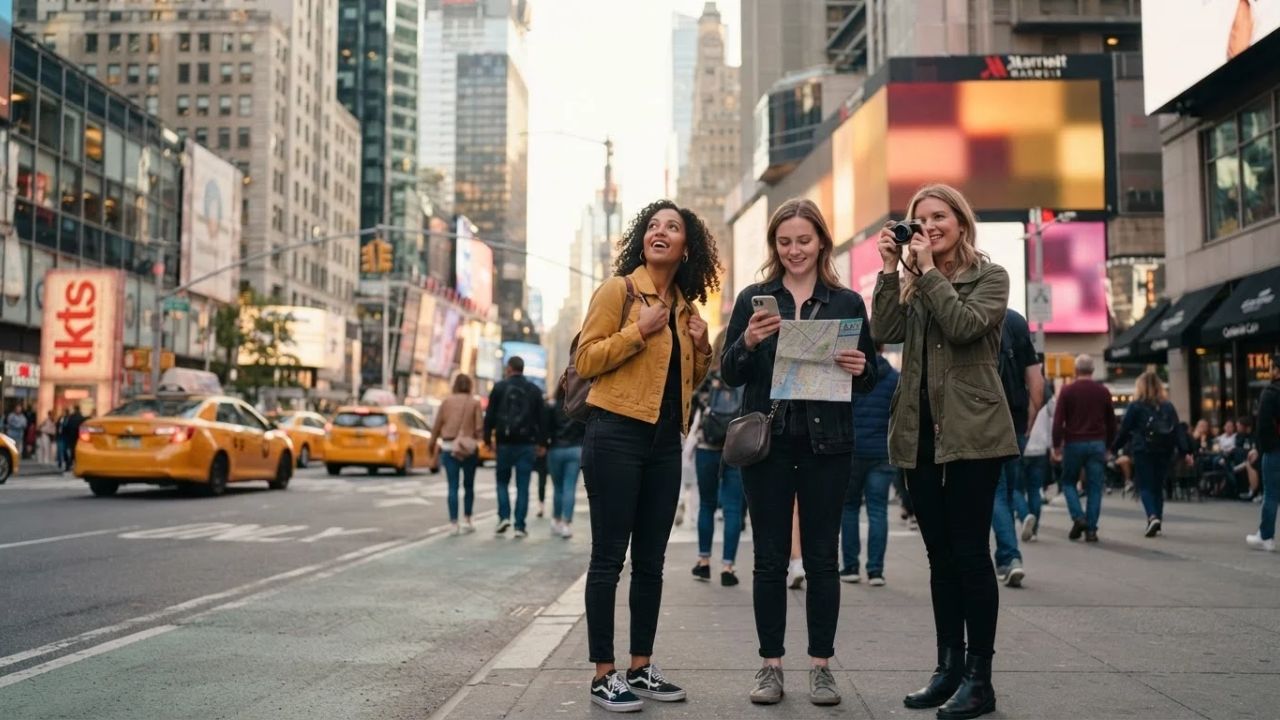
Independent overseas travelers are reshaping American tourism by embarking on extended, single-state journeys focusing on local neighborhoods, culture, and retail.
While holiday brochures have long depicted American vacations as lively family road trips in station wagons, official federal data reveals that a staggering 58.6% of overseas travelers visiting the United States now journey entirely alone. Published in the latest Survey of International Air Travelers by the National Travel and Tourism Office (NTTO), this migration of independent flyers marks a profound cultural transformation in global mobility. Out of 34.3 million overseas visitor arrivals recorded in 2025 (within a broader total of 46.4 million international inbound air travelers including Canada and Mexico), solitary explorers now dwarf traditional travel parties, with only 21.4% traveling with a spouse or partner and just 18.3% accompanied by family members or relatives.
Far from being rushed stopovers, these independent journeys are characterized by remarkable patience and geographical immersion. The average overseas visitor spends 16.9 nights in the country and expends $1,829 while on American soil, supported by an average combined annual household income of $90,880. Rather than attempting exhausting cross-country marathons, international visitors are intentionally anchoring down: an overwhelming 75.4% visit only a single state during their stay, averaging just 1.4 states visited per journey. This deliberate, single-state immersion is revitalizing neighborhood retail, local dining, and regional transit corridors from coastal Florida to northern California.
The Solo Revolution: Unpacking the 2025 NTTO Overseas Inbound Data
The demographic breakdown of international travelers demonstrates that independent travel is no longer a niche subculture but the dominant operational mode of overseas tourism. Vacation and leisure remain the principal motivator, driving 57.1% of all overseas visits, while visiting friends and relatives accounts for 22.2%, and business travel represents 16.4%.
International visitors approach these extended holidays with meticulous preparation. On average, travelers make the conscious decision to visit the United States 104 days prior to departure, locking in their airline reservations approximately 79 days ahead of travel. This roughly 25-day deliberation window between destination selection and flight booking underscores how thoroughly foreign travelers research regional itineraries, lodging hubs, and transport links before committing funds.
Source market data reveals a dynamic geographic realignment. The United Kingdom maintains its historic position as America's premier overseas market, generating 4.1 million arrivals in 2025. Demonstrating the surging economic power of South Asian travel, India has climbed to the second position with 2.1 million arrivals, narrowly surpassing Japan at 2.0 million. Brazil anchors South American inbound demand with 1.9 million travelers, while Germany rounds out the top five with 1.8 million visitors. The dual presence of India and Japan in the top tier confirms that trans-Pacific and Asian corridors have become indispensable pillars of the American visitor economy.
Traveler satisfaction across these journeys remains extraordinarily high. A remarkable 97.2% of overseas visitors reported that their American holiday met or exceeded their expectations, and 96.0% stated they expect to return to the United States. While 73.7% rated their border entry experience as good or excellent, the broad satisfaction metric confirms that the experiential appeal of American destinations easily overcomes the minor inconveniences of international transit.
What Makes This Solo Travel Movement Different: Single-State Immersion and Retail Primacy
The activities pursued by international travelers challenge conventional sightseeing assumptions. When analyzing leisure pursuits across all overseas arrivals, retail shopping emerged as the single most popular activity at 82.9%, outranking conventional sightseeing at 77.8%. Visiting national parks and historic monuments engaged 33.9% of travelers, while art galleries and museums captured 28.3%, and exploring small towns and rural countryside drew 27.6%.
This heavy emphasis on shopping, paired with extended stays, explains the geographical concentration revealed by the NTTO. International visitors are not trying to see every national landmark in two weeks; they are settling into a single state, renting vehicles, patronizing regional outlet centers, exploring suburban malls, and dining in neighborhood establishments. While 75.4% remain in one state, only 14.9% venture into two states, and a mere 9.7% navigate three or more states during their trip.
Destination rankings reflect this regional focus. In 2025, Florida edged ahead of its northern rival to become the most visited state among overseas travelers, welcoming 9.3 million visits. New York followed closely behind with 9.1 million visits, while California captured 6.6 million. Nevada secured fourth place with 2.3 million visits, and Texas rounded out the top five with 1.9 million visits.
Accommodations and mobility remain heavily reliant on traditional infrastructure. Hotels and motels accommodated 71.4% of all overseas visitors, retaining their position as the preferred lodging option. Meanwhile, private or company automobiles served 34.6% of travelers, representing the leading mode of transit and enabling independent explorers to navigate beyond metropolitan transit lines into scenic coastal byways and state park systems promoted through Visit The USA.
Visitor Insider Tips: Navigating America Solo Like an Insider
Traveling across the United States as an independent voyager offers unmatched freedom, provided you master local social norms and logistics:
- Embrace Counter Dining and Bar Culture: Eating alone at a formal dining table can sometimes feel isolating, but American culinary culture offers an ideal alternative: the dining bar. In vibrant foodie destinations from Miami to Manhattan, solo travelers can sit directly at full-service restaurant bars or diner counters. You receive the complete dinner menu, prompt service, and natural opportunities to chat with friendly bartenders and neighborhood regulars.
- Strategize Single-State Rail and Transit Hubs: If visiting New York, skip the rental car entirely and rely on the MTA subway, Long Island Rail Road, and Metro-North trains, which connect Manhattan directly to Hudson Valley art towns and coastal beaches. In Florida, avoid grueling turnpike drives by utilizing the high-speed Brightline train, which whisks solo passengers smoothly between downtown Miami, Fort Lauderdale, West Palm Beach, and Orlando. For those heading to the Sunshine State, resources from Visit Florida highlight pedestrian-friendly beach corridors.
- Tipping Etiquette for Independent Travelers: Tipping remains an integral component of the service economy in the United States. In sit-down restaurants and bars, customary gratuity ranges from 18% to 22% of the pre-tax bill for good service. For rideshare drivers and hotel bellhops, budget $2 to $5 per trip or bag.
- Solo Hotel Safety and Neighborhood Base: Select lodging in central, walkable districts with active street life. In New York, look beyond crowded Times Square toward quieter, transit-accessible quarters like Brooklyn's Downtown or Long Island City. In California, solo travelers often find beachside enclaves like Santa Monica or San Diego's Little Italy far more navigable and relaxed than car-choked downtown corridors.
- Advance Booking for Solo Exploration: Because shopping and cultural attractions draw massive attendance, reserve timed-entry tickets well ahead of departure for high-demand institutions like New York's Museum of Modern Art (MoMA), the Statue of Liberty crown access, or California's Alcatraz Island.
Cultural and Environmental Context: Community Benefits of Extended Travel
The rise of the long-stay solo traveler delivers distinct environmental and civic advantages to American host communities. Fast-paced multi-city tours generate massive aviation emissions and concentrate heavy motorcoach exhaust around fragile historic monuments. In contrast, independent travelers who spend 17 nights exploring a single state tend to utilize regional trains, suburban bus routes, and electric rental vehicles, significantly reducing their per-day carbon footprint.
Economically, solo travelers distribute their $1,829 average expenditure across a much wider array of independent businesses. Rather than dining exclusively in large banquet-style tourist restaurants or booking block accommodations at chain resort hotels, independent visitors frequent neighborhood grocery markets, independent coffee roasters, local laundromats, and community bookstores.
This deliberate pace fosters meaningful cross-cultural dialogue. An overseas visitor from Britain, India, Brazil, or Germany spending two full weeks in a single American county interacts with residents as an engaged neighbor rather than a passive observer. In an era where mass tourism can easily strain municipal resources, the independent, long-stay overseas visitor exemplifies a sustainable model of travel that enriches local commerce while fostering authentic global understanding.
FAQ: Solo Travel in the United States 2026
What percentage of overseas travelers visit the United States alone? According to official NTTO data, 58.6% of overseas visitors traveled solo in 2025, making independent travel the largest travel-party category by a wide margin.
Which US states attract the highest number of overseas visitors? Florida leads the nation with 9.3 million overseas visits, followed closely by New York with 9.1 million, California with 6.6 million, Nevada with 2.3 million, and Texas with 1.9 million.
How long does the average overseas visitor stay in the United States? The average overseas visitor stays 16.9 nights in the country, spending approximately $1,829 during their holiday.
What is the most popular activity for overseas visitors in America? Shopping is the top reported leisure activity at 82.9%, surpassing traditional sightseeing (77.8%) and national park visits (33.9%).
On the open American avenue, the solo traveler discovers that the finest company is often the unexpected warmth of a stranger's welcome.
Related Travel Guides
- Shores Beyond the Megaship: Ten Intimate North American Coastal Cruise Routes for 2026
- Steins on the Prairie: How Lincoln Oktoberfest Reinvents Bavarian Tradition in Nebraska's Historic Haymarket
- Transcontinental River Deltas: How Dhaka's Direct New York Flight Ambition Opens Bangladesh to Global Travelers
Disclaimer
This article is for informational and educational purposes only. It does not constitute legal, financial, or professional advice. While we strive to provide accurate and up-to-date information, travel policies, regulations, and conditions change rapidly. Always verify information with official sources before making travel decisions. Nomad Lawyer makes no representations about the accuracy, reliability, completeness, or suitability of the information provided. Readers should consult qualified professionals for advice specific to their circumstances. The views expressed in this article are those of the author and do not necessarily reflect the views of Nomad Lawyer.
Raushan Kumar
Founder & Lead Developer
Full-stack developer with 11+ years of experience and a passionate traveller. Raushan built Nomad Lawyer from the ground up with a vision to create the best travel and law experience on the web.
Learn more about our team →