
US Retail Safety and Travel Index: Arizona Ranks #1 as California Leads Volume and Nevada Surges in 2026

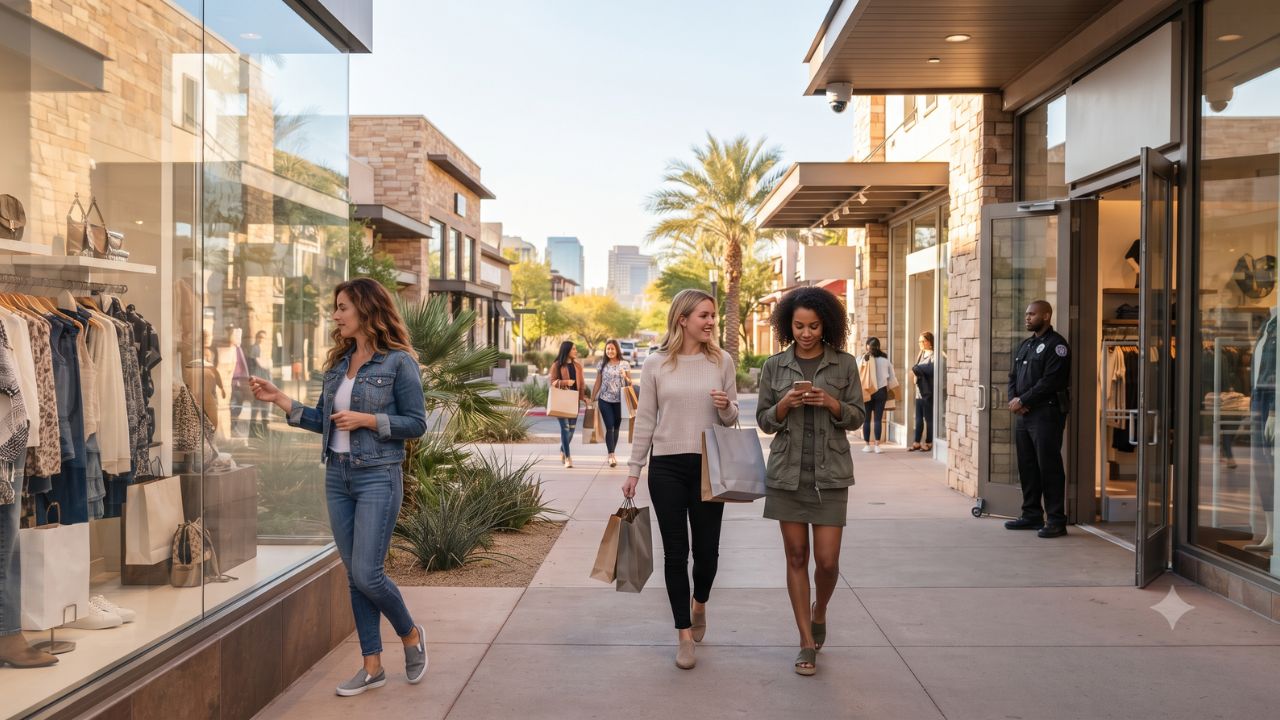
While California logged the nation's highest absolute volume with 99,591 reported retail theft incidents in 2025, an extensive 50-state analysis by Tad Nelson & Associates ranks Arizona as America's number-one state in the composite 2026 Shoplifting Index with an overall score of 85.61. Despite a minor 1.5% dip last year, Arizona's retail theft reports remain 41.6% above 2023 baselines, outpacing traditional high-volume shopping markets.
The findings, compiled from FBI Crime Data Explorer records and supplemented by retail trend reports from the Council on Criminal Justice (CCJ), illustrate a fragmented operating environment across major American shopping destinations. While nationwide retail theft reports declined from a 2024 peak of 1,122,174 to 1,069,716 in 2025 across 42 states, total incidents remained 7.5% higher than the 994,652 logged in 2023. For international visitors, holiday shoppers, and luxury travelers visiting flagship commercial corridors from Scottsdale to the Las Vegas Strip, understanding these state-level retail dynamics ensures a secure shopping experience.
Methodology and the Top 10 Composite State Rankings
The 2026 All-State Shoplifting Index utilizes a multi-metric weighting formula rather than relying purely on raw incident headcounts. The index assigns 45% of its weighting to the state's reported 2025 shoplifting rate per capita, 30% to total reported incident volume, and 25% to year-over-year momentum between 2024 and 2025.
Under this composite model, the top ten states for 2026 are:
- Arizona (Index 85.61): 30,760 reports in 2025; long-term two-year surge of +41.6%.
- Pennsylvania (Index 83.98): 34,694 reports in 2025; steady retail pressures across urban hubs.
- Maryland (Index 80.82): 31,123 reports in 2025; elevated commercial corridor activity.
- Oregon (Index 80.20): 27,352 reports in 2025; sustained downtown retail challenges.
- Colorado (Index 77.76): 26,689 reports in 2025; regional shopping district pressures.
- New Jersey (Index 74.80): 29,334 reports in 2025; +2.0% annual increase.
- Virginia (Index 74.29): 42,720 reports in 2025; high overall commercial volume.
- New York (Index 71.12): 71,578 reports in 2025; massive metropolitan density.
- California (Index 70.92): 99,591 reports in 2025; +3.1% annual increase.
- Nevada (Index 70.61): 12,871 reports in 2025; nation's fastest annual surge (+11.7%).
The Eight States Bucking the National Downward Trend
While 42 US states experienced annual declines in shoplifting reports during 2025, exactly eight states recorded increases, led by dramatic momentum in Nevada:
| State | 2025 Reported Incidents | 2024–2025 Annual Change (%) | Two-Year Trend & Operational Context |
|---|---|---|---|
| Nevada | 12,871 | +11.7% | Fastest growth nationwide; +50.0% vs 2023 baseline |
| Massachusetts | 19,994 | +5.2% | Urban shopping district expansion in Greater Boston |
| Mississippi | 6,890 | +4.7% | Regional retail corridor increases |
| California | 99,591 | +3.1% | Largest total volume in US; expanding retail taskforces |
| North Dakota | 2,884 | +2.4% | Moderate baseline volume with slight upward movement |
| New Jersey | 29,334 | +2.0% | High-density suburban retail center pressures |
| Kentucky | 11,443 | +0.6% | Stable volume with marginal upward drift |
| Texas | 97,124 | +0.2% | Second largest volume in US; steady commercial activity |
Nevada's 11.7% jump was more than double that of any other state, with its 2025 total sitting 50% above its 2023 level—the largest two-year surge in the entire study.
Urban Retail Trends and the 2026 First-Half Outlook
While annual 2025 data showed broad stabilization, early 2026 metrics indicate renewed retail pressure in major cities. Data from the Council on Criminal Justice tracking 18 major American metropolitan areas revealed a 4% increase in reported shoplifting rates during the first half of 2026 compared to H1 2025 (and 5% above H1 2019 pre-pandemic levels). Shoplifting stood as the only crime category among 13 tracked offenses to remain consistently above pre-pandemic benchmarks.
What Sets Regional Shopping Environments Apart
Shopping in the United States remains an essential part of the travel experience, from the upscale open-air plazas of Scottsdale Fashion Square in Arizona and Rodeo Drive in Beverly Hills to the luxury resort gallerias along the Las Vegas Strip.
In destination markets, retailers and municipal authorities are implementing enhanced security protocols without dampening the visitor experience. High-end boutiques utilize discreet private security, advanced optical tracking systems, and digital inventory tags. For visitors exploring premier commercial corridors, shopping environments remain highly accessible, though practical personal vigilance is recommended in crowded retail zones.
Visitor Insider Tips for Safe Shopping Trips
Travelers exploring popular American retail corridors can maximize convenience and security with these proven strategies:
- Car Parking and Vehicle Security: When parking at major shopping malls or outlet centers in Phoenix, Los Angeles, or Las Vegas, never leave shopping bags or electronics visible on car seats. Place all purchases directly into the locked trunk before driving to your next stop, and park in well-lit areas near primary mall entrances. Official travel planning resources are available via Visit Arizona.
- Payment Safety and Digital Wallets: Use contactless smartphone payment methods (such as Apple Pay or Google Wallet) at checkout counters. Digital tokenization prevents payment card skimming and eliminates the need to open wallets in crowded checkout lines.
- Boutique Hours and Peak Crowds: Visit luxury shopping districts on weekday mornings between 10:00 AM and 1:00 PM when stores are calm, sales associates provide personalized styling assistance, and fitting rooms are uncrowded.
- Tax-Free Shipping for International Travelers: Many high-end luxury stores in California, New York, and Nevada offer direct international insured shipping to overseas residences, allowing international travelers to avoid carrying valuable goods through airports or hotels. General international visitor information can be reviewed through Visit The USA.
Cultural Heritage and Retail District Sustainability
Commercial avenues often serve as the historic social cores of American cities. From Old Town Scottsdale's Southwestern art galleries to the preserved art deco storefronts along historic Main Streets, independent retailers anchor neighborhood identity and support local craftspeople.
Sustainable retail travel emphasizes shopping at locally owned businesses, certified Native American artisan markets, and independent community boutiques. By patronizing local merchants and respecting security guidelines in shopping quarters, travelers help sustain local employment and maintain thriving, welcoming commercial districts.
FAQ: US Retail Shopping Safety in 2026
Which US state ranks highest in the 2026 Shoplifting Index?
Arizona ranks first with an index score of 85.61 due to its high per-capita rate and a 41.6% surge above 2023 levels, followed by Pennsylvania (83.98) and Maryland (80.82).
Which states recorded the highest total number of shoplifting reports?
California recorded the highest absolute total with 99,591 reports in 2025, followed closely by Texas with 97,124 reports and New York with 71,578 reports.
Which state is experiencing the fastest rise in shoplifting?
Nevada recorded the fastest increase in the nation, surging 11.7% between 2024 and 2025, and sitting 50% above its 2023 baseline.
Did nationwide shoplifting increase or decrease overall in 2025?
Nationwide shoplifting reports fell 4.7% from 1,122,174 in 2024 to 1,069,716 in 2025 across 42 states, but remained 7.5% above the 2023 baseline of 994,652 incidents.
From the sunlit promenades of Scottsdale to the dazzling storefronts of Las Vegas, smart situational awareness ensures America's great shopping districts remain an absolute pleasure to explore.
Related Travel Guides
Disclaimer
This article is for informational and educational purposes only. It does not constitute legal, financial, or professional advice. While we strive to provide accurate and up-to-date information, travel policies, regulations, and conditions change rapidly. Always verify information with official sources before making travel decisions. Nomad Lawyer makes no representations about the accuracy, reliability, completeness, or suitability of the information provided. Readers should consult qualified professionals for advice specific to their circumstances. The views expressed in this article are those of the author and do not necessarily reflect the views of Nomad Lawyer.
Raushan Kumar
Founder & Lead Developer
Full-stack developer with 11+ years of experience and a passionate traveller. Raushan built Nomad Lawyer from the ground up with a vision to create the best travel and law experience on the web.
Learn more about our team →