
Nationwide Travel Chaos Engulfs the US as American, Delta, and Southwest Airlines Suffer Over 2,600 Flight Delays and 142 Cancellations: Latest Airline News
A severe wave of operational disruptions paralyzes massive transit hubs across the United States, triggering 2,606 severe delays and 142 cancellations that strand thousands of passengers.

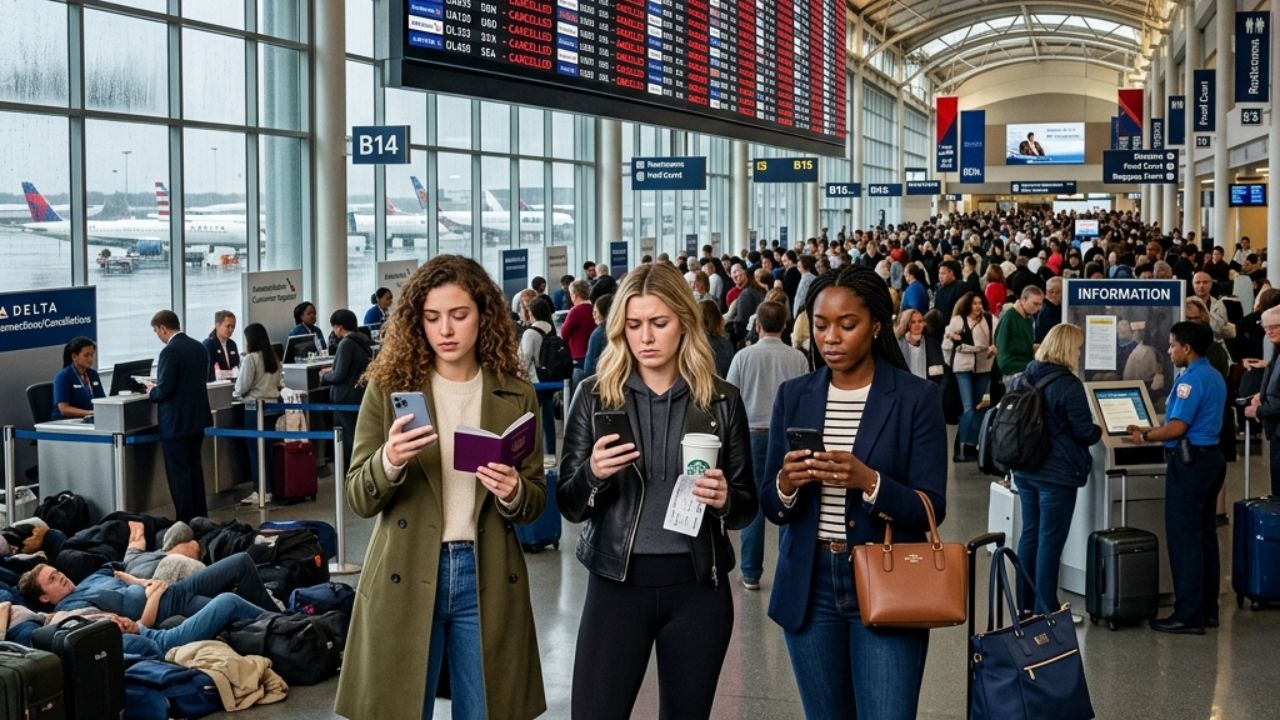
Image generated by AI
A Devastating Aviation Meltdown Across the United States
While the broader global passenger network frequently battles unpredictable localized weather events and standard seasonal congestion, a highly disruptive, synchronized operational breakdown is currently paralyzing the absolute core of the massive United States aviation network. Delivering highly urgent, breaking airline news, verified flight data confirms that a massive wave of sudden groundings has severely devastated operations across Massachusetts, Arizona, Michigan, Ohio, Georgia, Utah, Maine, and beyond. While desperate travelers attempt to navigate sudden, terrifying airport disruptions, these exclusive aviation updates reveal that legacy heavyweights and regional carriers alike—including American Airlines, Delta Air Lines, Southwest, United, and JetBlue—have abruptly executed 142 absolute flight cancellations alongside a staggering 2,606 rolling delays nationwide. By violently stalling critical departures across massive transcontinental hubs, this system-wide failure has triggered uncontrollable travel chaos, leaving thousands of passengers entirely stranded and completely severing vital routes connecting major cities across the entire country.
Expanded Overview: The Scale of the Transcontinental Gridlock
The sudden execution of these mass cancellations and widespread delays serves as an undeniable example of how rapidly carrier-specific operational hurdles and localized weather patterns can dismantle the highly optimized, interconnected scheduling network of the United States. Historically, the massive domestic corridors linking the East Coast to the Mountain West and the Sun Belt operate as incredibly efficient logistical pipelines heavily utilized by corporate commuters and leisure tourists.
However, the sheer impact of today's disruption has completely dismantled that reliability. The massive disruptions heavily targeted some of the busiest airports on the planet, heavily clustering around East Coast corridors and critical midwestern gateways. Boston Logan International and Hartsfield-Jackson Atlanta International absorbed the absolute worst of the logistical collapse, while regional airports in Massachusetts and Maine suffered crippling percentages of outright cancellations. This situation heavily reflects the ongoing vulnerability of the US aviation system, particularly on highly utilized routes with extremely tight aircraft rotation dependencies.
Section-Wise Breakdown of the Most Disrupted US Airports
Boston and Atlanta Absorb the Heaviest Blows
The absolute epicenter of this logistical nightmare radiated outward from two of the nation's most critical connecting mega-hubs. Boston Logan International Airport (Massachusetts) experienced the highest disruption levels of any major facility, recording a devastating 58 absolute cancellations alongside 221 massive delays. The airport alone accounted for a highly substantial share of the nationwide cancellation activity, completely severing routes up and down the eastern seaboard.
Further south, Hartsfield-Jackson Atlanta International Airport (Georgia)—frequently ranked as the busiest airport in the world—buckled under severe operational strain. The mega-hub recorded 13 absolute cancellations and a staggering 198 massive delays, trapping tens of thousands of connecting passengers inside its massive concourses.
Widespread Gridlock Across Phoenix, Detroit, and Salt Lake
The operational strain violently bled across the country, infecting highly critical connection points in the South, Midwest, and Mountain regions. Phoenix Sky Harbor International Airport (Arizona) reported 78 severe delays and 2 cancellations, stalling desert traffic. Detroit Metro Wayne County Airport (Michigan) logged 59 delays and 5 absolute cancellations, severely cutting capacity in the Midwest. Further west, Salt Lake City International Airport (Utah) reported 50 delays and 5 cancellations, reflecting moderate but highly disruptive operational challenges. Even smaller hubs like Cleveland-Hopkins International Airport (Ohio) recorded 31 delays and 1 cancellation.
Regional Airports Decimated by Cancellations
While massive hubs suffered brutal volume, highly remote regional airports experienced devastating cancellation percentages that entirely severed their connectivity. Nantucket Memorial Airport (Massachusetts) recorded a shocking 20 absolute cancellations against only 3 delays, completely halting island access. Similarly, Hancock County/Bar Harbor Airport (Maine) suffered 6 absolute cancellations and exactly 0 delays, meaning the scheduled operations were simply erased from the board entirely.
Verified US Nationwide Airport Disruption Metrics Table
| Airport | Delays | Cancellations |
|---|---|---|
| Boston Logan International | 221 | 58 |
| Hartsfield-Jackson Atlanta International | 198 | 13 |
| Phoenix Sky Harbor International | 78 | 2 |
| Detroit Metro Wayne County | 59 | 5 |
| Salt Lake City International | 50 | 5 |
| Cleveland-Hopkins International | 31 | 1 |
| Nantucket Memorial | 3 | 20 |
| Hancock County/Bar Harbor | 0 | 6 |
Section-Wise Breakdown of Impacted Airlines
American and Southwest Lead in Massive Delays
The operational strain severely punished the nation's largest carriers. American Airlines led the entire industry in pure delay volume, recording a catastrophic 537 massive delays, alongside 2 outright cancellations. Southwest Airlines closely followed, experiencing 302 massive delays and 1 cancellation, severely crippling its highly utilized point-to-point network.
Delta Air Lines Suffers the Most Cancellations
While American led in delays, Delta Air Lines absorbed the absolute highest cancellation figure among the major carriers. Delta reported a devastating 25 absolute cancellations alongside 244 massive delays, violently severing critical connections through its Atlanta and Salt Lake City hubs. United Airlines also suffered heavily, logging 250 delays and 6 cancellations.
Regional and Mid-Tier Carriers Paralyzed
JetBlue Airways heavily felt the massive disruptions radiating out of Boston, reporting 106 delays and 4 cancellations. Alaska Airlines recorded 45 delays and 5 cancellations, while its regional partner Horizon Air (ASA) suffered 20 delays and 4 cancellations. Other highly affected regional operators included Republic Airways (59 delays, 1 cancellation) and Endeavor Air (52 delays, 2 cancellations). Niche operator Tradewind experienced a massive 12 absolute cancellations against just 1 delay.
Verified US Nationwide Airline Disruption Metrics Table
| Airline | Delays | Cancellations |
|---|---|---|
| American Airlines | 537 | 2 |
| Southwest Airlines | 302 | 1 |
| United Airlines | 250 | 6 |
| Delta Air Lines | 244 | 25 |
| JetBlue Airways | 106 | 4 |
| Republic Airways | 59 | 1 |
| Endeavor Air | 52 | 2 |
| Alaska Airlines | 45 | 5 |
| Horizon Air (ASA) | 20 | 4 |
| Tradewind | 1 | 12 |
Passenger Impact: Extended Terminal Waits and Rebooking
For the modern domestic commuter, the passenger impact of these massive, sudden disruptions is physically exhausting and highly terrifying. With 2,606 flights severely delayed nationwide, tens of thousands of travelers immediately experienced drastically reduced flexibility and entirely lost direct travel options. Passengers desperately attempting to travel through Boston and Atlanta are violently forced into frantic, multi-hour rebooking queues. Travelers are urgently advised to check flight statuses regularly before leaving for the airport, monitor airline notifications through mobile apps, and review rebooking options strictly before arriving at heavily congested terminal ticket counters.
Industry Analysis: The Vulnerability of Interconnected Fleets
From a macroeconomic and industry operations perspective, this incident highlights a highly concerning reality for US aviation planners. Travel analysts fiercely argue that when massive carriers like American and Southwest suffer hundreds of delays, it points directly to acute, systemic operational challenges—such as severe air traffic control constraints, massive weather fronts, or intense tarmac congestion. When a single massive hub like Boston or Atlanta buckles, the lack of available replacement aircraft forces airlines to simply cancel flights rather than attempt to recover the schedule, generating rolling delays that infect the entire continent.
Conclusion: A Highly Volatile Recovery Phase for US Travel
The sudden, highly publicized execution of 142 outright cancellations and 2,606 massive delays across the United States is exponentially more than a routine operational hiccup—it represents a highly visible failure of the transcontinental aviation network. By completely severing critical connections across Massachusetts, Georgia, Arizona, and Michigan, the disruption has proven how rapidly localized friction can devolve into absolute, nationwide terminal chaos. As operations teams aggressively attempt to process the backlog of stranded domestic passengers, travelers are urgently advised to completely avoid arriving at any major hub without aggressively monitoring their airline's official app for real-time flight status.
Key Takeaways
- Massive Nationwide Gridlock: The US aviation network suffered a highly disruptive wave of 2,606 severe delays and 142 absolute cancellations.
- American Airlines Bears the Delays: American recorded a devastating 537 massive delays, heavily leading the industry in delayed flights.
- Delta Air Lines Cancellations: Delta executed the highest volume of outright groundings, pulling 25 flights from the schedule alongside 244 delays.
- Boston and Atlanta Paralyzed: Boston Logan (221 delays, 58 cancellations) and Hartsfield-Jackson Atlanta (198 delays, 13 cancellations) suffered the absolute worst terminal gridlock.
- Passenger Chaos: Tens of thousands of travelers were left completely stranded, facing terrifying missed connections and severe terminal distress as they scramble for alternative routing.
Disclaimer: The specific flight cancellation metrics, impacted routes, and delay counts presented in this report are based on verified flight tracking data for nationwide operations on May 31, 2026. Official causes for this operational breakdown, subsequent network recovery timelines, and passenger compensation procedures are highly volatile and subject to continuous, real-time update. Affected passengers are urgently advised to monitor their specific booking status directly via their airline's official portal.
Disclaimer
This article is for informational and educational purposes only. It does not constitute legal, financial, or professional advice. While we strive to provide accurate and up-to-date information, travel policies, regulations, and conditions change rapidly. Always verify information with official sources before making travel decisions. Nomad Lawyer makes no representations about the accuracy, reliability, completeness, or suitability of the information provided. Readers should consult qualified professionals for advice specific to their circumstances. The views expressed in this article are those of the author and do not necessarily reflect the views of Nomad Lawyer.
Kunal K Choudhary
Co-Founder & Contributor
A passionate traveller and tech enthusiast. Kunal contributes to the vision and growth of Nomad Lawyer, bringing fresh perspectives and driving the community forward.
Learn more about our team →