
US Interior Department to Install 12 Warning Signs Outside Smithsonian National Museum of American History in 2026
The Trump administration is deploying 12 temporary warning signs around the Smithsonian National Museum of American History to alert visitors of alleged ideological bias and 'fake history' within the exhibits.

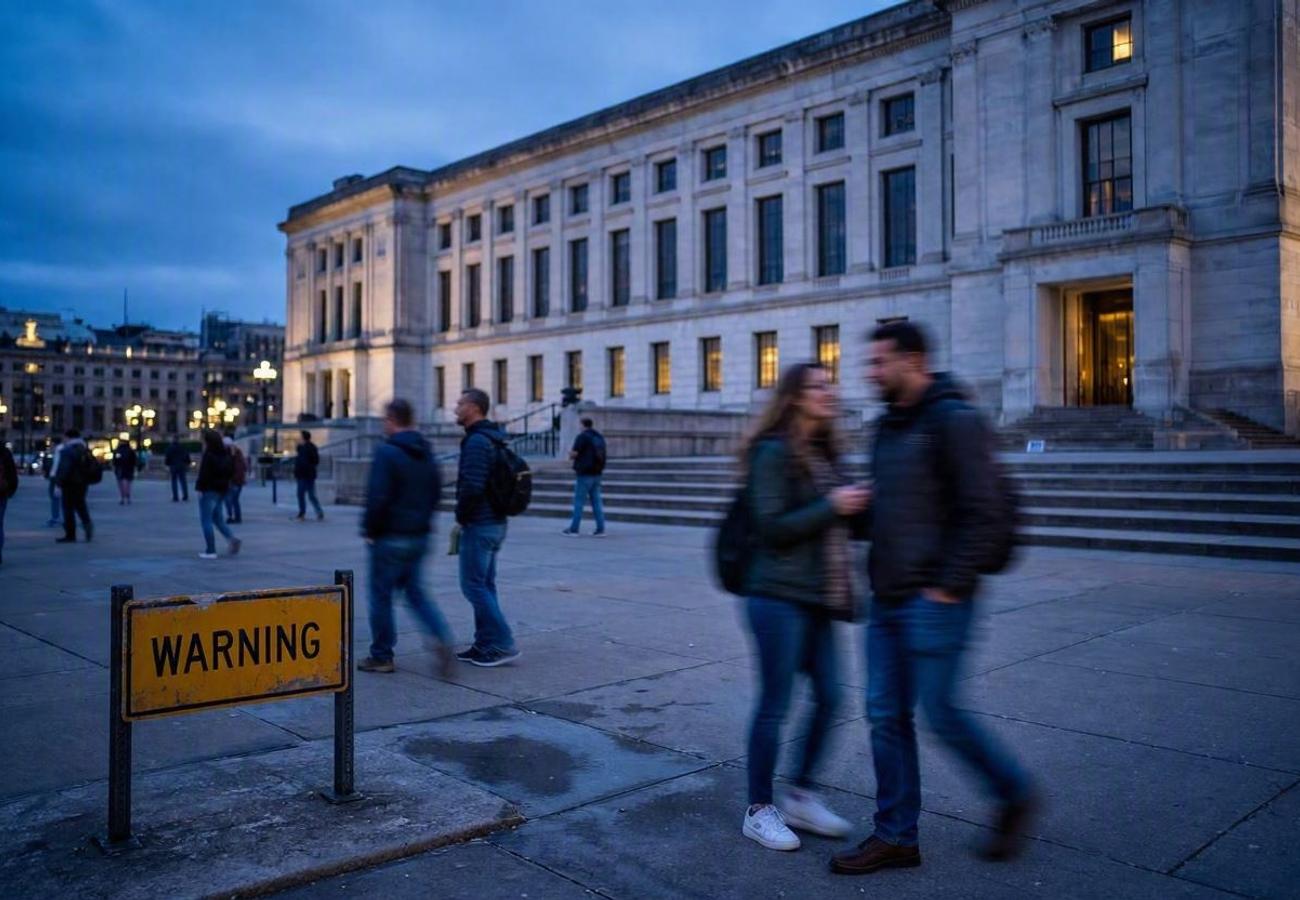
Image generated by AI
[Washington, D.C., September 18, 2026] — The Trump administration is moving to install 12 temporary warning signs on public walkways surrounding the Smithsonian National Museum of American History to alert visitors that the institution's exhibits promote "radical ideologies."
The initiative, directed by the U.S. Department of the Interior, targets the Smithsonian Institution for allegedly distorting American heritage and promoting "social justice" narratives. These signs will be placed on sidewalks and paths maintained by the National Park Service (NPS), effectively creating a government-mandated warning system for tourists and citizens before they enter the museum.
The Catalyst for Signage Installation
The decision follows an executive order titled "Restoring Trust in the Smithsonian," which was issued after a months-long probe by the Domestic Policy Council. This investigation culminated in a report titled Saving America’s Story: How Ideological Capture at the Smithsonian Institution’s National Museum of American History Erases Our Heritage.
The report claims that the museum's current leadership has abandoned the presentation of American history as a shared national inheritance. Instead, the administration alleges the museum uses its exhibits as tools for the "radical transformation of our society." The administration has specifically targeted Smithsonian Secretary Lonnie Bunch III and museum director Anthea Hartig, accusing them of harboring "anti-white animus" and prioritizing political agendas over historical accuracy.
Beyond general historical narratives, the administration has taken issue with the National Museum of Natural History, claiming certain exhibits present views "inconsistent with biology," specifically regarding the binary nature of sex. Additional grievances include museum presentations on illegal immigration and the lack of sufficient honor paid to the 56 signers of the Declaration of Independence.
Scope of Impact and Financial Cost
The project utilizes taxpayer funds to implement a targeted communication campaign on the museum's perimeter. The financial and operational breakdown is as follows:
| Item | Detail |
|---|---|
| Total Number of Signs | 12 temporary installations |
| Cost Per Sign | Approximately $7,000 |
| Total Project Budget | Roughly $84,000 |
| Placement Locations | NPS-maintained sidewalks and public walkways |
| Primary Target | National Museum of American History |
| Secondary Target | Smithsonian Institution general visitors |
The administration's goal is to redirect visitors to "resources for accurate information regarding America’s history" and to signal that current exhibits require renovation to align with the findings of the Domestic Policy Council report.
What This Means for Travelers
For tourists visiting the National Mall, the immediate impact is visual and informational. Visitors will encounter government-sponsored signage that contradicts the content of the museum they are about to enter. This creates a fragmented visitor experience where the federal government is openly disputing the curation of one of the world's most prominent museums.
Travelers should expect:
- Visual Disruptions: Temporary signage along the primary pedestrian arteries leading to the museum.
- Conflicting Narratives: A direct clash between the exhibits inside the museum and the warnings posted on the exterior sidewalks.
- Potential Crowds: Increased security or pedestrian congestion around these signs as they become flashpoints for political debate.
While the museum remains open and accessible, the atmosphere surrounding the facility is shifting from a purely educational environment to one of active political contestation.
The Path Forward and Leadership Changes
This move is the latest in a series of actions intended to usher in what the administration calls the "Golden Age of America." It follows a March 2025 executive order, "Restoring Truth and Sanity to American History," which labeled the Smithsonian "woke" and "out of control."
The White House has previously highlighted specific artworks as evidence of this "distortion," including a depiction of a transgender Statue of Liberty and pieces commemorating illegal border crossings. The administration intends for these signs to serve as a corrective measure to ensure that the "American story" is told with "honesty and gratitude."
Amidst this turmoil, Smithsonian Secretary Lonnie Bunch III—the first African American and first historian to hold the position—has announced his retirement. While the administration's attacks have coincided with this announcement, Bunch has stated that his decision to step down is unrelated to the political pressure. He served as the 14th Secretary of the Smithsonian since June 2019, overseeing a vast network of 21 museums and 20 libraries.
FAQ: Smithsonian Museum Access 2026
Will the warning signs block entry to the National Museum of American History? No. The signs are being installed on the sidewalks and walkways surrounding the museum. They are designed to inform visitors before they enter, not to prevent access to the exhibits.
Is the museum closing any exhibits due to these warnings? Currently, the signs are temporary warnings placed outside. There is no official confirmation that specific internal exhibits have been removed, though the administration has called for their renovation.
Who is paying for the installation of these signs? The project is funded by U.S. taxpayer money, with a total estimated cost of $84,000 managed through the Department of the Interior and the National Park Service.
Does this affect other Smithsonian museums? While the primary focus of the 12 signs is the National Museum of American History, the administration has expressed similar grievances regarding the National Museum of Natural History.
The battle over the American narrative has moved from the curator's desk to the sidewalk.
Related Travel Guides
Disclaimer
This article is for informational and educational purposes only. It does not constitute legal, financial, or professional advice. While we strive to provide accurate and up-to-date information, travel policies, regulations, and conditions change rapidly. Always verify information with official sources before making travel decisions. Nomad Lawyer makes no representations about the accuracy, reliability, completeness, or suitability of the information provided. Readers should consult qualified professionals for advice specific to their circumstances. The views expressed in this article are those of the author and do not necessarily reflect the views of Nomad Lawyer.
Naina Thakur
Contributor & Travel Specialist
Travel enthusiast and legal writer covering visa regulations, responsible tourism, and cultural journeys across global destinations.
Learn more about our team →