
US Air Travel Faces 2,689 Flight Delays and 164 Cancellations as Storms and Construction Hit Key Hubs
Over 2,689 flights faced delays and 164 were cancelled across the US, with severe thunderstorms in Miami and Houston, runway work in Boston, and Pacific Northwest ground disruptions.

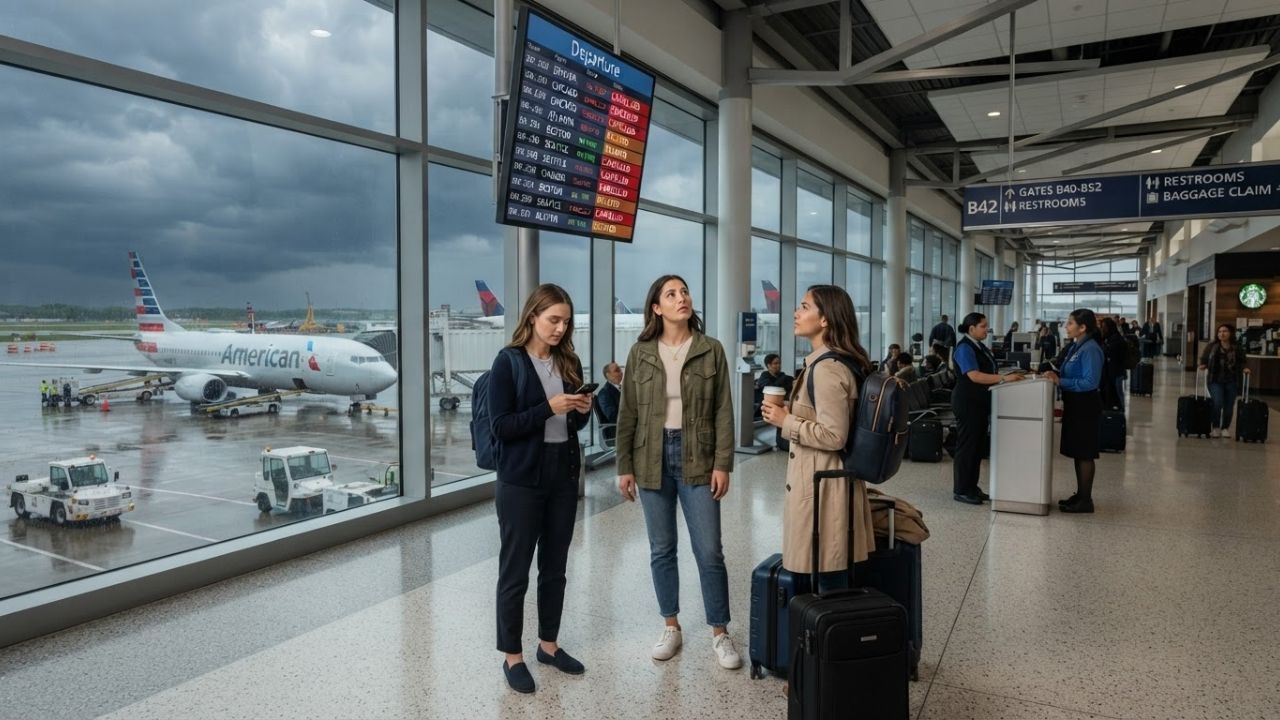
Image generated by AI
Commercial air travelers across the United States confronted widespread disruption as airspace trackers recorded 2,689 flight delays and 164 cancellations across major regional and transcontinental corridors on 10 September 2026. Compounded by severe convective thunderstorm cells moving across South Florida and the Gulf Coast, active runway rehabilitation at Boston Logan, and localized regional airline groundings in the Pacific Northwest, ground delay programs initiated by the Federal Aviation Administration (FAA) triggered cascading schedule adjustments nationwide.
Storm Fronts and Runway Projects Drive Airport Disruptions
The synchronized operational friction affected major carrier hubs from the Atlantic seaboard to the Pacific coast, according to consolidated airspace monitoring logs timestamped at 2:30 pm ET:
- Miami International Airport (MIA): Ranked as the nation’s hardest-hit airport by delay volume, recording 290 delays alongside 8 cancellations. The FAA instituted a mandatory ground delay program due to severe thunderstorm activity, pushing average flight delays to an extraordinary 218 minutes. Originating flights posted an 18% delay rate, while arriving destination flights suffered a 28% delay rate.
- Boston Logan International Airport (BOS): Ground delays linked to active runway construction resulted in 226 delays and 3 cancellations. Inbound flights absorbed an average delay of 64 minutes, generating a 22% delay rate across destination operations.
- Chicago O’Hare International Airport (ORD): The Midwestern hub recorded 205 delays and 4 cancellations, with FAA tracking indicating average departure delays of 15 minutes and increasing under categorized operational constraints, holding destination arrivals at a 6% delay rate.
- Hartsfield-Jackson Atlanta International Airport (ATL): The world's busiest passenger hub logged 150 delays and 6 cancellations, maintaining a 5% origin delay rate and an 8% destination delay rate.
- Seattle-Tacoma International Airport (SEA): Traffic volume and terminal demand created 110 delays and 32 cancellations. Average departure holds registered at 15 minutes and rising, with origin operations showing a 2% cancellation and 7% delay rate, while destination arrivals recorded a 2% cancellation and 8% delay rate.
- San Francisco International Airport (SFO): The Northern California gateway logged 96 delays and 6 cancellations, posting a 9% destination arrival delay rate.
- George Bush Intercontinental Airport (Houston - IAH): Severe regional thunderstorms forced average departure delays of 15 minutes and increasing, yielding 81 delays and 7 cancellations (5% origin delay rate, 7% destination delay rate).
- Portland International Airport (PDX): Regional schedule thinning generated 31 delays and 25 cancellations. Departing flights experienced a 2% cancellation and 3% delay rate, while arriving destination routes experienced a 5% cancellation and 6% delay rate.
Carrier Breakdown: Southwest and Regional Fleets Face Heavy Strain
Schedule fragility manifested differently across individual carrier networks, with low-cost domestic point-to-point operations absorbing high delay numbers while regional Pacific Northwest carriers experienced sharp cancellation rates:
- Southwest Airlines: Encountered the highest operational delay pressure nationwide, logging 540 flight delays and 9 cancellations as rolling weather through Florida and Texas cascaded through its quick-turnaround schedule.
- United Airlines: Absorbed 239 delays and 12 cancellations, with significant friction concentrated at its Chicago O'Hare and Houston Bush hubs.
- Alaska Airlines: Recorded 67 flight delays and 26 cancellations across its West Coast network.
- Horizon Air (ASA): Suffered acute schedule disruption, posting 71 cancellations and 15 delays. Operating primarily as Alaska Airlines' regional feeder arm, Horizon's cancellations accounted for over 43% of total nationwide cancellations.
Comparative Airport Disruption Matrix
| Airport Hub | Total Delays | Total Cancellations | Primary Causal Factor | Average Delay Time |
|---|---|---|---|---|
| Miami (MIA) | 290 | 8 | Thunderstorms (FAA Ground Delay) | 218 minutes |
| Boston Logan (BOS) | 226 | 3 | Runway Construction | 64 minutes |
| Chicago O'Hare (ORD) | 205 | 4 | Air Traffic Demand / Operational | 15+ minutes |
| Atlanta (ATL) | 150 | 6 | High Density Volume | Variable holds |
| Seattle-Tacoma (SEA) | 110 | 32 | Airspace Demand & Fleet Balancing | 15+ minutes |
| San Francisco (SFO) | 96 | 6 | Coastal Gate Metering | Regular intervals |
| Houston Bush (IAH) | 81 | 7 | Regional Thunderstorms | 15+ minutes |
| Portland (PDX) | 31 | 25 | Regional Fleet Maintenance / Crew Flow | Scheduled drops |
Local Insider Tips for Navigating Hub Ground Delays
When systemic weather and construction hold aircraft at departure gates, experienced travelers utilize regional workarounds to minimize transit downtime:
- Miami Airport Concourse Navigation: With average delays exceeding three hours, avoid gate areas in Concourse D which experience severe seating shortages. If ticketed on participating carriers or holding airline lounge passes, head to Concourse J or quieter upper-level observation lounges near the central terminal hotel.
- Boston Logan Water Shuttle Bypass: Travelers facing prolonged delays at BOS heading into downtown Boston can skip congested roadway taxi lines entirely by taking the Massport Route 66 shuttle bus directly to the Logan Water Transportation Dock. From there, the MBTA water ferry connects to Long Wharf in under 10 minutes.
- Pacific Northwest Intercity Alternative: If traveling between Portland (PDX) and Seattle (SEA) during Horizon Air regional cancellations, avoid waiting on indefinite airport standby lists. Amtrak Cascades rail services run regular daily trains between Portland Union Station and Seattle King Street Station, providing a reliable four-hour ground transit bypass.
- Enforce Federal Department of Transportation (DOT) Refund Rules: If your flight is canceled or experiences a significant schedule change and you choose not to accept alternative carrier routing, you are legally entitled to a full cash refund to your original form of payment under federal DOT rules—not merely expiring airline travel credits.
Aviation Outlook: Balancing Fleet Utilization and Infrastructure Upgrades
The convergence of 2,689 delays across a single afternoon underscores the operational tightness of the United States air transportation system. While capital modernization projects such as runway overhauls at Boston Logan remain necessary for multi-decade airport safety and efficiency, they temporarily restrict arrival slots during peak operating hours.
When combined with volatile convective thunderstorm patterns in the southern states and high volume on transcontinental routes, airlines operate with minimal spare fleet capacity. For passengers, proactive flight-status tracking, understanding carrier rebooking options, and building buffer time into connecting domestic itineraries remain indispensable tools for navigating contemporary air travel.
Frequently Asked Questions
What caused the widespread US flight delays today?
Delays were primarily driven by severe thunderstorms triggering FAA ground delays in Miami and Houston, runway rehabilitation construction at Boston Logan, and terminal congestion at Chicago O'Hare and Seattle-Tacoma.
Which airline experienced the highest number of cancellations?
Horizon Air (ASA) experienced the largest cancellation impact with 71 flights canceled, followed by Alaska Airlines with 26 cancellations and United Airlines with 12 cancellations.
How long were flight delays at Miami International Airport?
The Federal Aviation Administration reported that ground delays at Miami International Airport averaged 218 minutes due to severe thunderstorm activity.
Am I entitled to a cash refund if my flight is canceled?
Yes. Under United States Department of Transportation regulations, passengers whose flights are canceled by the airline and who decline rebooking are entitled to a full prompt cash refund, regardless of whether the disruption was caused by weather or airline operations.
Monitoring live airspace telemetry and carrier mobile notifications allows passengers to adjust travel plans before departure during widespread airport ground delays.
Related Travel Guides
Delta Air Lines Launches First US Nonstop Flight to Saudi Arabia: Atlanta to Riyadh on Airbus A350
The Real Cost of Changing or Cancelling Airline Award Flights: Complete 2026 Loyalty Guide
Disclaimer
This article is for informational and educational purposes only. It does not constitute legal, financial, or professional advice. While we strive to provide accurate and up-to-date information, travel policies, regulations, and conditions change rapidly. Always verify information with official sources before making travel decisions. Nomad Lawyer makes no representations about the accuracy, reliability, completeness, or suitability of the information provided. Readers should consult qualified professionals for advice specific to their circumstances. The views expressed in this article are those of the author and do not necessarily reflect the views of Nomad Lawyer.
Preeti Gunjan
Contributor & Community Manager
A passionate traveller and community builder. Preeti helps grow the Nomad Lawyer community, fostering engagement and bringing the reader experience to life.
Learn more about our team →