
US Flight Cancellations Surge to Four-Year High: How Megahubs DFW, JFK, and O'Hare Are Handling the Strain
US flight cancellations have hit a four-year peak as severe storms, airspace bottlenecks, and tight airline schedules create ripple delays across Dallas/Fort Worth, New York, Chicago, and Miami.

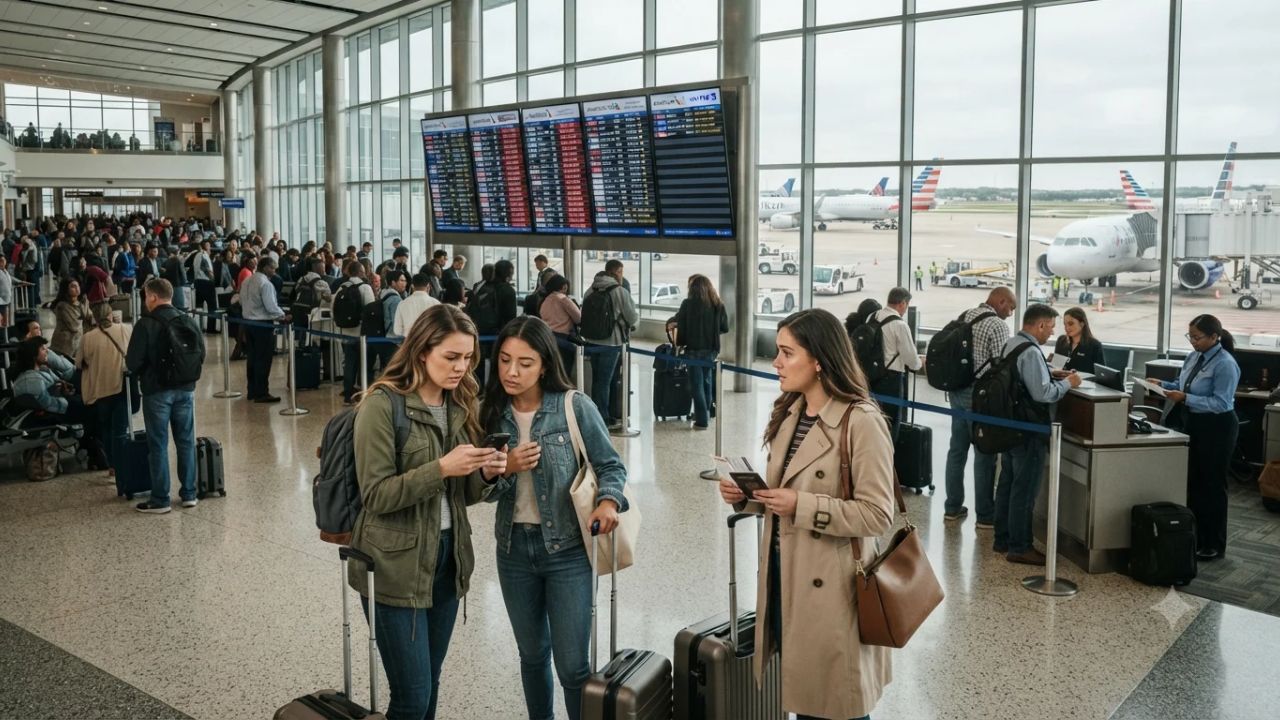
Flight cancellations across the United States have officially reached a four-year peak according to recent aviation data highlighted by Stacker Travel, transforming routine airport transits into high-stakes operational bottlenecks. A single severe thunderstorm over North Texas or a ground delay program in the tri-state New York airspace now triggers domino effects that cascade across thousands of miles, stranding flight crews, displacing airframes, and leaving passengers stranded at connecting gates from Atlanta to Denver.
As millions of domestic and international travelers cross the country for business and leisure, America's largest aviation gateways are operating under unprecedented pressure. Understanding the structural vulnerabilities of megahubs such as Dallas/Fort Worth International Airport (DFW), Chicago O'Hare International Airport (ORD), Miami International Airport (MIA), and the New York metropolitan trio of John F. Kennedy International Airport (JFK), Newark Liberty International Airport (EWR), and LaGuardia Airport (LGA) is essential for anyone boarding an aircraft this season.
Anatomy of the Four-Year Cancellation Peak Across US Hubs
The surge in grounded flights stems from a delicate balance between tightly wound airline route models and external operational stresses. Modern commercial carriers utilize high-utilization aircraft schedules, meaning a single narrow-body jet is routinely scheduled to operate four to six distinct flight segments in a single calendar day. When severe weather systems—such as high-wind squall lines in the Midwest, tropical disturbances across the Gulf Coast, or early-season winter storms—shut down runways for even sixty minutes, the schedule compression collapses.
A single cancellation triggers a multi-layered logistical deficit. Beyond the immediate inconvenience to travelers on that specific flight number, the grounded aircraft fails to arrive at its downline destination to operate subsequent segments. Simultaneously, cockpit and cabin crews exceed federally mandated duty limits under FAA Part 117 flight time limitations, grounding aircraft even after skies clear.
The table below outlines how operational pressures and regional geography impact the nation's key connecting gateways:
| Aviation Gateway | Primary Operating Role | Dominant Vulnerability Factor | Recommended Minimum Connection | Risk Profile Index |
|---|---|---|---|---|
| Dallas/Fort Worth (DFW) | Mega-Connecting Superhub | Convective storm corridors & apron congestion | 90–120 Minutes | High Ripple Impact |
| New York JFK / EWR / LGA | Global Gateway & Regional Hub | Dense airspace congestion & slot limits | 120–180 Minutes | High Departure Delay |
| Chicago O'Hare (ORD) | Transcontinental Midpoint | Rapid front weather shifts & gate holds | 90–110 Minutes | Moderate-High Ripple |
| Hartsfield-Jackson Atlanta (ATL) | World's Busiest Passenger Hub | Peak-hour ground movement volume | 75–90 Minutes | Moderate Delay Spread |
| Miami International (MIA) | Latin America & Caribbean Gateway | Tropical precipitation & customs queues | 120–150 Minutes | High International Risk |
| Denver International (DEN) | Mountain West Crossroads | High-altitude convective wind shears | 75–90 Minutes | Moderate Ground Stops |
Megahubs Under Stress: What Makes Each Major Gateway Vulnerable
Every major American aviation center exhibits unique geographic and structural pressure points that dictate how schedule breakdowns spread across the national network.
Dallas/Fort Worth International Airport (DFW)
Spanning more than 27 square miles, DFW is one of the world's most sprawling connecting points. Because it serves as a central operational fortress for nationwide departures, convective storm cells over North Texas immediately sever transcontinental air corridors. Recent airport stress rankings place DFW high on delay exposure due to massive transfer distances between Terminals A, B, C, D, and E, where a 15-minute incoming delay can turn a cross-terminal sprint via the Skylink train into a missed connection.
The New York Metro Triad: JFK, Newark Liberty, and LaGuardia
Managing commercial aviation within the New York airspace requires navigating the densest civilian flight corridor on earth. The Port Authority of New York and New Jersey oversees facilities that process millions of international arrivals alongside high-frequency domestic shuttles. Air traffic control restrictions, combined with runway construction and coastal weather fronts, frequently prompt Ground Delay Programs managed by the FAA Air Traffic Control System Command Center. When inbound international flights into JFK or EWR arrive behind schedule, onward domestic connections throughout the Eastern Seaboard quickly dissolve.
Chicago O'Hare and Miami International
Chicago O'Hare occupies a central geographic position that links the eastern and western halves of the continent, making its dual-runway operations highly sensitive to Midwestern temperature swings and lake-effect wind changes. Further south, Miami International Airport acts as the nation's primary bridge to the Caribbean, Central America, and South America. High passenger volume and international baggage transfers mean that when tropical storm bands ground flights in Florida, regional schedules downline in Kingston, San Juan, and Bogotá experience immediate disruptions.
Visitor Insider Tips: Defending Your Itinerary Against Air Travel Chaos
While passengers cannot control regional weather patterns or federal air traffic directives, seasoned travelers deploy precise strategic safeguards to protect their itineraries:
- Book the First Departure Wave (05:00 to 07:30): Aircraft scheduled for the earliest morning departures are almost always already parked at the gate from the previous evening. Crews have completed their mandatory rest periods, giving these flights the highest statistical on-time departure rate before rolling system delays accumulate.
- Enforce a Two-Hour Minimum Layover: Never accept automated booking algorithms that offer 40- to 50-minute domestic connections at giant hubs like DFW, ORD, or ATL. A simple ten-minute taxiway hold or gate delay will eliminate your transfer margin.
- Track Inbound Aircraft Registration: Instead of merely looking at your flight's scheduled departure time on airport terminal screens, use airline mobile apps or flight tracking tools to monitor the incoming aircraft's physical location (the "Where is my plane coming from?" feature). If the inbound plane is delayed at an earlier hub, you can initiate rebooking before the official departure board changes.
- Carry Essential Medications and Changes of Clothes: With baggage transfer systems facing peak strain during mass cancellation events, checked luggage is frequently separated from passengers during tight re-routes. Keep high-value items, chargers, and two days of clothing in your overhead cabin bag.
- Bypass Terminal Help Desks with Direct Digital Channels: When a flight cancels, terminal service lines swell to hundreds of passengers within minutes. Call the carrier's international customer support desk via VoIP, reach out via direct messaging channels on social media, or self-rebook via the airline mobile application while walking away from the physical line.
Regulatory Realities, Consumer Rights, and Infrastructure Modernization
The escalation of flight cancellations has heightened scrutiny on consumer protections and airline operational transparency. Under regulatory rules enforced by the U.S. Department of Transportation, passengers are legally entitled to a full cash refund—not merely a travel voucher or credit—if an airline cancels a flight or significantly alters the schedule and the traveler chooses not to take the alternate flight offered.
To curb long-term systemic vulnerabilities, carriers and airport authorities are accelerating capital investments into digital passenger notifications, automated ramp baggage tracking, predictive maintenance platforms, and expanded terminal gate infrastructure. However, modern air travel remains an intricately connected ecosystem where physical runway capacity and crew availability set absolute hard limits on recovery speed.
FAQ: Navigating US Flight Disruptions in 2026
What are my refund rights if my US flight is cancelled?
If your flight is cancelled or significantly delayed and you choose not to travel on the airline's alternative rebooking, federal rules require the airline to issue a full cash refund back to your original payment method.
How much connection time should I budget at major hubs like DFW or JFK?
Allow at least 90 to 120 minutes for domestic connections at DFW, ORD, and ATL, and 2 to 3 hours for itineraries involving international arrivals or terminal changes at New York JFK, Newark, or Miami.
Why do cancellations linger even after severe weather clears?
Cancellations continue after storms pass because aircraft remain stranded in other cities and flight crews exceed their legal duty-hour caps, requiring airlines time to reposition personnel and planes.
Are morning flights less likely to experience cancellations?
Yes. Flights departing before 08:00 have the highest on-time reliability because aircraft and flight crews are already positioned overnight, avoiding the accumulated cascading delays that build up throughout the afternoon and evening.
When flight corridors tighten, smart scheduling and proactive rebooking are the ultimate currency for uninterrupted travel.
Related Travel Guides
Disclaimer
This article is for informational and educational purposes only. It does not constitute legal, financial, or professional advice. While we strive to provide accurate and up-to-date information, travel policies, regulations, and conditions change rapidly. Always verify information with official sources before making travel decisions. Nomad Lawyer makes no representations about the accuracy, reliability, completeness, or suitability of the information provided. Readers should consult qualified professionals for advice specific to their circumstances. The views expressed in this article are those of the author and do not necessarily reflect the views of Nomad Lawyer.
Naina Thakur
Contributor & Travel Specialist
Travel enthusiast and legal writer covering visa regulations, responsible tourism, and cultural journeys across global destinations.
Learn more about our team →