
US Flight Cancellations and Delays Surge Due to Hurricane Lala and Thunderstorms
Flight cancellations surge in the US as Category 1 Hurricane Lala hits Hawaii and thunderstorms trigger flood warnings and delays at Denver.

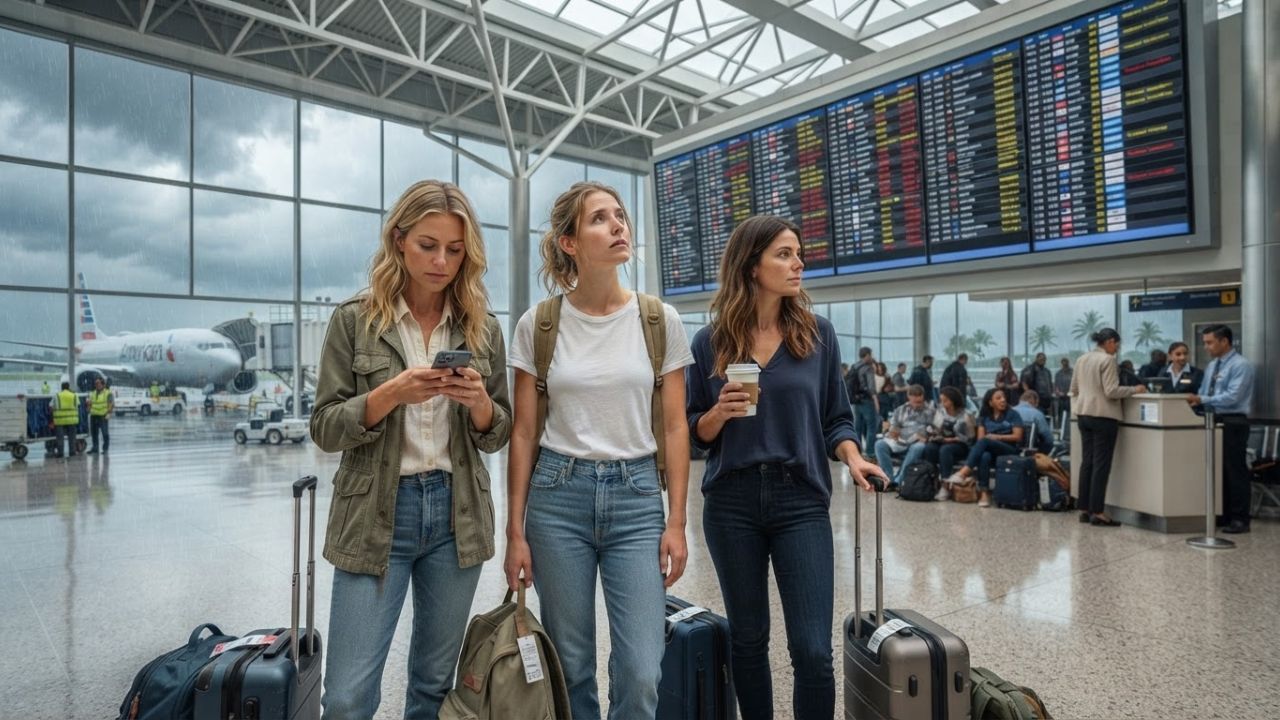
Image generated by AI
A major air travel disruption has spread across the United States, with 2,989 flight delays and 310 cancellations recorded nationwide on August 15, 2026. Severe weather conditions, driven by Category 1 Hurricane Lala in Hawaii and intense thunderstorms in Colorado, have created heavy delays and cancellations across major hubs including Denver, Honolulu, and Los Angeles.
Severe Weather Triggers Nationwide Flight Disruptions
The U.S. aviation network experienced significant operational challenges on Saturday, August 15, 2026, as severe weather systems on both the mainland and the Pacific islands forced airlines to alter schedules. Nationwide, tracking data recorded 2,989 flight delays and 310 cancellations, affecting thousands of domestic and international travelers. The disruptions were concentrated around two major weather events: the rapid strengthening of Category 1 Hurricane Lala (previously classified as a tropical storm) near the Big Island of Hawaii, and isolated flooding caused by thunderstorms in the Denver metro area.
Geographic factors played a key role in how these disruptions manifested. In Hawaii, the focus was heavily on cancellations as airports prepared for high winds and torrential rain, while mainland hubs like Denver International Airport experienced massive delays as flights waited out passing thunderstorms. These operational variations highlight the complexity of managing a national aviation network during concurrent, severe weather systems, requiring close coordination between air traffic control, airport operators, and airline dispatch teams.
The disruption extended beyond the largest hubs to affect secondary airports across the country. Facilities such as Phoenix Sky Harbor, St. Louis Lambert, Austin-Bergstrom, William P. Hobby, and Nantucket Memorial all recorded delays and cancellations, showing how localized weather events can create a ripple effect throughout the entire transport network. Travelers are advised to monitor flight statuses closely, as scheduling changes can occur rapidly.
Hurricane Lala Impacts Hawaiian Aviation
Hawaii became the primary hotspot for flight cancellations as Category 1 Hurricane Lala brought wind gusts reaching 70 mph (113 km/h) and heavy rainfall near the Big Island on Saturday, August 15. The National Hurricane Center issued a hurricane warning for the Big Island, warning that some areas could receive up to 25 inches (63.5 centimeters) of rain, creating the threat of life-threatening mudslides. Mountain peaks and slopes experienced winds up to 30% stronger than surface levels, creating dangerous flying conditions that forced airlines to suspend operations.
The weather impact was reflected clearly in local airport statistics, which showed a high ratio of cancellations to delays. Daniel K. Inouye International Airport in Honolulu recorded 83 cancellations and 26 delays, while Kahului Airport on Maui saw 51 cancellations and only 8 delays. Ellison Onizuka Kona International Airport at Keahole recorded 47 cancellations and 9 delays, and Lihue Airport on Kauai saw 19 cancellations and 6 delays. This cancellation-heavy pattern was necessary to protect passengers and aircraft from the severe winds and rainfall associated with the storm.
Local emergency management officials, including Governor Josh Green, urged residents and visitors to shelter in place and stay off the roads as the storm moved through the region. The Hawaii Emergency Management Agency coordinated with airlines to manage the evacuation of travelers before the worst of the weather arrived. However, with runway conditions deteriorating and power outages affecting parts of the islands, flight suspensions remained the safest course of action.
Thunderstorms and Flood Threats in Colorado
While Hawaii faced cancellations, Denver International Airport became the largest delay center on the mainland due to severe thunderstorms and isolated flood threats across Colorado's eastern plains. The Denver metro area was under a flood watch from 2 p.m. to 10 p.m. on Saturday, August 15. The airport recorded 316 delays and 60 cancellations, making it the most disrupted facility by delay volume in the country.
Unlike the storm in Hawaii, which required grounding flights, the thunderstorms in Denver resulted in rolling delays as air traffic control managed departures and arrivals around active storm cells. Pilots navigated around heavy rain and lightning, leading to longer flight times and holding patterns. These delays created challenges for connecting passengers, many of whom faced missed flights and rescheduled bookings as the afternoon went on.
Other major mainland airports also saw significant disruption. San Francisco International Airport recorded 184 delays and 13 cancellations, while Hartsfield-Jackson Atlanta International Airport saw 168 delays and 10 cancellations. Los Angeles International Airport recorded 135 delays and 22 cancellations, Seattle-Tacoma International Airport saw 128 delays and 21 cancellations, and Harry Reid International Airport in Las Vegas recorded 94 delays and 15 cancellations. These figures show that flight delays remained a widespread issue across the mainland travel network.
Airline Performance and Cancellation Rates
The impact of the weather disruption varied across airlines. Southwest Airlines recorded the highest total number of disruptions, with 529 delays and 81 cancellations. Its 529 delays accounted for 16% of its scheduled flights, the highest delay percentage among major U.S. carriers. This performance was linked to Southwest's large presence at Denver International Airport and its point-to-point network model, which is highly sensitive to delays at major hubs.
United Airlines recorded 273 delays and 57 cancellations, with delays representing 9% of its total flights. The carrier, which operates a major hub at Denver, worked to manage connections through its reservation system. Hawaiian Airlines faced the highest cancellation rate in the country at 25%, recording 57 cancellations and 14 delays. This cancellation-heavy result was a direct consequence of Hurricane Lala's impact on its inter-island and transpacific routes, which form the core of its operations.
Alaska Airlines recorded 60 delays and 25 cancellations, with delays accounting for 6% of its flights. Delta Air Lines recorded 240 delays and 24 cancellations, with delays representing 7% of its operations. These statistics show that while some carriers managed to maintain their schedules, the combination of storms in Colorado and Hawaii created challenges across the entire aviation sector.
Traveler Rights and Severe Weather Tips
When flights are delayed or canceled due to weather, passenger rights in the United States differ significantly from other international jurisdictions. Travel specialists recommend these tips to navigate disruptions:
- Weather Exemption: Under U.S. Department of Transportation guidelines, severe weather is classified as an extraordinary circumstance. Airlines are not legally required to provide cash compensation or hotel vouchers for weather-related delays or cancellations.
- Refund Rights: If an airline cancels your flight or makes a significant schedule change (typically 3 hours or more for domestic flights) and you choose not to travel, you are entitled to a full cash refund to your original payment method, rather than travel vouchers.
- Customer Service Dashboard: Use the U.S. Department of Transportation’s Airline Customer Service Dashboard to check what commitments your specific airline has made regarding meals and accommodations for major delays.
- Credit Card Insurance: If you purchased your ticket using a premium credit card, review its travel protection policy. Many cards offer reimbursement for meals and hotel stays during weather-related delays of six hours or more.
- Denver Transit Advice: If delayed at Denver International Airport, the A-Line commuter train offers quick transit to downtown Denver, while the airport itself features numerous dining options and art exhibits to help pass the time.
Community Support and Sustainable Travel During Disruptions
Travel disruptions can have a significant environmental impact, as flight delays, holding patterns, and rerouting lead to increased fuel consumption and higher carbon emissions. To practice sustainable travel during delays, passengers can minimize their personal environmental impact by packing lighter, which reduces the aircraft's weight, and using digital boarding passes to reduce paper waste.
Additionally, travelers can support local economies affected by flight disruptions. When delayed at the airport or forced to stay overnight, choose to dine at independent restaurants that source ingredients from regional farms, buy from local retailers, or book accommodations at community-owned hotels rather than major international chains. This support helps direct travel spending to the local community, contributing to the economic resilience of the host city during travel emergencies.
Related Travel Guides
Halifax County Tourism Reaches Record $132.8 Million in Visitor Spending
New Caledonia and Mediterranean Escapes Drive Quiet Coastal Travel Trend
Disclaimer
This article is for informational and educational purposes only. It does not constitute legal, financial, or professional advice. While we strive to provide accurate and up-to-date information, travel policies, regulations, and conditions change rapidly. Always verify information with official sources before making travel decisions. Nomad Lawyer makes no representations about the accuracy, reliability, completeness, or suitability of the information provided. Readers should consult qualified professionals for advice specific to their circumstances. The views expressed in this article are those of the author and do not necessarily reflect the views of Nomad Lawyer.
Raushan Kumar
Founder & Lead Developer
Full-stack developer with 11+ years of experience and a passionate traveller. Raushan built Nomad Lawyer from the ground up with a vision to create the best travel and law experience on the web.
Learn more about our team →