
US Flight Disruption Alert: Over 2,160 Delays and 200 Cancellations Hit Philadelphia, New York, and Washington
Severe thunderstorms and FAA traffic initiatives trigger 2,161 flight delays and 200 cancellations, impacting PHL, JFK, LGA, Newark, DCA, and SFO.

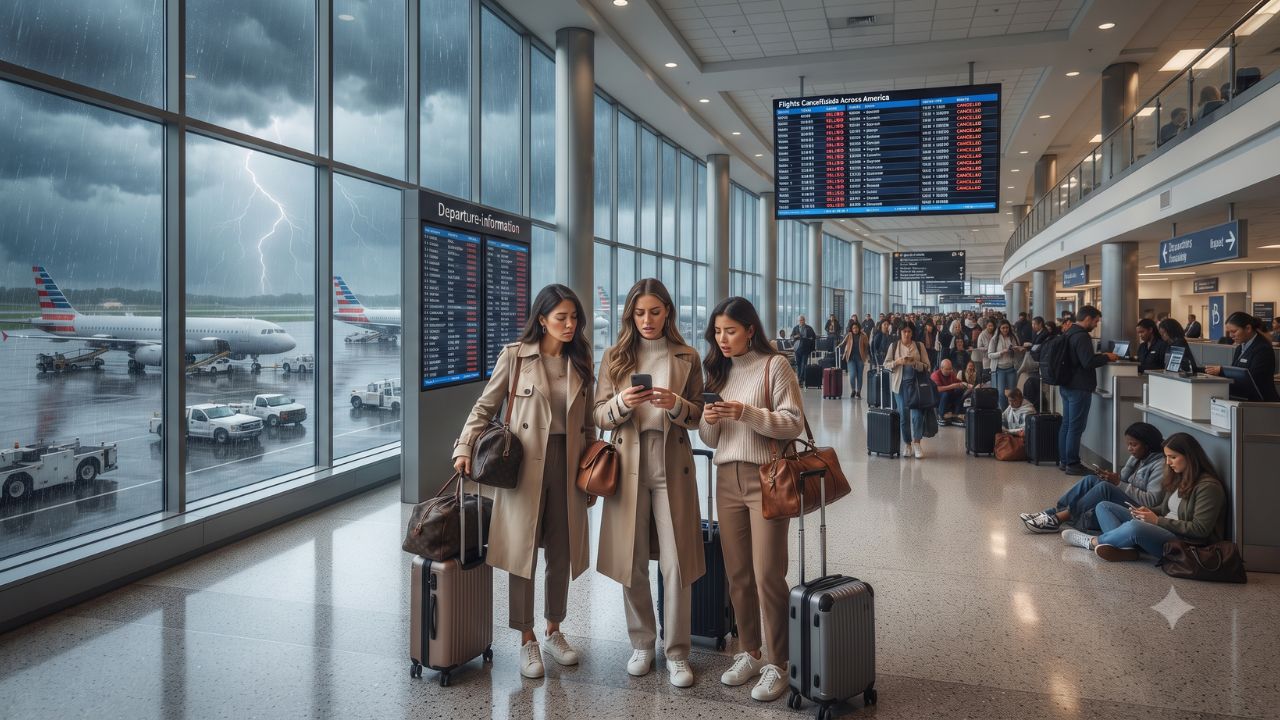
Image generated by AI
Compounding afternoon thunderstorms and cascading air traffic control management programs have triggered 2,161 flight delays and 200 cancellations across the United States, paralyzing major hubs along the Northeast Corridor and stranding travelers from Philadelphia to San Francisco.
Severe Weather and Airspace Flow Restrictions Disrupt Nationwide Travel
A severe late-summer convective storm system intersecting with congested East Coast aviation corridors has sparked widespread flight disruptions across the United States. Federal Aviation Administration (FAA) traffic-management programs and severe thunderstorm activity have resulted in 2,161 flight delays and 200 cancellations nationwide, according to real-time airspace data verified by FlightAware as of mid-afternoon.
The disruption is concentrated across the critical Northeast and Mid-Atlantic metropolitan areas—including Philadelphia, New York, Washington, D.C., and Baltimore—while low cloud ceilings in Northern California have triggered protracted ground delay programs at San Francisco International Airport.
Regional and mainline air carriers are struggling with dislocated aircraft and timed-out flight crews. American Airlines has recorded a staggering 310 delays, while Southwest Airlines bears the heaviest cancellation toll with 42 grounded flights and 222 delays, followed closely by JetBlue, United Airlines, and regional carriers PSA Airlines, Republic Airways, and Endeavor Air.
Hub-by-Hub Airfield Breakdown: Northeast Corridor Under Severe Pressure
Aviation operations across the Eastern Seaboard and West Coast hubs face escalating ground delays, FAA-enforced ground stops, and swelling tarmac wait times.
| Airport Facility | Airport Code | Flight Delays | Flight Cancellations | Operational Status & Delay Metrics |
|---|---|---|---|---|
| Philadelphia International | PHL | 281 delays | 11 cancellations | Average departure delays of 90 minutes and increasing; traffic initiatives active |
| New York LaGuardia | LGA | 230 delays | 35 cancellations | Average departure delays of 30 minutes and escalating |
| New York John F. Kennedy | JFK | 203 delays | 23 cancellations | Average departure delays of 15 minutes; international banks impacted |
| San Francisco International | SFO | 150 delays | 2 cancellations | FAA Ground Delay Program active; average delays of 56 minutes due to low ceilings |
| Newark Liberty International | EWR | 134 delays | 24 cancellations | Thunderstorm ground stop enforced; multi-terminal gate holds |
| Boston Logan International | BOS | 133 delays | 22 cancellations | Inbound sequencing delays impacting transatlantic and regional departures |
| Reagan National | DCA | 122 delays | 18 cancellations | Average departure delays of 60 minutes and increasing |
| Washington Dulles International | IAD | 108 delays | 6 cancellations | Thunderstorm ground stop enforced; connecting banks disrupted |
| Baltimore/Washington International | BWI | 74 delays | 30 cancellations | Thunderstorm ground stop active; Southwest operations heavily curtailed |
| Miami International | MIA | 61 delays | 8 cancellations | Tropical convective cells causing rolling apron delays |
Airline Vulnerability: Mainline and Regional Carrier Disruption
The cascading nature of FAA airspace metering initiatives has created acute pressure points across specific carrier networks:
- Southwest Airlines (42 Cancellations, 222 Delays): Operating high-frequency point-to-point routes, Southwest faces substantial disruption at Baltimore/Washington (BWI), where thunderstorm ground stops have stranded incoming aircraft and triggered rolling turn-around cancellations.
- American Airlines (310 Delays, 4 Cancellations): While cancellation rates remain low, American has logged the highest gross delay count in the country, largely driven by severe hub congestion at Philadelphia (PHL) where average departure delays have reached 90 minutes.
- Regional Feeders (PSA, Republic, Endeavor): Regional subsidiaries are bearing significant operational strain: PSA Airlines has recorded 15 cancellations and 125 delays; Republic Airways reports 11 cancellations and 109 delays; and Endeavor Air logs 10 cancellations and 104 delays, creating acute travel bottlenecks for passengers connecting through secondary cities.
- JetBlue Airways (32 Cancellations, 131 Delays): Heavily exposed to airspace congestion at New York JFK, Boston Logan, and LaGuardia, JetBlue schedules are facing compounding aircraft rotation holds.
- United Airlines (20 Cancellations, 181 Delays): Ground stops at Newark Liberty and Washington Dulles have disrupted mid-day domestic flight banks and international departures.
Operational Causes: The Anatomy of Ground Stops and Low Ceilings
The nationwide disruption stems from two distinct meteorological mechanisms:
- Convective Thunderstorms in the Northeast: Severe convective cells across New Jersey, Pennsylvania, Maryland, and Northern Virginia forced air traffic controllers to issue immediate ground stops at Newark, Washington Dulles, and Baltimore/Washington. Under a ground stop, all inbound aircraft destined for these airports are held at their departure gates nationwide to prevent airborne stacking in turbulent storm cells.
- Marine Stratus Low Ceilings at SFO: In Northern California, San Francisco International Airport implemented an FAA-mandated Ground Delay Program averaging 56 minutes. SFO’s parallel runways (28L and 28R) are separated by just 750 feet, requiring specialized instrument flight rules (IFR) when coastal marine fog lowers cloud ceilings, effectively cutting the airport's hourly landing capacity in half.
Passenger Protection and Local Insider Guidance for Disrupted Travelers
Travelers facing cancellations or multi-hour delays across these airports can minimize distress with these field-tested strategies:
- Pivot to Amtrak Along the Northeast Corridor: If stranded in Philadelphia (PHL), Newark (EWR), New York (JFK/LGA), Baltimore (BWI), or Washington (DCA/IAD), bypass the airport entirely. Amtrak’s Northeast Regional and Acela high-speed trains operate along electrified rail between Boston, New York Moynihan Train Hall, Philadelphia 30th Street Station, and Washington Union Station, unaffected by FAA air traffic holds.
- Know Your US DOT Automatic Cash Refund Rights: Under US Department of Transportation (DOT) federal regulations, if your flight is cancelled or significantly altered (a delay of three hours or more for domestic travel) and you choose not to accept the airline’s alternative rebooking, you are legally entitled to a full cash refund to your original form of payment, not merely an expiring travel credit or voucher.
- Use Airline Digital Rebooking Tools Before Queuing: Do not wait in two-hour customer service lines at the gate. Open your airline’s mobile application (Southwest, United, American, or Delta) immediately upon notification of delay. The app’s automated disruption assistant allows you to rebook alternative connections or next-day flights for free before customer service agents can process passengers ahead of you.
- Seek Sanctuary in Historic Terminal Spaces: If stuck at Philadelphia International, head to the Terminal B/C connecting marketplace for authentic local cheesesteaks at Tony Luke's or Geno's. At Reagan National (DCA), escape modern terminal noise by exploring the historic 1941 Terminal A lobby with its neoclassical architecture and quiet seating. At SFO, explore the quiet aviation galleries of the SFO Museum in Harvey Milk Terminal 1.
- Check Alternate SFO Gateways: When SFO is locked in marine stratus ground delays, investigate rebooking options to Oakland International Airport (OAK) or San Jose Mineta International Airport (SJC), which frequently operate under clear skies and normal FAA arrival rates.
Long-Term Aviation Outlook: Weather Resilience and Airspace Modernization
Today’s 2,161 flight delays and 200 cancellations illustrate the acute vulnerability of America's legacy aviation hubs to localized convective weather. As passenger volumes reach record levels across the late-2020s, the margin for operational error has shrunk to near zero.
With the FAA accelerating NextGen satellite navigation and airport authorities expanding electrified intercity rail links like the Northeast Corridor, the aviation sector continues to adapt. However, for the modern traveler, maintaining situational awareness, tracking weather radar, and knowing passenger rights remain the ultimate safeguards against transit chaos.
Frequently Asked Questions: US Flight Disruptions Today
How many flights were delayed and cancelled across the US today? FlightAware data recorded 2,161 flight delays and 200 cancellations nationwide, driven by severe thunderstorms and FAA traffic-management initiatives.
Which airports are experiencing the longest delays? Philadelphia International Airport (PHL) is reporting the longest delays, averaging 90 minutes and increasing, while San Francisco (SFO) faces 56-minute ground delays and Reagan National (DCA) averages 60 minutes.
Which airlines have the most cancellations today? Southwest Airlines leads all carriers with 42 cancellations and 222 delays, followed by JetBlue Airways with 32 cancellations and 131 delays, and United Airlines with 20 cancellations and 181 delays.
Am I entitled to a cash refund if my flight is cancelled due to weather? Yes. Under US Department of Transportation rules, if an airline cancels your flight for any reason—including weather—and you choose not to travel on their offered rebooking, you are entitled to a prompt 100% cash refund.
Related Travel Guides
Disclaimer
This article is for informational and educational purposes only. It does not constitute legal, financial, or professional advice. While we strive to provide accurate and up-to-date information, travel policies, regulations, and conditions change rapidly. Always verify information with official sources before making travel decisions. Nomad Lawyer makes no representations about the accuracy, reliability, completeness, or suitability of the information provided. Readers should consult qualified professionals for advice specific to their circumstances. The views expressed in this article are those of the author and do not necessarily reflect the views of Nomad Lawyer.
Raushan Kumar
Founder & Lead Developer
Full-stack developer with 11+ years of experience and a passionate traveller. Raushan built Nomad Lawyer from the ground up with a vision to create the best travel and law experience on the web.
Learn more about our team →