
US Family Travel Shift: 92% of Parents Embrace Term-Time Vacations for Savings and Real-World Learning
A nationwide survey reveals 92% of US parents now consider traveling during school terms to cut costs, avoid crowds, and prioritize experiential education.

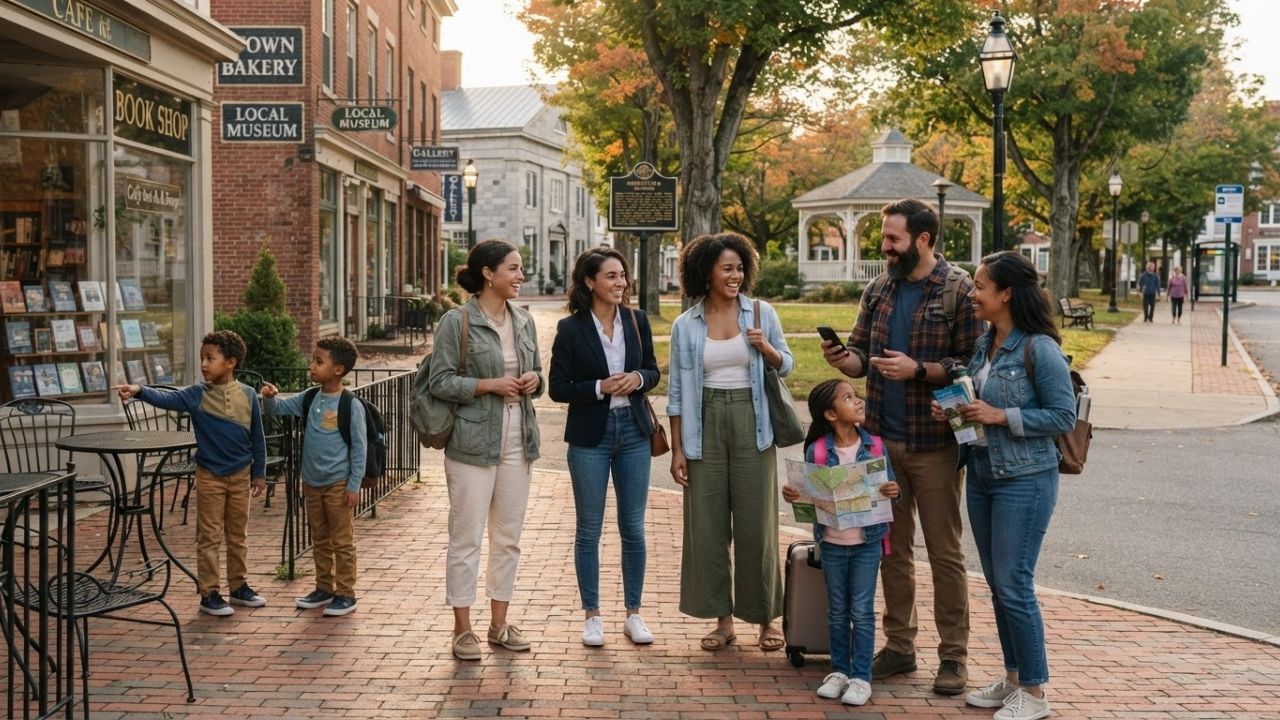
Image generated by AI
Challenging decades of rigid school calendar conventions, 92% of American parents now consider taking their children out of the classroom for vacations that yield financial savings, with nearly half willing to pull students out for savings of less than $1,000.
The Classroom-to-World Evolution: How Flexibility Is Redefining Family Travel
American family vacation culture is undergoing a fundamental realignment. For generations, the rhythm of domestic and international family travel was dictated strictly by the school calendar: summer breaks, Thanksgiving weekends, and mid-winter recesses. Today, escalating airfare and lodging costs, coupled with widespread remote workplace flexibility, are prompting parents to break away from peak holiday crowds in favor of off-peak, value-driven journeys.
A nationwide study conducted by Atomik Research on behalf of multi-modal booking platform Omio surveyed 1,000 US adults who are parents of children aged five to 18 between July 30 and August 3, 2026 (margin of error ±3 percentage points at a 95% confidence level). The research reveals that the school bell no longer commands absolute authority over family itineraries. Instead, American households are actively balancing formal academic instruction with real-world experiential learning, price affordability, and family bonding.
Rather than viewing holidays merely as leisure pauses, parents are increasingly recognizing that traveling during quieter periods offers children richer immersion, shorter wait times at cultural landmarks, and access to destinations that would otherwise be cost-prohibitive.
Comprehensive Survey Findings: Drivers, Demographics, and Parental Perceptions
The survey highlights the key financial and lifestyle factors motivating parents to rethink their holiday calendars:
| Survey Dimension & Metric | Research Finding & Percentage | Primary Behavioral Driver |
|---|---|---|
| Willingness for Term-Time Travel | 92% of US parents | High peak-season airfare, hotel rates, and surge pricing |
| Sub-$1,000 Savings Benchmark | Nearly 50% of parents | Lower price thresholds actively alter travel timing |
| Availability Motivation | 22% of respondents | Securing better flight routes and preferred accommodations |
| Financial Savings Motivation | 19% of respondents | Reducing overall vacation expenditures |
| Weather Consideration | 19% of respondents | Dodging extreme summer heat or winter travel disruptions |
| Remote-Work Enablement | 16% of respondents | Utilizing remote and hybrid workplace flexibility |
| Crowd Avoidance | 16% of respondents | Seeking calm, uncrowded attractions and parks |
| Fathers' Past Practice | 74% of fathers | Higher reported participation in school-term trips |
| Mothers' Past Practice | 62% of mothers | Deliberate balancing of academic calendars and family time |
| Experiential Worth | 44% of parents | Believing missing school days is justified by memorable family moments |
| Equal Educational Value | 28% of parents | Viewing real-world travel as educational as classroom time |
| Millennial Generational View | 30% of Millennials (vs 23% Gen X) | Higher generational appreciation for experiential education |
| Winter & Spring Preference | 52% of parents | Traveling between December–February and March–June |
| Autumn Preference | 47% of parents | Capitalizing on mild fall weather and lower shoulder rates |
Cultural and Experiential Dividends: Travel as Living Education
Beyond financial savings, the shift toward term-time travel reflects a profound change in educational philosophy. The survey reveals that 44% of parents believe missing several school days is completely justified if the journey fosters lasting family connections. Furthermore, 28% view real-world travel as offering educational value equivalent to classroom instruction.
This sentiment is particularly pronounced among Millennial parents (30%), who outpace Generation X parents (23%) in prioritizing immersive childhood experiences over rigid classroom attendance. When children explore ancient pueblo dwellings in New Mexico, study marine ecology along protected California coastlines, or trace Revolutionary War events through the historic walking corridors of Boston and Philadelphia, history and science transition from abstract textbook pages into tactile, memorable reality.
Crucially, traveling outside crowded summer peaks creates a superior pedagogical environment. In uncrowded galleries and national park visitor centers, park rangers and museum educators have the time to engage directly with young travelers, answering questions and providing personalized insights that are impossible during congested peak seasons.
Navigating School Absences: The Parental Approach
The study also shed light on how families manage administrative communication with educational institutions when traveling during the academic year:
- Direct Transparency (45%): Nearly half of surveyed parents openly inform school administrators and teachers that their child's absence is for a scheduled family holiday.
- Personal/Family Discretion (18%): Almost one in five families classifies the leave as a general family or personal matter.
- Medical Cloaking (7%): A small fraction reports the student as sick to bypass administrative inquiry.
- No Explanation Provided (7%): Families provide no specific narrative, treating the absence as discretionary.
While school districts emphasize the importance of daily attendance for state funding formulas and curriculum pacing, progressive educators increasingly partner with families by assigning reflective travel journals, photo essays, and localized research projects that allow students to share their experiences with classmates upon return.
Local Insider Guidance for Frictionless Off-Peak Family Travel
Parents looking to capitalize on term-time travel savings while safeguarding their children's academic standing should implement these proven operational strategies:
- Target "Sweet-Spot" Shoulder Windows: Identify optimal off-peak windows that avoid school exam cycles. The two weeks following Halloween (early November), late January to early February (between Martin Luther King Jr. Day and Presidents' Day), and late April to early May (post-spring break lull) offer dramatic airfare discounts of 30% to 50% alongside mild weather and negligible lines.
- Engage Teachers Four Weeks in Advance: Present travel as a collaborative educational partnership. Request homework packets, reading lists, and digital curriculum assignments well ahead of time. Propose that your child complete a daily experiential travel journal or deliver a five-minute presentation on local history or ecosystems when they return.
- Leverage the NPS Junior Ranger Program: When visiting United States National Parks, National Monuments, or Historic Sites, head directly to the visitor center and enroll your children in the free Junior Ranger program. Completing the educational activity booklets and earning official wooden badges reinforces environmental science, geology, and civil history.
- Utilize Multi-Modal Transit Platforms: Take advantage of integrated booking tools like Omio to compare flights, passenger rail (such as Amtrak Northeast Regional or Pacific Surfliner routes), and regional express coaches. Incorporating scenic rail legs not only lowers overall transport costs compared to peak airfares but also provides children with spacious seating and panoramic geographical perspectives.
- Support Local Shoulder-Season Economies: When visiting seasonal destinations during off-peak windows, patronize locally owned diners, independent bookstores, and community-guided wildlife tours. Your patronage injects vital off-season revenue directly into local family businesses that struggle during the winter or spring lulls.
Long-Term Tourism Outlook: Flattening the Seasonal Travel Curve
The rise of flexible family travel marks a positive, permanent evolution across the travel ecosystem. For decades, destinations have grappled with the disruptive cycle of overtourism during June, July, and August, followed by economic stagnation in the off-season.
By redistributing family travel demand across autumn, winter, and spring, airlines maintain balanced load factors, hotels achieve steady year-round occupancy, and local communities enjoy sustainable economic stability. As workplace flexibility and experiential education continue to reshape American life, the journey itself is becoming recognized as one of the most vital classrooms a child can experience.
Frequently Asked Questions: US Flexible Family Travel Trends
What percentage of US parents consider taking children out of school for travel savings? According to the Omio and Atomik Research survey, 92% of American parents would consider taking their children out of school for a holiday if it yielded financial savings.
How much money do families need to save to justify term-time travel? Nearly half of surveyed parents stated they would take children out of class for total trip savings of less than $1,000.
How do fathers and mothers compare in taking kids out of school for trips? 74% of surveyed fathers reported having taken children out of school for family trips, compared with 62% of surveyed mothers.
What seasons are most popular for flexible, off-peak family getaways? 52% of parents favor winter (December to February) and spring (March to June), while 47% identify autumn as an ideal period for family travel outside official breaks.
Related Travel Guides
Disclaimer
This article is for informational and educational purposes only. It does not constitute legal, financial, or professional advice. While we strive to provide accurate and up-to-date information, travel policies, regulations, and conditions change rapidly. Always verify information with official sources before making travel decisions. Nomad Lawyer makes no representations about the accuracy, reliability, completeness, or suitability of the information provided. Readers should consult qualified professionals for advice specific to their circumstances. The views expressed in this article are those of the author and do not necessarily reflect the views of Nomad Lawyer.
Preeti Gunjan
Contributor & Community Manager
A passionate traveller and community builder. Preeti helps grow the Nomad Lawyer community, fostering engagement and bringing the reader experience to life.
Learn more about our team →