
US Customs and Border Protection Increases Secondary Inspections for Canadian Citizens in 2026
An analysis of escalating CBP secondary inspection protocols for Canadian nationals, highlighting a rise in device seizures, 8-hour detentions, and the strategic use of Withdrawal applications for entry.

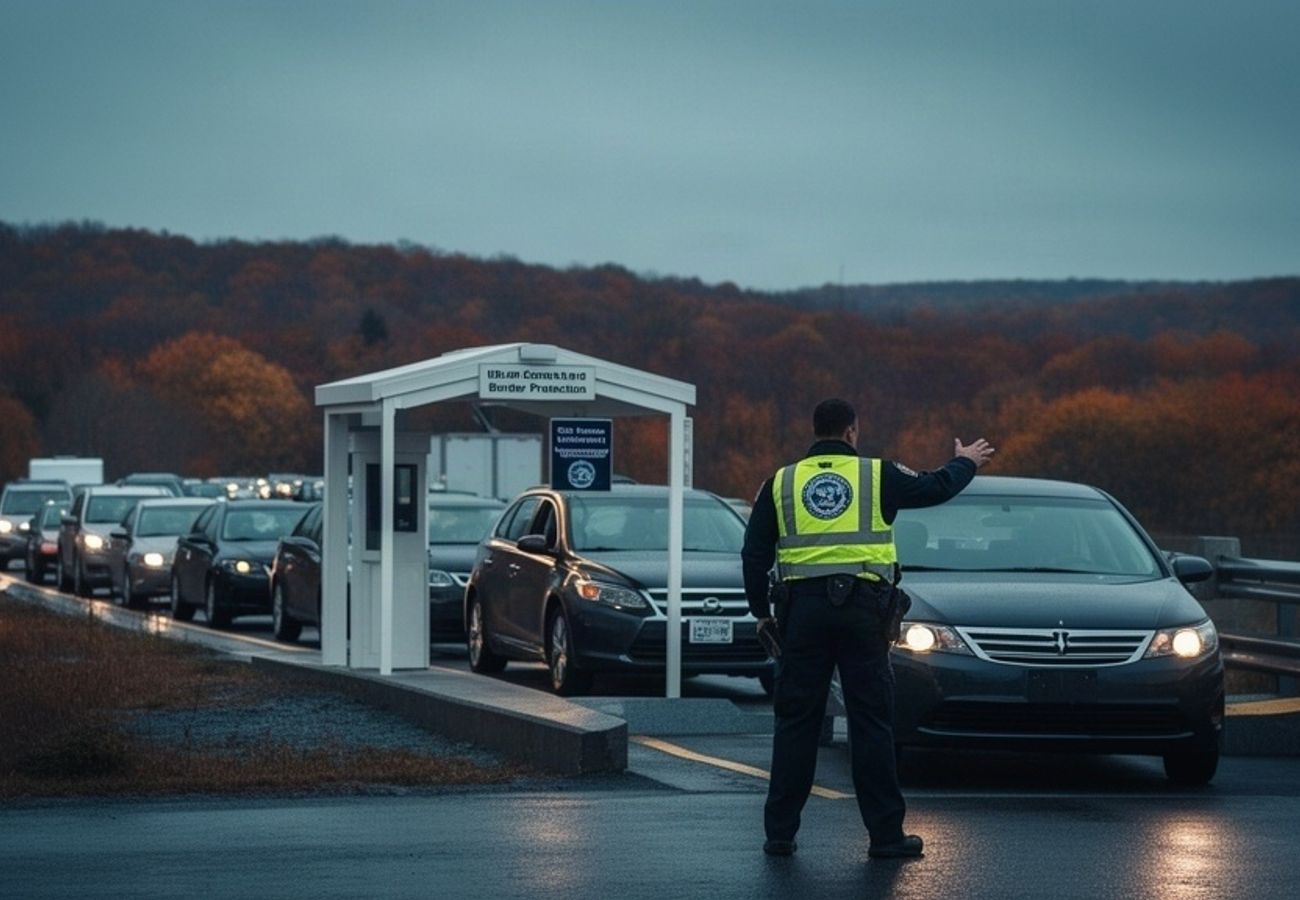
Image generated by AI
While the majority of cross-border transit remains fluid, recent reports indicate a sharp increase in "secondary inspection" durations for Canadian nationals, with some detentions stretching from routine minutes to 8-12 hour interrogations. This shift suggests a tightening of admissibility standards at smaller ports of entry, where the transition from primary screening to intensive scrutiny is becoming more frequent for specific traveler profiles.
The Trend in Numbers: Border Friction and Detention
Recent data from traveler reports and legal analysts highlight a pattern of aggressive screening at the US-Canada border. A specific case involving three Canadian citizens traveling from Montreal to Vermont illustrates the current operational intensity of the U.S. Customs and Border Protection (CBP). The group was subjected to an 8-hour detention that included the seizure of electronic devices, the collection of fingerprints, and the use of handcuffs during transport between ports of entry.
The data indicates that CBP is increasingly utilizing "advanced searches." Unlike a basic search—where an officer manually scrolls through a device—an advanced search involves external hardware to copy or analyze data. Under current protocols, CBP may retain these devices for up to five days if the examination cannot be completed on-site.
Furthermore, the use of the "Withdrawal of Application" is becoming a primary tool for CBP to resolve suspicious entries without triggering a formal removal order. This allows the agency to deny entry while avoiding the administrative burden of a full deportation process.
Comparative Context: Admissibility and Profiling
The current climate at the border shows a marked shift toward scrutinizing dual nationality and country of birth, regardless of the traveler's current citizenship. The 2026 data shows a recurring pattern where Canadian-Pakistani, Canadian-Iranian, and Canadian-Tunisian citizens face significantly higher rates of secondary inspection.
For instance, in June 2026, a Canadian-Iranian traveler was denied entry, while another of the same descent was interrogated regarding military service in Iran. Similarly, a Tunisian-Canadian family in July 2026 faced a 12-hour detention and subsequent entry denial. This suggests a correlation between national origin and the likelihood of "reasonable suspicion" triggers used by CBP officers.
| Inspection Metric | Routine Primary Screening | Secondary Inspection (Current Trend) |
|---|---|---|
| Average Duration | 2–10 Minutes | 8–12 Hours |
| Data Collection | Passport/Visa Check | Fingerprints, Photos, Social Media |
| Device Access | None | Basic to Advanced (External Hardware) |
| Legal Outcome | Admission | Admission, Withdrawal, or Expedited Removal |
| Physical Restraint | None | Handcuffs (in specific transport cases) |
This escalation mirrors broader global trends in border security where International Air Transport Association (IATA) standards are increasingly integrated with national security databases, allowing officers to flag "discrepancies" before a traveler even reaches the booth.
What This Means for Travelers
For Canadian citizens, particularly those with dual nationality or a history of military service in any capacity, the "routine" border crossing is no longer guaranteed. The current data suggests that CBP is operating with broad discretionary power, meaning "bizarre" or intrusive questioning is legally permissible if the officer claims a national security concern.
If you are planning a cross-border trip in Q4 2026, consider the following actionable advice:
- Digital Hygiene: Be aware that CBP has the authority to search social media and private messages. If you have content that could be misinterpreted (e.g., legal firearm use or military history), be prepared to provide documentation proving legality.
- Right to a Supervisor: While you cannot legally force the immediate return of a seized phone, you have the right to request a supervisor and official documentation regarding the detention of your property.
- Withdrawal vs. Removal: If offered a "Withdrawal of Application," it is generally more favorable than an "Expedited Removal Order," as the latter can result in a multi-year ban from the United States.
Forward Projection: The Future of Border Entry
Based on the current trajectory, we expect an increase in the use of AI-driven biometric screening at land borders. The shift toward 8-to-12 hour detentions for "higher-up" approval indicates a move toward centralized decision-making, where the officer at the booth has less authority to grant entry for flagged individuals.
We anticipate that the Department of Homeland Security (DHS) will further integrate social media scraping into the pre-clearance process. This means that "reasonable suspicion" will likely be generated by algorithms before the traveler arrives at the port of entry, leading to a higher percentage of travelers being diverted to secondary inspection immediately upon arrival.
FAQ: CBP Border Inspections 2026
Will my phone be searched if I am a Canadian citizen? CBP has broad authority to conduct both basic and advanced searches of electronic devices. While not every traveler is searched, those flagged for "reasonable suspicion" or national security concerns may have their devices seized for up to five days.
Is a "Withdrawal of Application" a deportation? No. A withdrawal allows you to voluntarily cancel your request to enter the US. This is distinct from a formal removal order, which is a legal deportation that typically carries a long-term ban on re-entry.
Can I refuse to give my fingerprints or social media passwords? Refusing to cooperate with CBP during a secondary inspection can be viewed as a lack of candor or a security risk, which often leads to a formal denial of entry or an expedited removal order.
What should I do if I feel I am being profiled? Travelers can file a complaint through the DHS Traveler Redress Inquiry Program (TRIP) or seek legal counsel to request their CBP records and challenge the legality of the detention.
The border is no longer just a checkpoint; it is a data-mining operation.
Related Travel Guides
Disclaimer
This article is for informational and educational purposes only. It does not constitute legal, financial, or professional advice. While we strive to provide accurate and up-to-date information, travel policies, regulations, and conditions change rapidly. Always verify information with official sources before making travel decisions. Nomad Lawyer makes no representations about the accuracy, reliability, completeness, or suitability of the information provided. Readers should consult qualified professionals for advice specific to their circumstances. The views expressed in this article are those of the author and do not necessarily reflect the views of Nomad Lawyer.
Kunal K Choudhary
Co-Founder & Contributor
A passionate traveller and tech enthusiast. Kunal contributes to the vision and growth of Nomad Lawyer, bringing fresh perspectives and driving the community forward.
Learn more about our team →