
US Aviation Launches Massive Fortress Network Expansion to Defeat Travel Chaos and Flight Cancellations Ahead of 2026 Boom
Breaking airline news: The US aviation sector launches a massive fortress network expansion across Atlanta, Chicago, and Dallas to shield passengers from severe travel chaos.

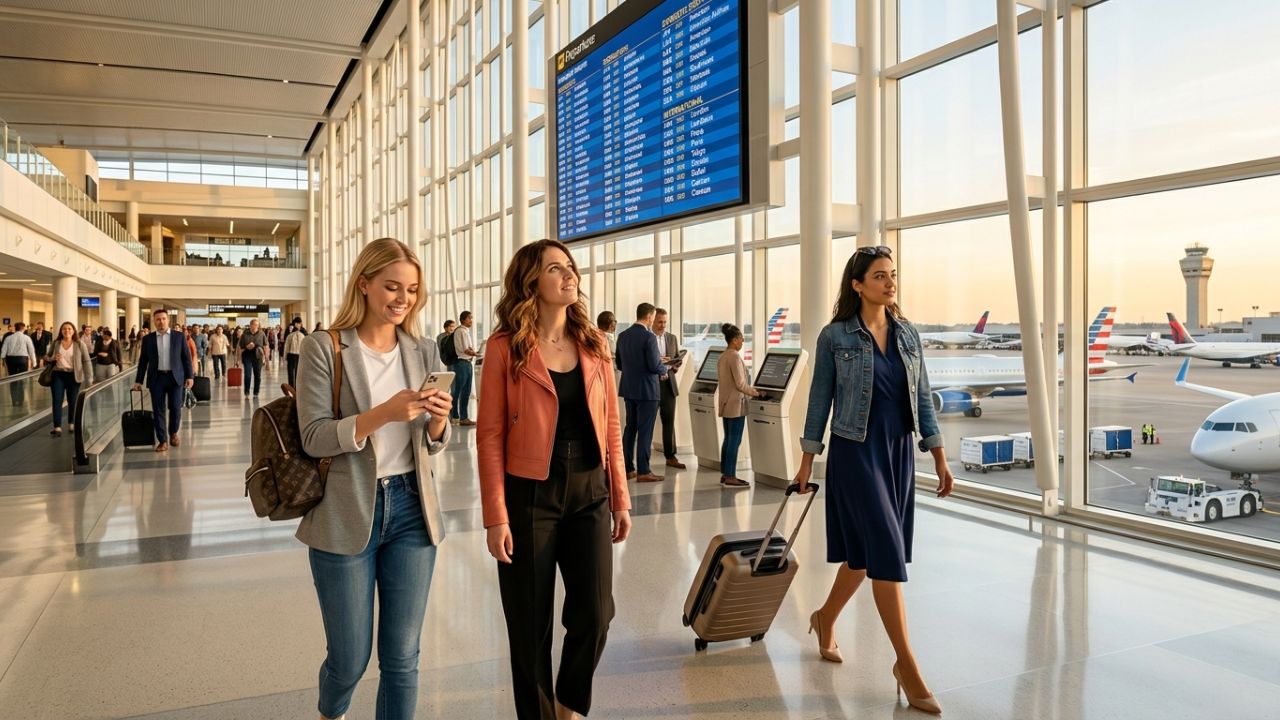
Image representing the massive US aviation infrastructure expansion aimed at neutralizing severe airport disruptions ahead of the historic 2026 travel boom.
US Aviation Launches Massive Fortress Network Expansion to Defeat Travel Chaos and Flight Cancellations Ahead of 2026 Boom
A Strategic Overhaul to Shield the North American Grid
The United States aviation sector is executing a massive, preemptive strike against the systemic logistical failures that have historically plagued the industry. According to the latest breaking airline news, airlines, airports, and federal aviation authorities are aggressively implementing a "fortress network" expansion ahead of what is officially projected to be the busiest travel period in modern aviation history. Recognizing that outdated infrastructure guarantees devastating travel chaos and unrecoverable flight cancellations, the U.S. Department of Transportation (DOT) and the Federal Aviation Administration (FAA) have authorized a total system overhaul.
By rapidly expanding capacity, modernizing air traffic control, and restructuring high-density networks, the industry is building an impenetrable shield against severe airport disruptions. As passenger volumes across North America surge relentlessly through 2026, driven by intense leisure demand and booming international connectivity, this coordinated, multi-billion dollar effort ensures the American aviation ecosystem remains resilient, high-capacity, and fundamentally disruption-proof.
Dismantling the Threat of Unrecoverable Gridlock
The rapid expansion of the US aviation grid is an absolute necessity. FAA aviation forecasts indicate that passenger traffic is accelerating at an unprecedented rate, severely testing the limits of current infrastructure. Historically, when major hubs face sudden capacity saturation, the resulting bottleneck triggers cascading flight cancellations that destroy domestic and international itineraries within hours.
To prevent this paralyzing travel chaos, major carriers like American Airlines are aggressively increasing fleet utilization and deploying advanced, highly efficient scheduling algorithms. The strategy focuses intensely on reinforcing the nation’s absolute busiest choke points: Dallas–Fort Worth, Atlanta Hartsfield–Jackson, Chicago O’Hare, Los Angeles International, and New York JFK. By fundamentally redesigning airspace management and ground handling efficiency at these mega-hubs, the US aviation sector guarantees that global mobility can expand infinitely without sacrificing passenger safety or schedule integrity.
Section-Wise Breakdown: Reinforcing the Mega-Hubs
The federal defense against systemic airport disruptions requires incredibly localized, heavy infrastructure deployments across America's most critical transit gateways:
The Core Fortresses: Atlanta, Dallas, and Chicago The operational backbone of the American domestic network relies entirely on the efficiency of Atlanta Hartsfield–Jackson, Dallas–Fort Worth, and Chicago O’Hare. To ensure these hubs do not buckle and trigger nationwide travel chaos, massive terminal expansions and highly optimized gate management systems are being deployed. By redesigning physical passenger flow and deploying advanced baggage handling architecture, these airports are dramatically reducing turnaround times, effectively neutralizing the threat of ground-based flight cancellations during peak summer surges.
The Coastal Gateways: New York JFK and LAX Managing the explosive growth of international transpacific and transatlantic routes falls heavily on Los Angeles International (LAX) and New York JFK. Because global travel demand remains incredibly strong despite economic fluctuations, these coastal gateways are heavily optimizing their international terminals. By expanding digital processing for customs and integrating seamless biometric boarding, LAX and JFK are dramatically accelerating international passenger throughput, insulating global travelers from the severe airport disruptions that frequently plague under-resourced international hubs.
Federal Modernization: The FAA’s Invisible Shield Behind the physical terminal upgrades, the Federal Aviation Administration is actively modernizing the invisible infrastructure that dictates daily operations. By aggressively recruiting additional air traffic controllers and integrating cutting-edge digital technologies into national air traffic control systems, the FAA is systematically eliminating congestion in high-traffic airspace. This flawless coordination between airlines and federal regulators ensures that planes spend less time in holding patterns, fundamentally eliminating the operational friction that breeds travel chaos.
Operational Infrastructure Details: The Expansion Matrix
To fully comprehend the sheer scale of this national defense against flight cancellations, aviation analysts track the precise infrastructure upgrades being deployed across the grid. The following factual matrix details the exact operational improvements transforming US aviation in 2026:
Factual US Aviation Infrastructure Expansion Matrix
| Operational / Infrastructure Metric | Factual Deployment Strategy |
|---|---|
| Leading Federal Agencies | FAA & U.S. Department of Transportation (DOT) |
| Key Airlines Driving Expansion | American Airlines & Major U.S. Carriers |
| Primary Core Hubs Expanded | Atlanta (ATL), Dallas (DFW), Chicago (ORD) |
| Primary Coastal Gateways Expanded | Los Angeles (LAX), New York (JFK) |
| FAA Airspace Modernization | Upgraded air traffic systems & controller recruitment |
| Terminal Operations Optimization | Redesigned flight scheduling & gate management |
| Passenger Processing Tech | Digital check-in, biometric boarding, baggage tracking |
| Global Route Expansion | Strengthened transatlantic & transpacific connections |
Passenger Impact: A Frictionless Travel Experience
For the millions of passengers taking to the skies in 2026, this massive fortress network expansion represents profound psychological and financial relief. Historically, booking travel during peak summer or holiday seasons involved immense exposure to sudden flight cancellations and agonizing terminal queues.
Now, passengers will experience a highly technology-driven aviation journey. Airlines are rapidly introducing fully integrated digital systems for check-in, instantaneous boarding, precise baggage tracking, and immediate AI-driven customer service. These profound improvements are explicitly designed to reduce waiting times and completely eliminate the agonizing travel chaos that defines legacy aviation. While airports will undeniably remain incredibly busy, the improved, real-time coordination between airlines and airport authorities ensures that systemic operational disruptions are swiftly mitigated before they impact the passenger.
Industry Analysis: Global Demand Dictates Capacity
According to the latest aviation updates, the driving force behind this massive US expansion is unrelenting global demand. Despite rising fuel costs and complex economic fluctuations, the desire for long-haul transatlantic and transpacific mobility remains incredibly strong. North America operates as a critical contributor to global aviation traffic; if the US grid fails, the global network suffers immediately. By aggressively increasing capacity, prioritizing sustainability, and deploying massive infrastructure capital now, US airlines are maintaining extreme competitiveness in a rapidly growing international market, proving that proactive expansion is the only defense against systemic industry collapse.
Conclusion: The Future of High-Capacity Travel
The United States aviation sector has officially entered its most critical, and highly successful, expansion phase in history. By launching a massive, multi-billion dollar fortress network across Atlanta, Dallas, Chicago, LAX, and JFK, the industry has successfully fortified itself against the existential threat of travel chaos. The highly coordinated efforts of the FAA, the DOT, and major carriers like American Airlines guarantee that the historic passenger boom of 2026 will be met with unparalleled operational resilience. For the modern traveler, this aggressive modernization means more routes, superior global connectivity, and the absolute elimination of the severe flight cancellations and airport disruptions that have long plagued the flying public.
Key Takeaways
- Massive Fortress Expansion: The FAA, DOT, and major airlines have launched a massive infrastructure overhaul to handle the historic 2026 travel boom.
- Defeating Travel Chaos: By heavily optimizing operations at Atlanta, Dallas, Chicago, LAX, and JFK, the industry is shielding passengers from severe airport disruptions.
- Federal Airspace Upgrades: The FAA is aggressively modernizing air traffic control and recruiting controllers to eliminate airspace congestion and flight cancellations.
- A Tech-Driven Passenger Journey: Travelers will benefit from seamless digital check-ins, advanced baggage tracking, and rapid boarding systems designed to eliminate terminal friction.
- Global Connectivity Secured: Expansion focuses heavily on strengthening resilient transatlantic and transpacific corridors to meet unrelenting international demand.
🌍 Related Travel Guides & Flight Resources
- Navigate Airport Disruptions Like a Pro Master the art of surviving unexpected travel chaos with our expert strategies.
- Breaking Airline News & Evasion Routes Stay ahead of the delays with our real-time aviation updates and route intelligence.
- Global Flight Cancellation Defense Grid Essential legal rights and compensation tactics when your flight goes down.
⚖️ Disclaimer
The aviation infrastructure intelligence, federal expansion projections, and operational matrices provided in this report are for informational purposes only. Airline route developments, FAA modernization timelines, and airport capacity upgrades are highly volatile and subject to immediate change based on federal funding, severe weather events, or global economic shifts. NomadLawyer does not guarantee the absolute accuracy or current validity of the information provided and assumes no liability for travel disruptions, flight cancellations, terminal delays, or any financial consequences resulting from the use of this content. Passengers are strongly advised to independently verify all flight schedules, digital check-in requirements, and real-time airport statuses directly with their respective airlines prior to travel.
Kunal K Choudhary
Co-Founder & Contributor
A passionate traveller and tech enthusiast. Kunal contributes to the vision and growth of Nomad Lawyer, bringing fresh perspectives and driving the community forward.
Learn more about our team →