
US Airport Terminal Distances Exceed 2 Miles: DFW, ORD Demand Strategic Connection Planning in 2026
Dallas/Fort Worth and Chicago O'Hare force passengers to navigate extreme terminal distances, reshaping connection window requirements for business and leisure travelers.

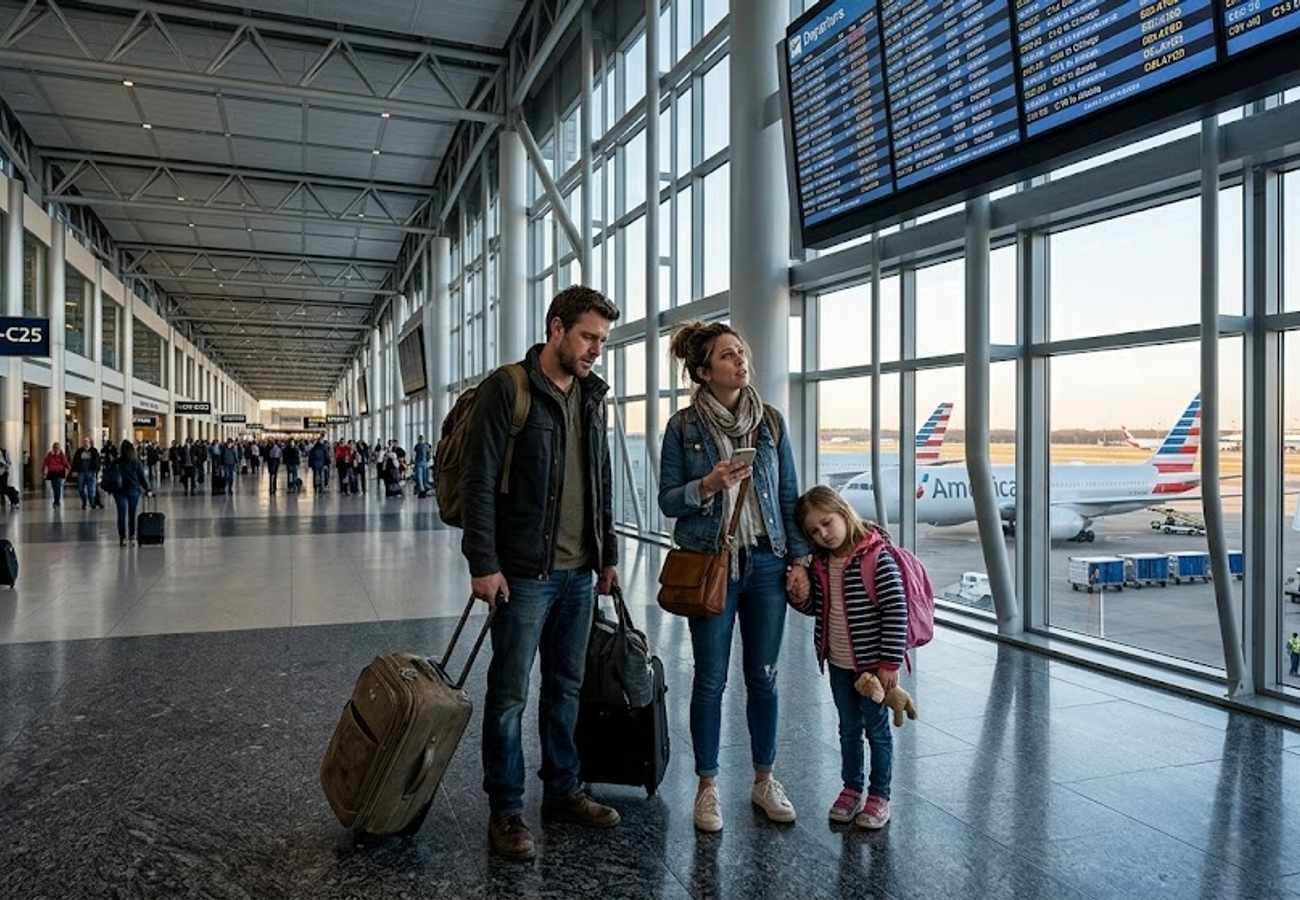
Image generated by AI
Passengers crossing Dallas/Fort Worth International Airport (DFW) face a 2.16-mile trek between terminal perimeters—the longest continuous walk in American aviation. This structural reality has fundamentally reshaped how travelers, airlines, and airport authorities approach connection logistics and passenger welfare.
The sprawl comes from deliberate architectural choices. Modern hub airports prioritize fleet optimization and safety compliance over pedestrian distances. Wider gate spacing prevents wingtip conflicts between large-body aircraft, while multi-concourse designs accommodate the exponential growth in passenger volumes over the past two decades. The infrastructure trade-off is unavoidable: accommodate more flights or reduce passenger fatigue.
Chicago O'Hare International Airport (ORD) ranks second with a maximum 1.34-mile continuous distance, primarily affecting international and domestic transfer corridors. Hartsfield-Jackson Atlanta International Airport (ATL), Orlando International Airport (MCO), and Denver International Airport (DEN) routinely exceed one-mile walking requirements. Passengers arriving exhausted before boarding creates operational friction—late arrivals trigger gate delays and missed connections that ripple across entire flight networks.
Strategic Impact on Route Planning and Connections
Airlines have responded by recalibrating connection windows. Industry practice traditionally allowed 45-minute layovers at major hubs; that standard no longer protects passengers at DFW or ORD. Travel consultants now recommend minimum 90-minute windows for complex routing through these airports, directly impacting scheduling efficiency and crew positioning.
The Federal Aviation Administration (FAA) has documented this operational reality in infrastructure assessments. Carriers including American Airlines (headquartered at DFW), United Airlines (a major ORD operator), and Delta Air Lines (dominant at ATL) factor terminal distance into crew training, ground handling protocols, and connection guarantees.
Infrastructure Solutions Currently Deployed
DFW Skylink, an automated people mover, transports thousands hourly between terminals at speeds exceeding traditional walking. Atlanta's Plane Train serves similar functionality. These systems directly reduce passenger fatigue and create measurable improvements in on-time performance for connecting flights.
High-speed moving walkways, digital wayfinding apps integrated with airline systems, and on-demand electric cart services now represent baseline infrastructure at mega-hubs. Airport authorities recognize that passenger flow efficiency directly impacts airline hub profitability and slot utilization.
Passenger Strategy Framework
Proactive Booking Decisions
When routing through DFW, ORD, ATL, or DEN, select 90+ minute connection windows. This buffer absorbs security delays, unexpected taxiway congestion, and mechanical boarding bridge issues. First-time travelers through these hubs often underestimate terminal complexity; experienced frequent flyers build this cushion automatically.
Automated Transit Leverage
Free internal train networks and moving walkways exist specifically to solve this problem. Passengers who walk cross-terminal distances on foot sacrifice time and energy. Airport signage and airline apps clearly mark these systems.
Mobility Assistance Notification
Travelers with children, elderly passengers, or mobility restrictions should contact their airline 48 hours pre-departure. American Airlines, United, and Delta all provide motorized cart escorts at no charge—a service designed specifically to address terminal distance challenges.
Luggage Optimization
Multi-directional spinner luggage significantly reduces physical strain compared to traditional duffel bags. The seemingly minor detail of luggage design compounds across a 2+ mile walk with time pressure.
Competitive and Business Implications
Terminal distance directly affects airport competitiveness. Passengers and corporations evaluate connection feasibility when selecting airlines and booking itineraries. Southwest Airlines, operating point-to-point networks with fewer connections, gains competitive advantage during peak travel periods simply because passengers avoid mega-hub friction entirely.
Conversely, mega-hubs justify their existence through schedule density and international connectivity. A passenger accepting a 90-minute connection through DFW gains access to 300+ daily flights that smaller airports cannot provide. The trade-off remains economically rational for most travelers.
Regional airports in secondary markets aggressively market shorter terminal distances as a customer service advantage. Denver International (DEN), despite exceeding one-mile walks, still captures market share by promising faster connections than coastal mega-hubs.
Forward Planning for Summer and Holiday Travel
Summer 2026 will stress these systems. Families prioritize school vacation windows; business travelers cluster around conference schedules. Connection buffers become non-negotiable. Booking flexibility—selecting flights with extended layovers—reduces stress and improves connection success rates by measurable margins.
Airlines understand this dynamic. Pricing algorithms now reflect connection reliability metrics. Fares for 90+ minute connections often command premiums, compensating carriers for reduced operational risk.
Master terminal navigation through intelligent booking decisions, leverage automated systems, and allow adequate connection time—your next adventure begins the moment you book, not when you land.
Related Travel Guides
Disclaimer
This article is for informational and educational purposes only. It does not constitute legal, financial, or professional advice. While we strive to provide accurate and up-to-date information, travel policies, regulations, and conditions change rapidly. Always verify information with official sources before making travel decisions. Nomad Lawyer makes no representations about the accuracy, reliability, completeness, or suitability of the information provided. Readers should consult qualified professionals for advice specific to their circumstances. The views expressed in this article are those of the author and do not necessarily reflect the views of Nomad Lawyer.
Raushan Kumar
Founder & Lead Developer
Full-stack developer with 11+ years of experience and a passionate traveller. Raushan built Nomad Lawyer from the ground up with a vision to create the best travel and law experience on the web.
Learn more about our team →