
US Airlines Overhaul Flight Networks: Delta, American, and United Trim Secondary Routes in 2026

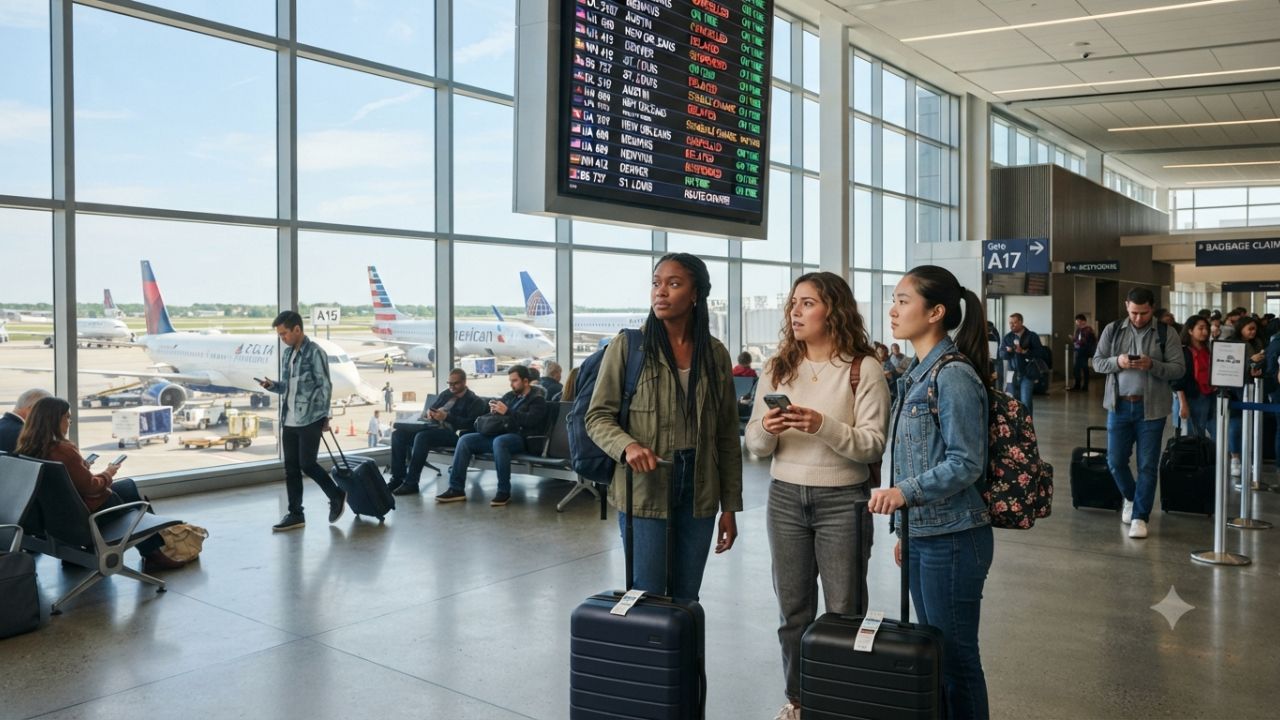
Rather than pursuing rapid post-pandemic fleet expansion, major United States carriers are quietly dismantling underperforming secondary point-to-point routes to protect operational profit margins and redeploy aircraft to high-yield international corridors. Delta Air Lines, American Airlines, United Airlines, and Southwest Airlines are undergoing strategic network recalibrations in late 2026, eliminating regional routes across Texas, New York, and the Caribbean.
This industry-wide rationalization reflects escalating aviation jet fuel expenses, elevated crew costs, and shifting consumer travel demand. For travelers, these route adjustments mean that direct flights on secondary city pairs—such as Austin to New Orleans or New York JFK to Memphis—are being replaced with single-connection itineraries through primary fortress hubs in Atlanta, Dallas/Fort Worth, Chicago, and Charlotte.
Delta's Network Consolidation: Texas, New York, and the Caribbean
According to official fleet and route filings through Delta Air Lines, the Atlanta-based legacy carrier has enacted several notable domestic and leisure route cancellations:
In the Caribbean, Delta terminated its nonstop link connecting Hartsfield-Jackson Atlanta International Airport (ATL) with Argyle International Airport in Saint Vincent and the Grenadines. While the seasonal route provided direct island access, long-term load factor assessments led the carrier to withdraw the service and concentrate Caribbean capacity on established leisure hubs promoted by Discover Saint Vincent and the Grenadines.
In Texas, Delta is restructuring its footprint at Austin-Bergstrom International Airport (AUS). Nonstop services connecting Austin with Memphis (MEM) and New Orleans (MSY) will officially end in October 2026 as the airline pivots aircraft toward more profitable cross-country business routes.
In the Northeast, Delta has adjusted operations out of New York John F. Kennedy International Airport (JFK), reducing point-to-point domestic departures to Memphis, St. Louis (STL), and Houston Intercontinental (IAH). By reallocating valuable JFK runway slots, the carrier is funneling airframes into high-demand transatlantic flights and premium transcontinental markets.
| Carrier | Primary Network Adjustments | Strategic Operational Focus |
|---|---|---|
| Delta Air Lines | Ended ATL–Saint Vincent; ending Austin to Memphis & New Orleans (Oct 2026); trimmed JFK to Memphis, St. Louis & Houston | Reallocating fleet capacity toward high-yield transatlantic & transcontinental corridors |
| American Airlines | Pausing selected regional flights & adjusting seasonal frequencies | Managing operating expenditures and balancing elevated jet fuel costs |
| United Airlines | Removing marginal regional services & optimizing flight banks | Funneling passengers through core hubs in Newark, Chicago O'Hare & Denver |
| Southwest Airlines | Slowing seat capacity growth & exiting low-margin secondary markets | Shifting toward revenue-dense leisure routes and managed business travel |
Industry-Wide Realignment Across Legacy and Low-Cost Carriers
Delta's strategic pruning mirrors maneuvers across the wider US airline sector. American Airlines has reviewed selected regional routes and temporarily reduced scheduled operations in 2026 to curb operating overhead. The Fort Worth-based carrier is focusing on maximizing connectivity through its massive mid-continent hubs at Dallas/Fort Worth (DFW) and Charlotte (CLT).
United Airlines has implemented a parallel consolidation, trimming selected regional frequencies to optimize aircraft turnaround times and crew utilization across hubs in Newark, Houston, Chicago, and Denver.
Meanwhile, Southwest Airlines has adopted a disciplined capacity strategy, curbing fleet growth rates and exiting unprofitable secondary city pairs. As labor and maintenance expenses rise across the industry, carriers are prioritizing flights that feed international passenger networks or attract high-margin corporate travelers promoted by Brand USA.
What Makes These Changing Transit Corridors Significant for Travelers
The elimination of non-hub direct flights transforms regional travel dynamics across the United States.
Cities like Austin, Memphis, and New Orleans—renowned for live music, indigenous culinary traditions, and heritage tourism—are seeing their transit landscape evolve. Rather than relying on direct regional point-to-point flights, travelers journeying between southern cultural centers must now budget additional transit time for connections through hub facilities.
Conversely, passengers departing from primary coastal gateways benefit from higher flight frequencies and expanded wide-body international options as airlines concentrate their newest fuel-efficient aircraft on long-haul routes to Europe, South America, and Asia.
Visitor Insider Tips: Navigating US Route Shifts in 2026
- Audit Existing Bookings for Schedule Modifications: If you hold flight reservations on routes facing suspension (such as Austin to New Orleans or JFK to St. Louis departing after October 2026), log into your airline account immediately. US Department of Transportation rules entitle you to a free rebooking on alternative routing or a 100% cash refund if your original schedule changes significantly.
- Consider Overland Rail and Driving Alternatives on Regional Corridors: On truncated regional routes like Austin to Houston or New York to Philadelphia, evaluate Amtrak regional trains or comfortable intercity motorcoaches, which avoid airport security lines and deliver passengers directly into downtown city centers.
- Book Mainline Connections Over Regional Express Jets: When booking connecting flights through Atlanta, Dallas, or Chicago, choose flights operated on mainline Boeing 737 or Airbus A320 aircraft rather than 50-seat regional jets to ensure standard overhead bin space for full-sized carry-on baggage.
- Leverage Multi-Carrier Itineraries for Regional Access: If a direct route is discontinued by your preferred airline, check competing low-cost or ultra-low-cost carriers (such as Allegiant or Breeze Airways) that often step in to operate seasonal point-to-point links between secondary cities.
- Join Airline Rebooking Queues via Social Media or Chat: If a connecting flight is disrupted at a major transit hub due to flight reductions, use the in-app chat function or direct message airline support channels on social platforms for faster rebooking assistance while waiting in terminal customer service lines.
Cultural and Environmental Context
The transition from scattered point-to-point regional flights toward consolidated hub-and-spoke networks carries meaningful environmental implications. Consolidating passengers onto larger, higher-capacity aircraft operating at higher load factors significantly reduces per-passenger carbon emissions compared to flying half-empty 50-seat regional commuter planes.
At the same time, regional airport authorities in mid-sized cities are adapting their economic strategies. Losing direct airline services encourages municipalities to improve regional ground transportation, invest in high-speed rail corridors, and cultivate local cultural economies that thrive on sustained drive-market tourism rather than fleeting aviation traffic.
FAQ: Navigating 2026 US Airline Route Cuts
Which Delta routes are ending in October 2026?
Delta is scheduled to end nonstop services connecting Austin (AUS) with Memphis (MEM) and New Orleans (MSY) in October 2026.
Why did Delta cancel flights to Saint Vincent?
Delta discontinued its seasonal Atlanta to Saint Vincent route following a strategic review of long-term route performance and aircraft allocation.
Can I get a full refund if my flight route is suspended?
Yes. If an airline cancels or significantly alters your flight schedule due to route suspension, you are legally entitled to a full cash refund to your original payment method.
Which domestic routes did Delta trim from New York JFK?
Delta reduced selected point-to-point domestic departures from New York JFK to Memphis, St. Louis, and Houston.
Understanding changing flight networks empowers travelers to adapt seamlessly and keep discovering the cultural heart of the Americas.
Related Travel Guides
Disclaimer
This article is for informational and educational purposes only. It does not constitute legal, financial, or professional advice. While we strive to provide accurate and up-to-date information, travel policies, regulations, and conditions change rapidly. Always verify information with official sources before making travel decisions. Nomad Lawyer makes no representations about the accuracy, reliability, completeness, or suitability of the information provided. Readers should consult qualified professionals for advice specific to their circumstances. The views expressed in this article are those of the author and do not necessarily reflect the views of Nomad Lawyer.
Naina Thakur
Contributor & Travel Specialist
Travel enthusiast and legal writer covering visa regulations, responsible tourism, and cultural journeys across global destinations.
Learn more about our team →