
Urgent Flights Warning: Spain and Italy 2026 Airport Delays Expected
EU's new biometric Entry/Exit System reaches full deployment across Spain and Italy in summer 2026, creating urgent flights warning for millions of holiday travellers. Expect longer airport queues, higher fares, and potential missed connections.

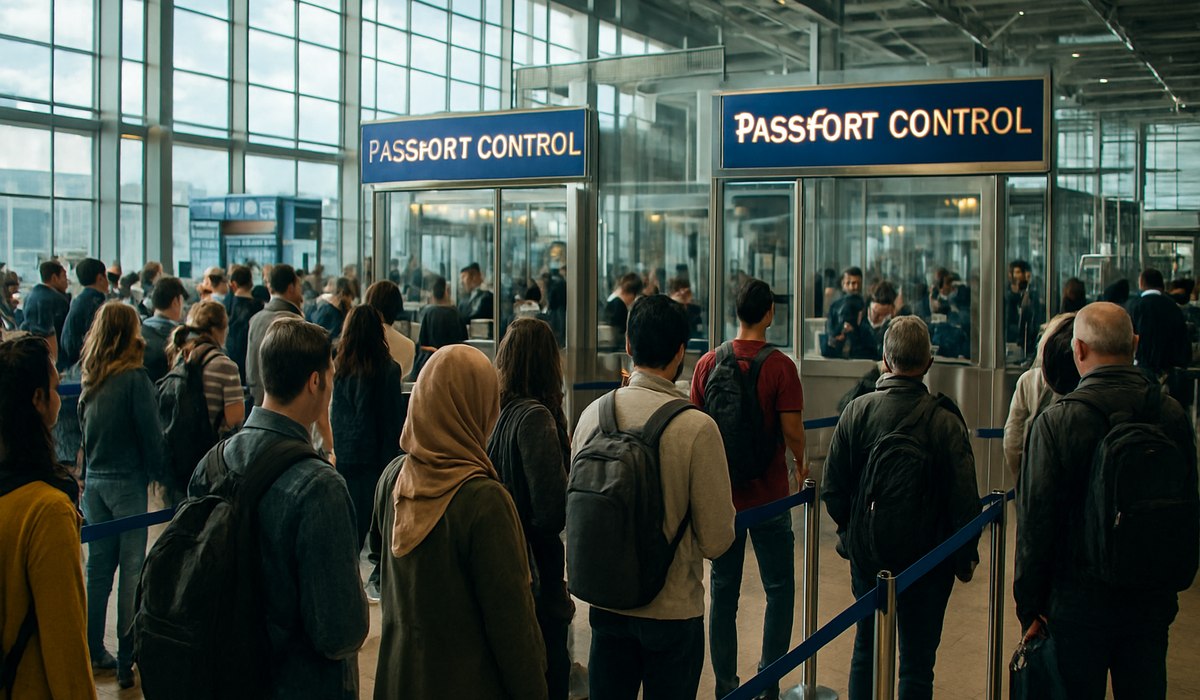
Image generated by AI
Breaking News: Summer 2026 Travel to Spain and Italy Faces Critical Airport Delays
Madrid Barajas, Málaga, Rome Fiumicino, and Milan Malpensa airports are bracing for record queues as the European Union's biometric Entry/Exit System (EES) reaches full operational capacity during peak summer season. Travel authorities across Europe are issuing an urgent flights warning for 2026, alerting millions of holiday travellers to prepare for significantly longer border processing times at Spain and Italy's busiest terminals. The convergence of new EU border controls, fuel surcharges, and reduced airline capacity is reshaping the summer travel landscape in ways that demand immediate action from passengers planning Mediterranean getaways.
What Is the EU's New Entry/Exit System and How Does It Work?
The Entry/Exit System represents a fundamental shift in how non-EU travellers enter and exit the Schengen Area. Launched in October 2025 at external borders, the EES now operates at Spain and Italy's major gateways, replacing traditional passport stamps with digital biometric registration. The system collects fingerprints, facial photographs, and precise entry-exit timestamps for all non-EU visitors, storing this data centrally for future border crossings.
According to European Commission guidance, the EES aims to enhance security and streamline legitimate travel. However, early deployment data shows that peak-hour processing has created bottlenecks, particularly during summer months when passenger volumes surge. Airports initially underestimated staffing requirements, resulting in documented cases of missed onward flights and congested arrival halls. The urgent flights warning stems from the fact that Spain and Italy—Europe's top leisure destinations for UK and North American tourists—will test the system at maximum scale precisely when holiday demand peaks. Travel planners urge passengers to allocate 45-90 minutes extra for arrival procedures, especially those with tight connections or late-night arrivals offering minimal buffer time.
Which Airports Are Affected and When Will Delays Peak?
Spain's busiest terminals already operating under full EES protocols include Madrid Barajas Airport, Europe's gateway for transatlantic and continental traffic, and Málaga-Costa del Sol, which handles millions of summer beach tourists annually. Italy's affected hubs encompass Rome Fiumicino, serving as the country's primary international hub, and Milan Malpensa, crucial for business and leisure routes across Europe.
Peak delays are expected during June, July, and August 2026—the traditional summer holiday window. Industry analysis indicates that weekend arrivals and early-morning flight clusters experience the longest queues, sometimes exceeding two hours for non-EU passport holders. Secondary Spanish airports including Barcelona-El Prat, Alicante, and Ibiza have also implemented EES protocols, though with slightly less congestion than major hubs. Airlines operating these routes—including Ryanair, easyJet, Vueling, and major carriers via FlightAware real-time tracking—have flagged connection risks, prompting many to increase minimum layover requirements. The urgent flights warning becomes especially critical for passengers booking same-day connections or arriving on budget carriers with tight turnaround schedules.
How to Prepare: Traveler Action Checklist
Minimizing disruption during your 2026 Spain or Italy holiday requires proactive planning across multiple travel phases.
-
Book longer layovers: When connecting through Madrid, Rome, or Milan, allow minimum 2.5-3 hours instead of standard 90-minute connections for same-day onward flights.
-
Arrive earlier for departing flights: Plan to arrive at check-in 3.5 hours before international departures, rather than the standard 3 hours.
-
Pre-register biometric data: If eligible, use EU pre-enrollment systems to record fingerprints and facial data before travel, potentially reducing on-arrival processing time.
-
Monitor airline schedule changes: Subscribe to flight alerts via carrier apps and check updated schedules weekly, as airlines continue reshuffling summer 2026 capacity across Spain and Italy routes.
-
Document all required approvals: Ensure your passport validity exceeds six months and confirm that your nationality requires no visa under current Schengen rules.
-
Review ETIAS requirements: Prepare for the European Travel Information and Authorisation System (ETIAS), expected to launch in late 2026. US, UK, and Canadian citizens will need online pre-authorization.
-
Purchase travel insurance with delay coverage: Given heightened uncertainty, insure against missed connections and resulting expenses.
-
Use airport apps for real-time updates: Download terminal maps and queue-time estimates from Madrid Barajas, Rome Fiumicino, and Milan Malpensa official applications.
-
Budget extra time and cost: Plan for higher airfares due to fuel surcharges and environmental compliance fees now embedded in ticket prices across Spain and Italy routes.
-
Contact your airline 72 hours pre-departure: Confirm departure times, terminal assignments, and any special procedures related to the EES implementation at your destination airport.
Higher Fares and Hidden Costs: The 2026 Price Reality
The urgent flights warning extends beyond airport delays to encompass significantly elevated ticket prices throughout 2026. Jet fuel costs, constrained supply chains, and stricter EU environmental policies are converging to inflate airfares across Spain and Italy routes by 15-25% compared to 2024 levels.
Low-cost carriers operating from Europe's major hubs have already introduced per-segment surcharges framed as fuel volatility and carbon compliance fees. Environmental policy research indicates that as free emissions allowances under the EU carbon trading scheme phase out during 2026, airlines must purchase full allowances for every flight, transferring these costs directly to passengers. Secondary airports and shoulder-season dates are experiencing the steepest price increases, with some routes showing 30% premiums.
Beyond airfare, travellers must account for expanded tourist taxes in Spain's coastal cities and Italy's historic centers. Barcelona, Madrid, Rome, Venice, and Milan have all increased or modified local levies on overnight stays and day-visit permits. These ground-based costs compound the higher ticket prices, collectively increasing the budget for a 2026 Mediterranean holiday by 20-30% compared to pre-pandemic baselines.
Route Cuts and Capacity Shifts: Limited Availability in 2026
Alongside the urgent flights warning regarding delays and costs, several major carriers have announced significant capacity reductions on Spain and Italy routes for summer 2026. At least one leading low-cost operator has reduced regional Spanish capacity by approximately 10%, including complete withdrawal from Asturias Airport.
This redeployment toward larger hubs like Madrid, Barcelona, and Milan means that travellers seeking secondary-airport options or specific regional routes face extremely limited alternatives. Early availability is evaporating rapidly, with peak summer dates already showing 70%+ seat occupancy across major airlines. Industry observers predict further network consolidation through mid-2026, making early booking essential. Check available routes and capacity trends via FlightAware scheduling tools to secure preferred flights before summer demand peaks.
What's Coming Next: ETIAS Authorization System Delayed to Late 2026
A second layer of complexity arrives when the European Travel Information and Authorisation System (ETIAS) launches—currently scheduled for late 2026 following multiple postponements. The ETIAS requires advance online authorization for visa-exempt travellers from the US, UK, Canada, Australia, and 56 additional countries before boarding Schengen-bound flights.
The system mandates a €7 fee per application, a five-year validity period, and processing times of several minutes to days depending on application complexity. EU officials have signaled a six-month grace
Disclaimer
This article is for informational and educational purposes only. It does not constitute legal, financial, or professional advice. While we strive to provide accurate and up-to-date information, travel policies, regulations, and conditions change rapidly. Always verify information with official sources before making travel decisions. Nomad Lawyer makes no representations about the accuracy, reliability, completeness, or suitability of the information provided. Readers should consult qualified professionals for advice specific to their circumstances. The views expressed in this article are those of the author and do not necessarily reflect the views of Nomad Lawyer.
Preeti Gunjan
Contributor & Community Manager
A passionate traveller and community builder. Preeti helps grow the Nomad Lawyer community, fostering engagement and bringing the reader experience to life.
Learn more about our team →