
Dozens Stranded Departing as European Airports Leave Passengers Behind in 2026
Dozens stranded departing European airports in April 2026 as security delays cause flights to leave without passengers. Manchester, France, and Milan incidents raise urgent passenger rights concerns.

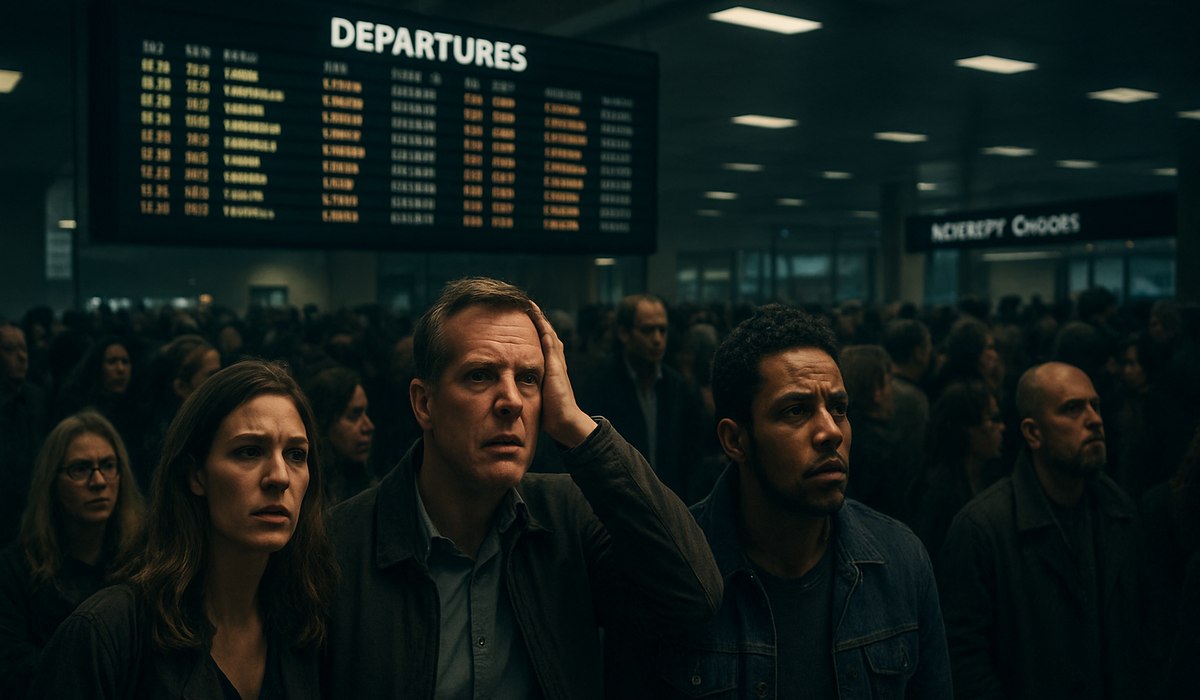
Image generated by AI
Dozens Stranded Departing: European Airports Leave Passengers Behind During Security Chaos
Dozens of air travelers across Europe have been left stranded at major airports in April 2026 after flights departed without them due to extended security and passport control delays. Incidents at Manchester Airport, French regional hubs, and Milan Linate have affected nearly 300 passengers across multiple carriers, triggering urgent questions about airline protocols and traveler protections. The pattern reveals a critical gap between airport security capacity and flight scheduling, leaving families, business travelers, and holiday-makers scrambling for alternative arrangements and compensation.
Recent Incidents: Manchester and French Airport Cases
A high-profile incident involving a Manchester-to-Alicante flight in April 2026 stranded approximately 35 passengers who had cleared initial security but were held in a departure gate stairwell during additional screening. By the time security personnel released them, the aircraft had already pushed back from the stand with their checked luggage still on board. The passengers faced immediate rebooking delays and the frustration of watching their belongings depart without them.
An even larger incident unfolded at Vatry Airport in France, where a Ryanair service departed with approximately 190 seats empty after dozens stranded departing due to acute security staffing shortages. Ground operations staff made the controversial decision to dispatch the aircraft rather than further delay the flight, abandoning ticketed passengers still queued in security lines. Meanwhile, at Milan Linate Airport, an easyJet flight to Manchester left over 100 UK-based passengers stranded after the European Union's new biometric Entry/Exit System created multi-hour passport control queues in early April. Passengers who had already completed standard security screening reported being trapped in border-control lines as their flight boarded and departed without them.
What Went Wrong: Security Bottlenecks and Staffing Shortages
Security bottlenecks and staffing gaps have emerged as the primary culprits behind dozens stranded departing incidents across European airports. Regional leisure destinations including Lanzarote, Malaga, and smaller French terminals report chronic understaffing at passport control and security checkpoints, particularly during peak holiday periods. A previous Lanzarote incident left over 60 Ryanair passengers heading to Ireland behind after border control delays prevented them from reaching gates before boarding closed, despite arriving at the airport with what they believed was adequate time.
The rollout of the EU's new biometric Entry/Exit System has intensified strain on border infrastructure. This system combines biometric capture with traditional document verification, dramatically slowing processing times when staffing and infrastructure fail to expand in parallel. Travel industry analysts note that passengers now face unpredictable delays at security and border checkpoints that rival or exceed flight delays themselves, creating a cascading effect where boarding occurs before entire passenger cohorts clear controls.
Airport operators and government border agencies attribute gaps to budget constraints, insufficient staffing allocations, and the speed of passenger volume growth. Airlines, meanwhile, cite operational pressures including tight departure slot windows, crew duty limits, and turnaround schedules that make prolonged ground delays financially unviable without cascading knock-on disruptions across their entire network.
Passenger Impact: Luggage Left Behind and Rebooking Chaos
The practical consequences for affected travelers extend far beyond missing a single flight. Passengers stranded at departure gates have had checked luggage depart without them, requiring complex recovery processes to retrieve bags from destination airports or arrange shipment back to departure cities. Rebooking onto alternative flights often involves significant delays, as airlines route passengers through available connections rather than immediately rebooting them on the next available service to their original destinations.
Families separated during transit have reported emotional distress alongside logistical nightmares. Holiday bookings with tight accommodation windows have been disrupted, forcing travelers to contact hotels, rental car companies, and tour operators to reschedule arrangements. Business travelers have missed critical meetings, conferences, and client engagements. In cases where luggage traveled while passengers did not, recovering belongings required coordination between multiple airport authorities, ground handlers, and airline customer service teams across international borders.
The financial impact includes not only airline rebooking but also unplanned accommodation, meal expenses, transportation, and communication costs. While some airlines have offered compensation under EU Regulation 261/2004, disputes over whether security delays constitute "extraordinary circumstances" have left many passengers in protracted claims processes.
Airline Protocols Under Scrutiny: Who Bears Responsibility?
Airlines operate under tight departure slots and crew duty limits that make prolonged delays costly, yet dozens stranded departing incidents suggest coordination failures between carriers and airport security operations. Airlines have consistently argued that security and passport control delays fall under extraordinary circumstances beyond their operational control, placing responsibility with airport operators and government agencies. However, passenger advocates argue that travelers purchase tickets from airlines, not from security contractors, and therefore expect carriers to coordinate with airport partners to ensure ticketed customers can reasonably reach departure gates.
Recent incidents reveal that airlines sometimes make boarding and departure decisions without confirmation that all passengers have cleared security controls. In the Vatry case, operations staff chose to dispatch the aircraft rather than delay further, effectively deciding that on-time performance outweighed passenger access to their booked flights. This decision prioritizes network schedules over individual passenger rights, a calculus that regulatory bodies and consumer advocates increasingly scrutinize.
Experts note that comprehensive pre-flight coordination should include real-time communication between airline gate agents, airport security management, and border control supervisors to identify bottlenecks before boarding closes. When such coordination fails, airlines face pressure to either delay departures substantially or proceed without stranded passengers. Current protocols appear insufficient to prevent dozens stranded departing scenarios, suggesting industry standards require revision.
Passenger Rights and Compensation Framework
Under EU Regulation 261/2004, passengers are entitled to compensation of €250 to €600 depending on flight distance when denied boarding due to overbooking or airline operational failures. However, this regulation includes a broad "extraordinary circumstances" exemption that covers events beyond the airline's control, including security and border delays. Airlines have successfully used this exemption in past cases to avoid compensation, arguing that airport security operations are not within their operational sphere.
Recent legal challenges in European courts have begun scrutinizing this interpretation. Consumer advocates argue that airlines can and should coordinate with airport security to establish passenger flow protocols that prevent dozens stranded departing scenarios. When airlines fail to implement such coordination, they bear responsibility for the resulting denied boarding, regardless of whether security delays were the immediate cause.
Travelers affected by airport security delays should document all communications, boarding passes, security timestamps, and rebooking confirmations. These records support compensation claims and regulatory complaints. The US DOT Airline Consumer Protection division provides resources for understanding passenger rights, while EU passengers can file complaints with national aviation authorities and consumer protection agencies.
Real-Time Flight Status and Monitoring
Checking real-time flight status before arriving at the airport helps passengers understand current departure conditions. Platforms like FlightAware provide live tracking of flight positions, gate information, and delay patterns. Arriving at the airport three hours before international departures (rather than the standard two hours) provides additional buffer time for extended security or border processing.
Monitoring airport-specific security wait times through airport apps and social media alerts can inform decision-making about arrival timing. Following @manchesterairport, @officiallinate, and @aeroports_fr on social media provides real-time updates about security staffing issues and predicted delays. When passengers observe unusual security queue lengths during check-in, immediately notifying gate agents about tight boarding timelines may prompt staff to expedite remaining passengers or adjust boarding schedules.
Key Data Table: Recent Stranding Incidents (April 2026)
| Airport | Airline | Route | Passengers Stranded | Departure Delay | Primary Cause | Date |
|---|---|---|---|---|---|---|
| Manchester Airport | Unspecified Carrier | Manchester–Alicante | 35 |
Disclaimer
This article is for informational and educational purposes only. It does not constitute legal, financial, or professional advice. While we strive to provide accurate and up-to-date information, travel policies, regulations, and conditions change rapidly. Always verify information with official sources before making travel decisions. Nomad Lawyer makes no representations about the accuracy, reliability, completeness, or suitability of the information provided. Readers should consult qualified professionals for advice specific to their circumstances. The views expressed in this article are those of the author and do not necessarily reflect the views of Nomad Lawyer.
Preeti Gunjan
Contributor & Community Manager
A passionate traveller and community builder. Preeti helps grow the Nomad Lawyer community, fostering engagement and bringing the reader experience to life.
Learn more about our team →