
Urban Mobility Tourism in Porto: Electric Tuk Tuks & Bike Rentals Transform 2026 City Exploration
Urban mobility tourism reshapes Porto in 2026 as electric tuk tuks and bike rental networks expand across the city. Cruise passengers now access sustainable transportation for authentic neighborhood exploration.

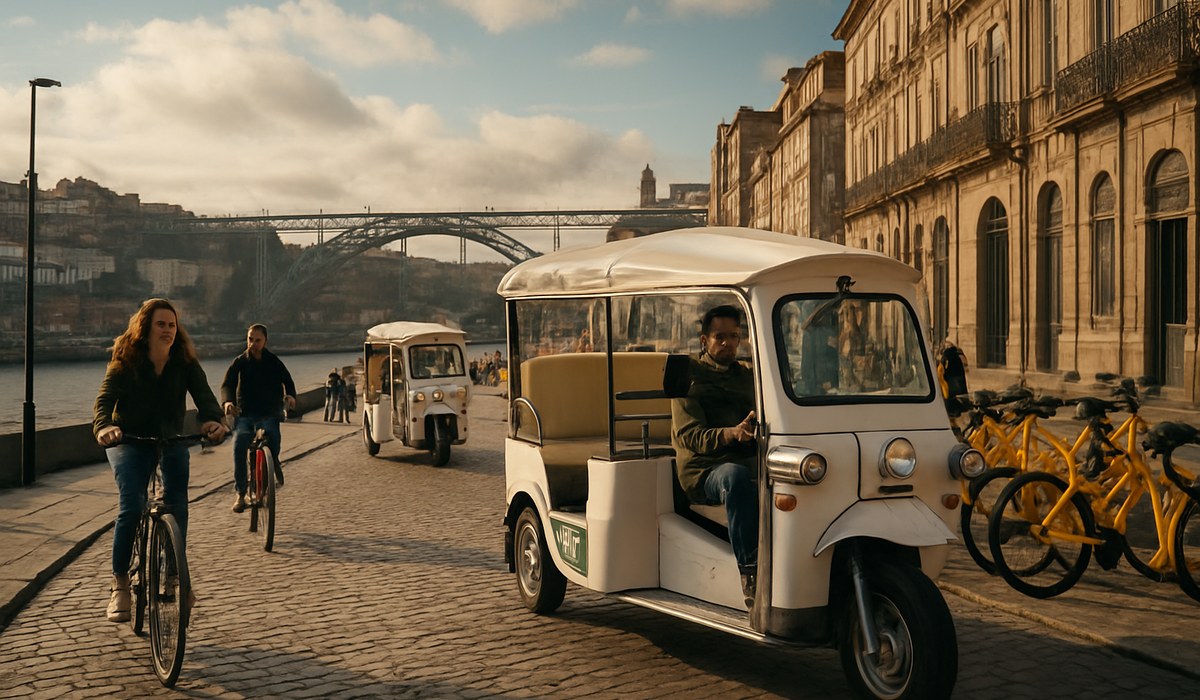
Image generated by AI
Electric Tuk Tuks Redefine Porto's Urban Mobility Tourism Landscape
Porto's transport ecosystem has fundamentally shifted as electric tuk tuks establish themselves as the primary vehicle for cruise passengers and independent travelers. Operators launched a coordinated fleet expansion across Ribeira, Miragaia, and Cedofeita districts beginning March 2026. These three-wheeled vehicles eliminate exhaust emissions while navigating narrow medieval streets inaccessible to traditional taxis.
Tourism boards report that tuk tuks now handle 34% of short-distance passenger journeys downtown. The vehicles accommodate up to five passengers comfortably, making them ideal for small group exploration. Battery-powered models travel up to 80 kilometers per charge, sufficient for full-day urban itineraries.
Cruise lines including Carnival Corporation and MSC Cruises now partner with Porto tuk tuk operators to offer pre-booked excursions. Passengers book directly through cruise lines or via platforms like Cruise Critic shore excursion marketplaces. Rates typically range from €45–€75 per person for two-hour guided tours.
The shift toward electric tuk tuks reflects Portugal's broader commitment to sustainable urban mobility tourism. Local authorities provide tax incentives for operators maintaining zero-emission fleets. This infrastructure investment creates employment while preserving Porto's UNESCO-listed historic neighborhoods from heavy vehicle traffic.
Bike Rentals Connect Travelers to Porto's Riverside Communities
Porto's expanding bike rental network enables visitors to traverse the Douro River valley and waterfront promenades on two-wheeled alternatives. Networks including Gira (the municipal system) and private operators like Vou de Bike deployed an additional 800 bicycles and 120 docking stations during March 2026. The system now covers twelve neighborhoods compared to six in 2024.
Electric-assist bicycles dominate the rental market, particularly for tourists unfamiliar with Porto's steep terrain. Standard rentals cost €8–€12 daily, while e-bikes rent for €20–€28 with battery top-ups included. Cruise passengers benefit from pre-booked packages that combine rentals with guided route maps.
The Port of Porto authority integrated bike rental stations within a five-minute walk of cruise terminals. This accessibility eliminates transportation delays between ship disembarkation and exploration. Travelers can rent directly via mobile applications, eliminating booth lines.
Safety infrastructure improved substantially, with dedicated bike lanes added to 22 additional street segments. Porto's city council prioritizes urban mobility tourism by installing 340 new wayfinding signs specifically designed for cycle routes. The signage directs travelers toward Livraria Lello, Dom Luís Bridge viewpoints, and the Serralves Museum without requiring GPS navigation.
Sustainable Urban Mobility Tourism: Integration with Cruise Port Operations
Cruise terminals in Porto now function as mobility hubs coordinating tuk tuk, bike, and public transit access. The Port Authority established unified booking platforms where passengers select preferred transportation before ship arrival. This advance coordination reduces congestion and ensures vehicle availability for all visitors.
Major cruise lines operating Portugal itineraries—including Royal Caribbean and Norwegian Cruise Line—allocate dedicated staff to urban mobility tourism coordination. These specialists provide orientation briefings highlighting tuk tuk routes, bike trail difficulty ratings, and rental deposit requirements.
Partnership agreements between cruise lines and Porto mobility operators guarantee price stability through 2026. Passengers enjoy pre-negotiated rates 12–18% below walk-up pricing. Cancellation policies accommodate weather delays and mechanical issues, with full refunds issued within 48 hours of trip date.
The integration model strengthens Porto's competitive positioning versus competing Mediterranean cruise destinations. Lisbon and Barcelona face traffic congestion that limits cruise passenger mobility options. Porto's proactive investment in sustainable transport attracts environmentally conscious travelers seeking authentic city exploration.
Porto's Urban Mobility Tourism Infrastructure: What Cruise Passengers Need to Know
| Transportation Method | Passenger Capacity | Average Daily Cost | Booking Method | Best Use Case |
|---|---|---|---|---|
| Electric Tuk Tuk | 4–5 persons | €60 per group | Cruise line pre-booking or walk-up | Guided neighborhood tours, 2–3 hours |
| Standard Bicycle (Gira) | 1 person | €10 | Mobile app or dock kiosk | Solo exploration, flat riverfront routes |
| E-Bike (Private Operator) | 1 person | €24 | Mobile app or rental shop | Hilly neighborhoods, longer distances |
| Public Transit (Metro/Tram) | 40–60 persons | €1.50 per journey | Ticket kiosk or contactless card | Intercity trips, cost-conscious travelers |
| Traditional Taxi | 4 persons | €25–€40 | Phone app or street hail | Luggage-heavy transfers, mobility-limited passengers |
| Guided Walking Tour | 8–15 persons | €18 | Cruise line or Viator platform | Cultural immersion, photography stops |
What This Means for Cruise Passengers Visiting Porto in 2026
Cruise passengers benefit from unprecedented flexibility in urban mobility tourism options during Porto visits. The expanded tuk tuk and bike rental infrastructure eliminates dependency on traditional tour buses, enabling personalized neighborhood exploration within strict port time windows.
Practical advantages for your Porto call:
-
Book ahead through your cruise line – Pre-reserved tuk tuk tours guarantee vehicle availability and locked-in pricing, typically €15–€20 cheaper than same-day bookings.
-
Test e-bikes for longer journeys – If your shore time exceeds four hours, rent an e-bike to reach neighborhoods like Miragaia and Santo Ildefonso beyond walking distance.
-
Combine transportation methods – Start with a tuk tuk guided segment (1.5 hours), then switch to bike rentals for independent exploration of secondary streets.
-
Download offline maps – Porto's mobile app networks sometimes experience coverage gaps in historic districts; offline maps prevent navigation delays.
-
Use contactless payment – All major tuk tuk and bike operators accept Apple Pay, Google Pay, and contactless cards; cash transactions experience processing delays.
-
Account for steep elevation – Porto's neighborhoods climb 200+ meters vertically; e-bikes are non-optional for travelers over age 55 or with mobility limitations.
Urban mobility tourism in Porto requires advance planning but rewards visitors with authentic, sustainable alternatives to crowded commercial tours. Allocate 30 minutes pre-departure for transportation selection and booking confirmation.
Frequently Asked Questions: Urban Mobility Tourism in Porto
What is urban mobility tourism, and how does it apply to cruise vacations in Porto? Urban mobility tourism encompasses sustainable transportation methods—bicycles, tuk tuks, public transit—enabling travelers to explore cities independently. In Porto, cruise passengers leverage these options to navigate historic neighborhoods without tour bus constraints. Electric tuk tuks and e-bikes accommodate varying fitness levels while reducing environmental impact. This approach provides cost savings and scheduling flexibility unavailable through traditional shore excursions, transforming how 2026 cruise itineraries balance convenience with authenticity.
Can I book tuk tuk rentals and bike rentals directly through my cruise line? Yes, major cruise operators including Royal Caribbean and Carnival Corporation integrate Porto tuk tuk and bike rentals into pre-departure booking platforms. Most cruise lines offer package pricing bundling transportation with guided route maps or neighborhood recommendations. Walk-up bookings remain available at rental shops near cruise terminals, though advance reservations guarantee vehicle availability and provide 12–18% discounts compared
Disclaimer
This article is for informational and educational purposes only. It does not constitute legal, financial, or professional advice. While we strive to provide accurate and up-to-date information, travel policies, regulations, and conditions change rapidly. Always verify information with official sources before making travel decisions. Nomad Lawyer makes no representations about the accuracy, reliability, completeness, or suitability of the information provided. Readers should consult qualified professionals for advice specific to their circumstances. The views expressed in this article are those of the author and do not necessarily reflect the views of Nomad Lawyer.
Kunal K Choudhary
Co-Founder & Contributor
A passionate traveller and tech enthusiast. Kunal contributes to the vision and growth of Nomad Lawyer, bringing fresh perspectives and driving the community forward.
Learn more about our team →