
United Airlines Cancels 300+ Flights Amid Severe Weather Disruptions at Chicago O'Hare and East Coast Hubs 2026
United Airlines faced over 300 cancellations within 48 hours as severe weather paralyzed Chicago O'Hare and key East Coast hubs, triggering flexible rebooking for affected passengers.

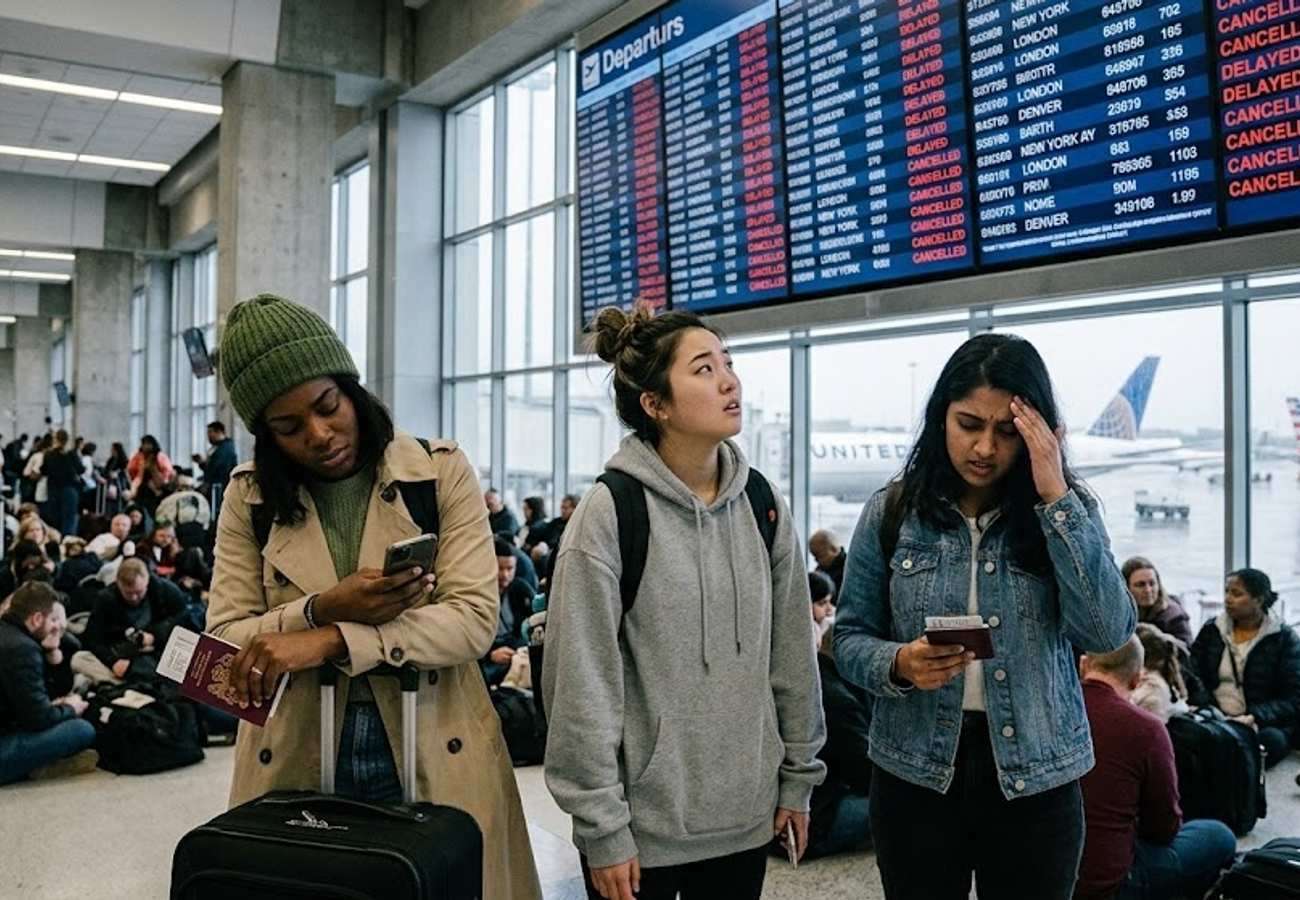
Image generated by AI
United Airlines has cancelled more than 300 flights in a 48-hour window following severe weather systems that disrupted operations across the Midwest and the East Coast.
The instability began on July 27 and extended through July 28, impacting major U.S. carriers. On Monday, 1,746 flights across the U.S. network were cancelled. This volatility persisted into Tuesday, with over 1,000 cancellations recorded by mid-day.
Operational Breakdown: Chicago and the East Coast
The crisis centered on Chicago O'Hare International Airport (ORD), where high humidity and severe storms, including tornado warnings, forced the FAA to issue multiple nationwide ground stops. FlightAware data confirms ORD had the highest number of cancelled flights globally, with 531 departure and 477 arrival cancellations.
While the Midwest was the initial epicenter, the disruption shifted toward the East Coast on Tuesday. Newark Liberty International Airport (EWR) faced a ground stop driven by a combination of thunderstorms and staffing shortages.
Rebooking Policy and Eligible Hubs
To mitigate the backlog, United Airlines implemented a flexible rebooking policy effective through July 30, 2026. The carrier is waiving change fees and fare differences for passengers departing from specific East Coast hubs between July 27 and July 30, 2026.
Eligible Airports for Free Rebooking:
- Baltimore, MD (BWI)
- Washington, DC (DCA)
- Newark, NJ/New York, NY (EWR)
- Washington, DC (IAD)
- New York, NY (JFK)
- New York, NY (LGA)
- Philadelphia, PA (PHL)
Passengers must remain in the same cabin and travel between the same cities as originally booked to qualify for these waivers.
Comparative Cancellation Data
U.S. Airlines with Most Cancellations (July 27)
| Rank | Airline | Cancellations |
|---|---|---|
| 1 | SkyWest | 301 |
| 2 | Republic | 268 |
| 3 | United Airlines | 237 |
| 4 | American Airlines | 175 |
| 5 | Envoy Air | 140 |
U.S. Airports with Most Departure Cancellations (July 28)
| Rank | Airport | Cancellations |
|---|---|---|
| 1 | LaGuardia Airport | 202 |
| 2 | John F. Kennedy International Airport | 145 |
| 3 | Newark Liberty International Airport | 74 |
| 4 | Boston Logan International Airport | 69 |
Passenger Impact and Logistics
The operational failure extended beyond flight schedules to ground logistics. Travelers at ORD reported significant failures in baggage handling, with hundreds of passengers waiting hours for bags that were never loaded onto aircraft.
Reports from passengers on X indicate a lack of staffing at terminals to assist with itinerary changes, while some flights, such as UA1209 from Chicago to Newark, were delayed and subsequently cancelled with minimal communication from the carrier.
Why This Matters: Industry Analysis
From a logistical perspective, this event highlights a critical vulnerability in the "hub-and-spoke" model. When a primary hub like ORD or EWR freezes, the ripple effect isn't just local; it creates a systemic failure across the entire network.
For travelers, the real impact is the "compounding delay." The data shows that while weather triggers the initial cancellation, staffing shortages (as seen at EWR) prevent the network from recovering quickly. This suggests that airlines are operating with such thin margins of redundancy that a single weather event can paralyze their ability to rebook passengers effectively.
Forward Outlook
Market trends suggest that as summer 2026 weather patterns become more volatile, airlines will struggle with "recovery time"—the period it takes to return to a normal schedule after a ground stop. Expect continued volatility at East Coast hubs through July 30, with potential for further ground stops if staffing levels at Newark and JFK do not stabilize.
Passengers are advised to monitor the United travel alerts page and prioritize digital rebooking over phone lines to avoid extended wait times.
Related Travel Guides
Disclaimer
This article is for informational and educational purposes only. It does not constitute legal, financial, or professional advice. While we strive to provide accurate and up-to-date information, travel policies, regulations, and conditions change rapidly. Always verify information with official sources before making travel decisions. Nomad Lawyer makes no representations about the accuracy, reliability, completeness, or suitability of the information provided. Readers should consult qualified professionals for advice specific to their circumstances. The views expressed in this article are those of the author and do not necessarily reflect the views of Nomad Lawyer.
Raushan Kumar
Founder & Lead Developer
Full-stack developer with 11+ years of experience and a passionate traveller. Raushan built Nomad Lawyer from the ground up with a vision to create the best travel and law experience on the web.
Learn more about our team →