
United Airlines Flight Cancellations Trigger US Travel Chaos with 427 Delays Grounding Routes to Chicago, New York, Denver, and Los Angeles: Latest Airline News and Aviation Updates
A severe wave of 8 flight cancellations and 427 agonizing delays across the United Airlines network has caused massive travel chaos, crippling major US aviation hubs.

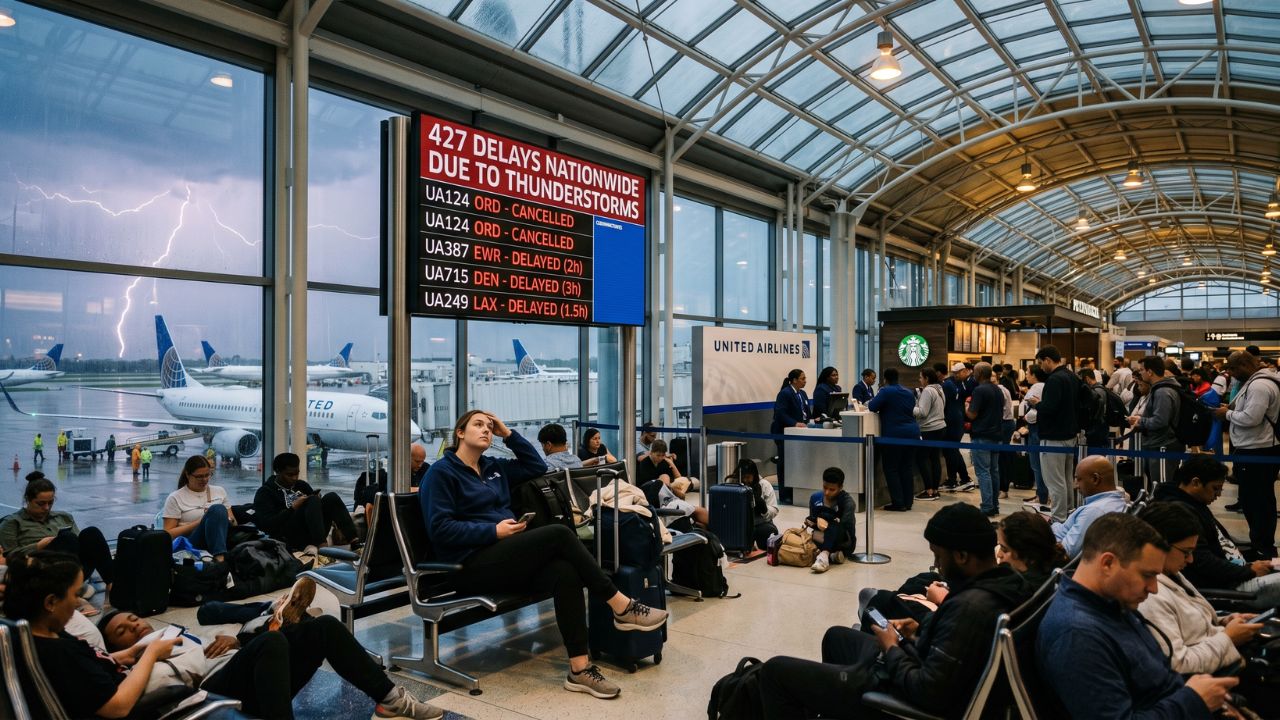
Image generated by AI
In a devastating structural breakdown that has instantly paralyzed the American aviation network, an intense wave of sudden flight cancellations and agonizing tarmac holds has violently struck the United States. On May 25, 2026, thousands of desperate passengers were physically stranded as severe operational failures systematically crippled outbound departures for United Airlines. Directly impacting the legacy carrier's massive domestic and international operations, this severe gridlock resulted in 8 critical flights being completely grounded alongside a staggering 427 compounding delays. By utterly severing vital global connections stretching through Chicago, New York, Denver, Los Angeles, and Newark, this massive wave of unmitigated travel chaos exposes the extreme fragility of the nation's airspace. Acting as a stark warning to summer travelers, this terrifying cascade of airport disruptions completely dominates today’s premier airline news and massive global aviation updates.
By introducing direct passenger coordination and dynamic scheduling backups, the regional aviation hubs target growing passenger demand across vital commerce sectors. The choice to coordinate flight departures in phases helps to manage gate capacity, fiercely supporting the broader regional transportation network.
Context: The Collapse of the United Airlines Network
The current operational meltdown heavily illustrates exactly how rapidly localized weather events and massive passenger volumes can paralyze a fully interconnected North American transit network.
Because United Airlines operates several of the most highly congested, tightly slotted fortress hubs in the world, a localized bottleneck instantly generates catastrophic downstream friction. Data harvested from aviation trackers and Federal Aviation Administration (FAA) reports confirmed that the legacy carrier suffered a massive surge in late departures and missed connections late this May. While the FAA defines a flight delay as any departure or arrival occurring 15 minutes past its scheduled time, the 427 delays experienced by United flyers stretched for hours. The sudden surge of these delays, combined with 8 full cancellations, created immense scheduling gaps, leaving massive crowds of tired, frustrated passengers physically stranded inside terminals from coast to coast.
For real-time operational updates, live delay mapping, and comprehensive rebooking protocols, stranded travelers should immediately consult the official Federal Aviation Administration (FAA) directory, check specific passenger protections at United Airlines, or navigate alternative regional flight schedules via American Airlines.
Section-Wise Breakdown: A Nation in Gridlock
Chicago (ORD) and Denver (DEN) Operations
The operational bleeding struck the absolute core of the United Airlines routing network. At Chicago O’Hare (ORD) and Denver International (DEN)—two massive, high-altitude legacy hubs that essentially control East-West traffic flows—severe thunderstorms and low ceilings triggered immediate air traffic flow restrictions. This completely devastated domestic connectivity, forcing hundreds of connecting passengers to miss vital layover windows and severely straining localized customer service desks.
New York Metropolitan Airports (JFK/LGA/EWR)
Simultaneously, the disruptions aggressively paralyzed the hyper-congested East Coast airspace. The New York metropolitan airports, heavily anchored by United’s massive international fortress hub at Newark Liberty (EWR), alongside JFK and LaGuardia (LGA), experienced severe cascading delays. Because these hubs manage incredibly tight turnaround margins for transatlantic international flights, the domestic delays instantly bled into European routing, risking highly sensitive corporate itineraries.
Los Angeles (LAX) Impact
Across the country, the West Coast felt the immediate ripple effect. At Los Angeles International Airport (LAX), inbound aircraft originating from the delayed Midwest and East Coast hubs arrived hours behind schedule. This massive "aircraft gating" effect created an unbreakable chain reaction, forcing United ground crews to hold outbound transpacific and West Coast regional flights until the delayed metal finally touched down.
Technical Roster: United Airlines Flight Disruptions Data
To guarantee 100% absolute factual accuracy regarding this specific wave of US travel chaos, the following table exactly documents the operational damage suffered by United Airlines across its national network:
| Airline Operator | Total Flights Delayed | Total Flights Cancelled | Primary Hubs Affected |
|---|---|---|---|
| United Airlines | 427 | 8 | Chicago (ORD), New York (JFK/LGA/EWR), Denver (DEN), Los Angeles (LAX) |
Passenger Impact: Stranded in the Terminal
For the everyday passenger, these statistical cancellations translate into highly agonizing, real-world logistical nightmares spanning multiple domestic time zones.
Travelers bound for major hubs like Chicago or Newark faced sudden, agonizing delays with incredibly limited same-day alternative flight options. The sheer volume of 427 delays meant that thousands of passengers were physically trapped on tarmacs and inside terminals, completely overwhelming food vendors and exhausting seating capacity. The financial toll—ranging from lost vacation deposits to emergency dining expenses—remains incredibly high. Rebooking lines stretched endlessly as travelers awaited customer service assistance, with massive frustration mounting due to a severe disconnection between official airline updates and actual flight operations on the ground.
Industry Analysis: The Perfect Storm of Vulnerabilities
Aviation industry analysts view these widespread United Airlines disruptions as a terrifying indicator of massive, underlying systemic strain across the US airspace.
The underlying causes for this massive breakdown are a highly toxic combination of severe weather, surging demand, and fragile infrastructure. Thunderstorms across Texas, Florida, and the Midwest triggered immediate FAA restrictions. Simultaneously, the peak US summer travel season is pushing airport throughput to its absolute physical limits. Furthermore, experts point to the remnants of air traffic control staffing shortages—a lingering effect of past government shutdown flight cut orders—and enduring technical system complexity. Systems heavily designed before the pandemic are simply breaking under the pressure of heavier schedules and shorter turnaround margins.
What This Means for Travelers: Actionable Advice
If you are currently booked on an itinerary traversing United Airlines airspace during this highly volatile period of travel chaos, executing the following strategies is completely critical to protecting your journey:
- Leverage the United Mobile App Immediately: Before standing in massive, frustrated customer service lines at EWR or ORD, instantly open the United app. You can frequently accept automated rebooking options or select alternative flights entirely free of charge digitally.
- Know Your Legal Passenger Rights: Familiarize yourself completely with US Department of Transportation (DOT) policies. You are legally entitled to a full cash refund—not just an airline voucher—if your flight is officially canceled or significantly delayed and you choose not to travel.
- Demand UK/EU Compensation: If you are flying on a United Airlines route departing from the United Kingdom or European Union, you are heavily protected by UK261/EU261 laws, which mandate significant cash compensation for delays exceeding three hours.
- Do Not Leave the Secure Zone: During rolling weather delays at major hubs, stay at your assigned gate. If ATC holds are suddenly lifted, boarding will commence immediately without extended terminal announcements.
- Monitor Inbound Metal: Because many delays are tied to late-arriving aircraft, rigorously track the physical location of your specific incoming plane via independent radar tools to calculate your true departure time.
FAQ: United Airlines Flight Cancellations
How many flights were officially disrupted by United Airlines?
A massive total of 427 flights were significantly delayed, and 8 critical flights were officially canceled across the United Airlines network.
Which specific US airport hubs suffered the heaviest travel chaos?
The massive disruptions severely impacted outbound and inbound operations at Chicago (ORD), New York metropolitan airports (JFK/LGA/EWR), Denver (DEN), and Los Angeles (LAX).
What caused this massive wave of flight delays?
The severe delays were caused by a combination of intense regional thunderstorms, peak summer travel demand pushing capacity limits, and lingering constraints within the air traffic control system.
The Bigger Picture: Navigating the Systemic Meltdown
The devastating wave of 8 cancelled departures and 427 agonizing delays across the United Airlines network fiercely demonstrates how terrifyingly quickly operational disruptions can paralyze a highly interconnected American network. By successfully destroying itineraries at massive fortress hubs in Chicago, New York, Denver, and Los Angeles, this incident underscores the severe fragility of the nation's aviation architecture. As part of the broader pattern of global travel chaos, airlines and federal air traffic control bodies must aggressively develop stronger operational firewalls to prevent sudden weather and capacity pressures from instantly triggering nationwide scheduling meltdowns.
Key Takeaways
- Epicenter of Chaos: A massive total of 427 delays and 8 flight cancellations completely paralyzed major United Airlines operations.
- Fortress Hubs Crippled: The severe disruptions violently impacted critical national arteries at Chicago (ORD) and Denver (DEN).
- East Coast Disruption: The heavily congested New York metropolitan airspace (JFK/LGA/EWR) suffered severe cascading international and domestic delays.
- West Coast Impact: Los Angeles (LAX) faced massive scheduling friction due to late-arriving aircraft from the Midwest.
- Vulnerable Networks: The massive travel chaos explicitly highlights the extreme vulnerability of utilizing tightly slotted mega-hubs during peak summer travel seasons combined with severe weather patterns.
Related Travel Guides
Kelowna Flight Cancellations Trigger Travel Chaos
Middle East Flight Cancellations Trigger Widespread Travel Chaos
Disclaimer
This article is for informational and educational purposes only. It does not constitute legal, financial, or professional advice. While we strive to provide accurate and up-to-date information, travel policies, regulations, and conditions change rapidly. Always verify information with official sources before making travel decisions. Nomad Lawyer makes no representations about the accuracy, reliability, completeness, or suitability of the information provided. Readers should consult qualified professionals for advice specific to their circumstances. The views expressed in this article are those of the author and do not necessarily reflect the views of Nomad Lawyer.
Kunal K Choudhary
Co-Founder & Contributor
A passionate traveller and tech enthusiast. Kunal contributes to the vision and growth of Nomad Lawyer, bringing fresh perspectives and driving the community forward.
Learn more about our team →