
United Airlines Flight UAL632 to Windsor Locks Makes Precautionary Return to Washington Dulles
United Airlines Flight UAL632, a Boeing 737-724 flying from Dulles to Windsor Locks, returned to Washington shortly after takeoff.

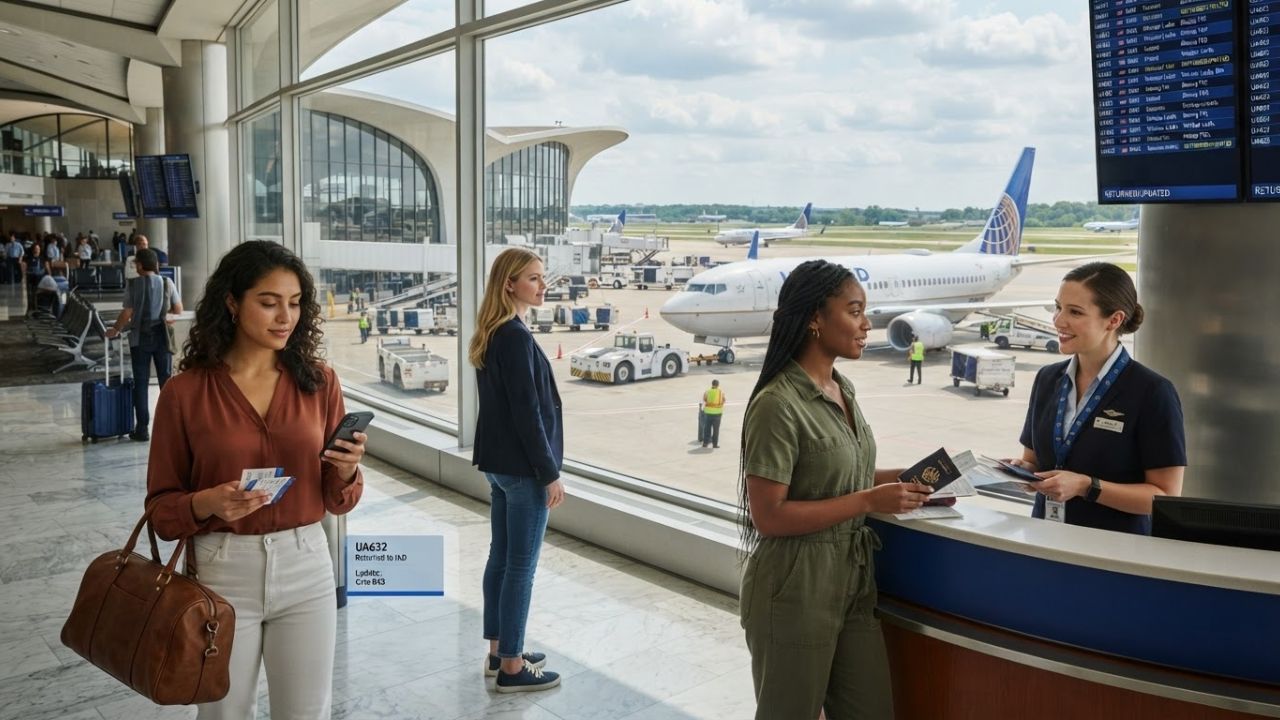
Image generated by AI
[Washington, July 8, 2026] — A United Airlines domestic flight returned to its origin gateway shortly after takeoff on Tuesday, July 7, 2026. Flight UAL632 departed Washington Dulles International Airport (IAD) bound for Bradley International Airport (BDL) in Windsor Locks, Connecticut. The crew discontinued the flight path during the initial climb phase.
The Boeing 737-724 aircraft reversed course and returned to Washington Dulles. The landing was completed safely, and the flight crew did not declare an inflight emergency. Ground teams met the aircraft to assist passengers with rebooking and alternative travel arrangements.
Airlines use return-to-origin procedures when an operational anomaly requires attention. The carrier has not confirmed the specific reason behind the route change. Ground personnel worked to inspect the airframe and coordinate passenger transfers to replacement services.
Operational Flight Path and Route Return Details
Flight tracking logs indicate that Flight UAL632 departed Washington Dulles on its scheduled departure slot. The flight route to Connecticut is short, requiring less than an hour of cruise time. The aircraft began its return while transiting regional airspace.
The crew coordinated with air traffic controllers to secure a lower altitude flight path back to Dulles. Returning to the origin airport is often the most practical option when resolving technical alerts. The flight ended at the same gate from which it departed.
Passengers remained at the terminal gate while United Airlines coordinated a recovery flight. The diversion did not disrupt wider scheduled operations at Dulles.
Boeing 737-724 Fleet Maintenance and Hub Base Logistics
The aircraft operating the route was a Boeing 737-724, a standard narrowbody jet used for domestic service. These twin-engine jets operate multiple regional flights daily. The aircraft is equipped with diagnostic sensors that monitor engine and cabin performance.
Returning to a major hub like Dulles is highly beneficial for fleet logistics. Dulles serves as a primary hub for United Airlines, offering parts inventories and maintenance crews. Outstations like Bradley International have limited engineering support for major inspections.
By returning to Dulles, the airline can quickly inspect the aircraft and return it to service. This helps prevent compounding delays on downstream schedules.
Standard Return-to-Origin Protocols in Commercial Aviation
Return-to-origin maneuvers are a standard component of airline safety management. Flight crews receive regular training to handle unexpected instrument readings. A decision to return does not mean a critical system failure occurred.
In many cases, cockpit displays warn pilots of minor pressure fluctuations or electrical anomalies. Standard protocols guide pilots to land at the nearest suitable airport with maintenance facilities.
United Airlines worked to communicate with affected passengers regarding flight status updates. The carrier provided food vouchers and rebooked travelers on later flights to Connecticut.
United Airlines Flight UAL632 Operations Summary
| Flight Parameter | Operational Details & Timestamps |
|---|---|
| Airlines & Flight ID | United Airlines / UAL632 |
| Aircraft Type | Boeing 737-724 (Boeing 737-700) |
| Scheduled Route | Washington Dulles (IAD) to Bradley International (BDL) |
| Diverted Destination | Returned to Washington Dulles (IAD) |
| Incident Date | July 7, 2026 |
| Operational Status | Safe landing at IAD; flight crew initiated return-to-origin en route |
| Emergency Status | Routine landing; emergency services were not declared |
Key Takeaways
- Precautionary return: United Airlines Flight UAL632 returned to Washington Dulles shortly after takeoff.
- Aircraft involved: The flight was operated by a Boeing 737-724 passenger jet.
- No emergency declared: The landing was routine, and emergency services were not required.
- Hub advantages: Dulles provided immediate maintenance support and replacement flight options.
- Windsor Locks target: The flight was scheduled to connect passengers with Bradley International Airport.
Why This Matters
Our analysis of the flight data indicates that return-to-origin events highlight the operational trade-offs of hub-and-spoke airlines. Landing at the destination (BDL) with a minor issue can strand the aircraft away from maintenance bases. Returning to Dulles ensures the airline has immediate access to spare aircraft and parts.
Furthermore, these diversions show the role of telemetry systems in modern aircraft. Cockpit computers flag minor anomalies before they develop into serious mechanical issues. This early detection helps ensure passenger safety and improves overall fleet reliability.
For passengers, the delay was minimized by the hub's passenger support services. Hub airports have reserve crews and spare aircraft ready to cover delayed routes. This reduces passenger wait times compared to diversions at smaller regional outstations.
Industry Outlook
Market trends suggest that airlines will expand their predictive maintenance systems to scan for potential component failures before departure. Expect carriers to refine their automated passenger rebooking tools to quickly manage connections during schedule delays. In the short term, United Airlines will prioritize aircraft inspections at Dulles to return the Boeing 737 to scheduled service.
FAQ
Why did United Airlines Flight UAL632 return to Washington? The flight crew made a precautionary decision to return to Washington Dulles. The airline has not disclosed the specific cause.
Which aircraft operated the flight? The route was operated by a Boeing 737-724 passenger jet.
How did the diversion affect passengers heading to Connecticut? Passengers were rebooked on alternative flights or replacement aircraft scheduled from the Washington Dulles hub.
Was an emergency declared during the return to Dulles? No, the aircraft completed a routine landing, and no emergency services were requested.
Related Travel Guides
- JFK Airport Flight Cancellations: Airspace Reductions and Severe Weather Disrupt Transatlantic Summer Travel Coordinated by Delta and JetBlue
- Boston Logan International Airport Delays Mount as Airspace Volume and Air Traffic Control Initiatives Constrain New England Flights
- Miami International Airport Flight Cancellations: American, Delta, United, and Envoy Air Suspend Key Domestic and Caracas Routes
Disclaimer
This article is for informational and educational purposes only. It does not constitute legal, financial, or professional advice. While we strive to provide accurate and up-to-date information, travel policies, regulations, and conditions change rapidly. Always verify information with official sources before making travel decisions. Nomad Lawyer makes no representations about the accuracy, reliability, completeness, or suitability of the information provided. Readers should consult qualified professionals for advice specific to their circumstances. The views expressed in this article are those of the author and do not necessarily reflect the views of Nomad Lawyer.
Kunal K Choudhary
Co-Founder & Contributor
A passionate traveller and tech enthusiast. Kunal contributes to the vision and growth of Nomad Lawyer, bringing fresh perspectives and driving the community forward.
Learn more about our team →