UK Celebrates 25 Years of Harry Potter: Five Magical Rail Journeys Across Famous Filming Sites

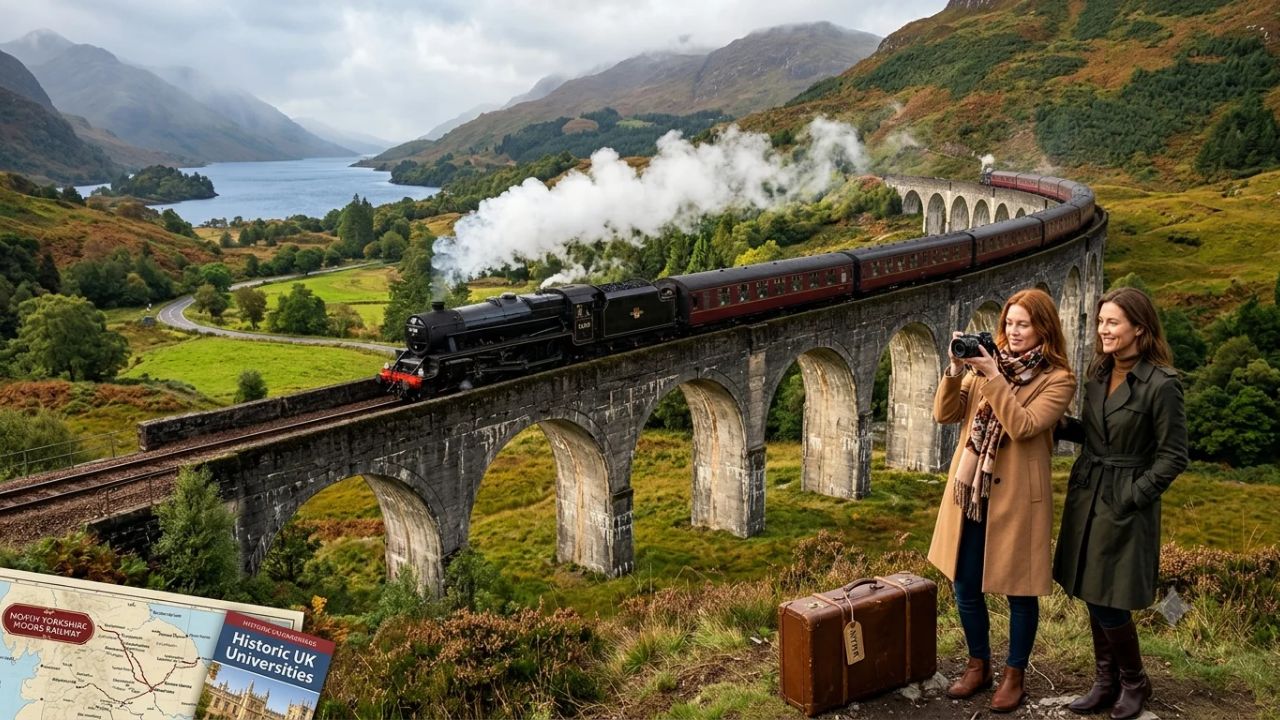
Great Britain's railway network connects fans to the authentic filming locations of Harry Potter, from the West Highland Line to historic English cathedrals, celebrating the 25th anniversary of the first film.
LONDON, November 3, 2026 — Twenty-five years after the global cinematic debut of Harry Potter and the Philosopher's Stone in November 2001, Great Britain's railway network remains the primary conduit connecting travelers to the authentic stations, dramatic viaducts, and medieval cloisters that brought the Wizarding World to life. Far from existing merely as computer-generated imagery or soundstage illusions, the physical environments that framed the cinematic narrative are embedded within Britain's living transport and heritage infrastructure. From the vibrant concourse of London King's Cross to the wild granite peaks flanking the West Highland Line, the historic colleges of Oxford, the soaring Norman arches of Durham Cathedral, and the heritage platforms of Goathland, rail travel offers an immersive gateway to cinematic history.
[!NOTE] Essential Rail & Anniversary Visitor Advisory: The five principal Harry Potter railway journeys do not form a single continuous rail tour. Instead, they comprise distinct regional itineraries requiring coordinated advance planning. Key seasonal milestones include the launch of Hogwarts in the Snow at Warner Bros. Studio Tour London from November 14, 2026, through January 17, 2027 (introducing an exclusive Foley sound effects feature for 2026), alongside strict operational differences between regular ScotRail passenger services and seasonal heritage steam excursions across Scotland's Glenfinnan Viaduct.
THE GREAT BRITISH HARRY POTTER RAILWAY EXPEDITION CORRIDOR
| Column 1 |
|---|
| [ 1. LONDON KING'S CROSS ] <== Western Concourse Intermodal Hub |
| * Role: Platform 9¾ luggage trolley installation & official Harry Potter Shop. |
| * Transit: Mainline gateway connecting London to Yorkshire, Durham, and Scotland. |
| [ 2. LEAVESDEN / WATFORD JUNCTION ] <== London Northwestern Railway from London Euston |
| * Role: Warner Bros. Studio Tour London – The Making of Harry Potter. |
| * Highlights: Permanent sets, 'Hogwarts in the Snow' (Nov 14–Jan 17), 2026 Foley audio stage. |
| [ 3. OXFORD UNIVERSITY PRECINCT ] <== Great Western Railway from Paddington / Chiltern |
| * Role: Bodley Tower Staircase (Christ Church), Divinity School & Duke Humfrey's Library. |
| * Highlights: Architectural inspiration for the Great Hall; authentic medieval reading rooms. |
| [ 4. DURHAM CATHEDRAL PENINSULA ] <== LNER East Coast Main Line from King's Cross |
| * Role: The Snowy Quadrangle Cloisters & Professor McGonagall's Chapter House Classroom. |
| * Highlights: 11th-century Norman architecture; dramatic river gorge peninsula setting. |
| [ 5. GOATHLAND & THE MOORS ] <== North Yorkshire Moors Railway / Coastliner 840 from York |
| * Role: The original Hogsmeade Station terminal. |
| * Highlights: Preserved Victorian country station; 3.5-mile Rail Trail to Grosmont. |
| [ 6. THE GLENFINNAN HIGHLAND VIADUCT ] <== ScotRail West Highland Line from Glasgow / Fort William |
| * Role: The iconic Hogwarts Express mountain crossing over Loch Shiel. |
| * Highlights: 21 mass concrete arches; historic 1745 Jacobite Monument; year-round hiking trails. |
The Twenty-Five Year Rail Legacy: How Hogwarts Reinvigorated British Train Tourism
When director Chris Columbus adapted J.K. Rowling's literary work for international cinema audiences in late 2001, the train journey was established as the emotional and physical threshold between the mundane world and magical adventure. Boarding the scarlet steam engine at Platform 9¾, passing through the smoke of the locomotive, and speeding across sweeping viaducts embedded railways at the very heart of the franchise's identity. Twenty-five years later, that cinematic association has generated an enduring wave of screen tourism that continues to direct international travelers across England and Scotland.
National tourism agency VisitBritain has formally integrated these filming sites into its cultural promotion strategies, recognizing that screen tourism provides an exceptional mechanism for dispersing economic activity outside London. For international visitors, following the trail of the film locations transforms standard sightseeing into a narrative-driven expedition. Rather than viewing historical monuments in isolation, travelers encounter living institutions: functioning railway junctions handling commuter traffic, university libraries preserving medieval manuscripts, working cathedrals conducting daily choral services, and heritage trusts maintaining historic steam locomotives.
This intersection between cinematic storytelling and railway preservation provides vital financial support to Britain's regional visitor economy. However, successfully navigating these destinations requires travelers to distinguish between four distinct operational categories: active national railway stations, ticketed studio exhibitions, historic heritage railways operating seasonal timetables, and working academic or religious spaces. Each category operates under its own legal access framework, booking rules, and operational rhythm.
The economic impact on passenger rail revenue is equally significant. Long-distance train operators including London North Eastern Railway, Great Western Railway, and ScotRail report that screen tourism has stimulated off-peak leisure travel across both secondary lines and mainline arteries. Overseas visitors frequently utilize BritRail passes and Advance purchase rail tickets to travel between southern heritage towns and northern scenic routes. This steady flow of leisure passenger volume helps offset traditional midweek business travel contractions, providing continuous farebox revenue that supports regional rail operations throughout the autumn and winter shoulder seasons.
Gateway to Magic: London King's Cross and the Mechanics of Platform 9¾
For almost every traveler embarking on a film-themed railway tour of Britain, the journey begins beneath the monumental arched train sheds of London King's Cross Station. Designed by Lewis Cubitt and opened in 1852, King's Cross represents one of the Victorian era's crowning engineering achievements. In cinematic lore, it serves as the departure point for Hogwarts students, who push their brass-bound luggage trolleys through the solid brick barrier dividing Platforms 9 and 10 to access Platform 9¾.
In reality, visiting the filming site reveals the ingenuity of both railway architecture and cinematic production. In the original 1850s station layout, Platforms 9 and 10 were separated by active railway tracks rather than a brick dividing wall. To capture the famous trolley-pushing sequence in the 2001 film, the production crew filmed along the brick arches separating Platforms 4 and 5 within the suburban train shed.
LONDON KING'S CROSS VISITOR NAVIGATION MAP
| Column 1 |
|---|
| [ SUBURBAN TRAIN SHED (Platforms 9–11) ] |
| * Physical location of tracks 9 & 10 (Operational railway platform; ticket barrier required). |
| [ HISTORIC MAIN TRAIN SHED (Platforms 4–8) ] |
| * Actual physical filming location used in 2001 film (Brick archways between Platforms 4 & 5). |
| * Access: Accessible only to passengers holding valid railway departure tickets. |
| [ MODERN WESTERN CONCOURSE (Public Concourse Area) ] |
| * Permanent Platform 9¾ Installation (Luggage trolley embedded in brick wall). |
| * The Harry Potter Shop at Platform 9¾ (Official studio retail boutique). |
| * Access: Completely free and open to the public; zero train ticket or barrier pass required. |
| * Operational Note: Professional photography staff present during daytime hours; queues apply. |
| [ INTERMODAL CONNECTIONS ] |
| * Adjacent to St Pancras International (Eurostar to Paris/Brussels, Southeastern High Speed). |
| * London Underground Hub: Six tube lines (Circle, Hammersmith & City, Metropolitan, Northern, |
| Piccadilly, Victoria). |
To accommodate millions of international visitors without disrupting daily commuter flows, Network Rail established a permanent, public Platform 9¾ installation within the station's modern western concourse, beneath John McAslan's soaring diagrid steel roof. The installation features a vintage luggage trolley, complete with steamer trunk and brass owl cage, embedded permanently into a designated brick wall, flanked by the official Harry Potter Shop.
The concourse installation is accessible free of charge without a train ticket. Professional photography staff and house scarf props are available during daytime operating hours, though visitors can take photographs with their own cameras. Beyond its role as a photo destination, King's Cross serves as the operational springboard for journeys north: high-speed London North Eastern Railway (LNER) Azuma trains depart platforms below, carrying travelers directly toward Yorkshire, Durham, Newcastle, and Edinburgh.
Leavesden Studio Tour: The Science of Winter Sets and the New 2026 Foley Audio Stage
Located twenty miles northwest of central London in Leavesden, Hertfordshire, Warner Bros. Studio Tour London – The Making of Harry Potter occupies the converted aircraft factory where all eight films were headquartered over a decade of production. While King's Cross represents an active railway gateway, Leavesden provides access to the authentic interior sets, costumes, animatronics, and technical secrets behind the films.
Transit to Leavesden from central London is fast and efficient. Travelers board London Northwestern Railway services from London Euston Station, reaching Watford Junction in approximately twenty minutes on non-stop regional express trains. Outside Watford Junction, visitors transfer to dedicated, zero-emission electric shuttle buses that make the short transfer to the studio gates in fifteen minutes. Shuttle transfers depart every thirty minutes starting from 9:20 AM (with earlier services running from 8:15 AM on dates with 9:00 AM tour openings) and are included in the studio admission ticket.
LEAVESDEN STUDIO TOUR TRANSIT & EXHIBITION TIMELINE
| Column 1 |
|---|
| [ LONDON EUSTON STATION ] |
| v (London Northwestern Railway fast express: 20 minutes) |
| [ WATFORD JUNCTION STATION ] |
| v (Zero-emission electric shuttle bus: 15 minutes; included in admission) |
| [ WARNER BROS. STUDIO TOUR LONDON (LEAVESDEN) ] |
| +--- PERMANENT EXHIBITIONS: Great Hall, Diagon Alley, Gryffindor Common Room, |
| +--- SEASONAL EVENT: 'Hogwarts in the Snow' (November 14, 2026 – January 17, 2027) |
| +--- BRAND-NEW 2026 FEATURE: Backlot Stage Foley Sound Effects Laboratory |
| * Interactive demonstration of cinematic Foley acoustics. |
| * Reveals how sound artists engineer crunching snow, crackling hearths, and |
| howling winter winds using everyday physical materials. |
The anniversary season brings a major transformation with the return of Hogwarts in the Snow, scheduled from November 14, 2026, through January 17, 2027. During this seasonal event, the studio decorators dress the original Great Hall set with festive Christmas trees, glittering garlands, and flaming hearths. The Gryffindor common room and boys' dormitory are decorated with authentic hand-made holiday cards, while the stunning 1:24 scale architectural model of Hogwarts Castle is covered in artificial snow formulated from varying mixtures of granulated paper and salt.
For the 2026 winter season, Warner Bros. has unveiled an entirely new educational installation located on the Backlot Stage: an interactive Foley sound effects demonstration. In professional filmmaking, Foley artists create and record practical sound effects to accompany on-screen action during post-production. The new 2026 exhibit demonstrates how cinematic sound designers engineered the physical sounds of winter in the Wizarding World—demonstrating how leather gloves, cornstarch pouches, and wooden creakers are manipulated to generate the acoustic effects of characters trudging through deep snowdrifts or warming themselves before roaring hearth fires.
A vital distinction for railway enthusiasts visiting Leavesden centers on the studio's Hogwarts Express exhibit. Positioned along a recreated Platform 9¾ set, the attraction houses the authentic Great Western Railway 4900 Class steam locomotive No. 5972 Olton Hall, repainted in scarlet livery. While visitors can step inside the carriages to view compartment sets dressed with confectionery props, this is a static museum exhibition rather than an operating train ride.
The West Highland Corridor: ScotRail Scheduled Services vs. The Jacobite Steam Excursion
For breathtaking landscape cinematography, no location rivals the Glenfinnan Viaduct in Inverness-shire, Scotland. Designed by pioneering concrete engineer Sir Robert McAlpine and completed in 1901, the viaduct carries the West Highland Line across a 416-yard span, elevated one hundred feet above the River Finnan on twenty-one graceful mass-concrete arches. In the films, this sweeping curved bridge provides the background for the Hogwarts Express journeys across the Scottish Highlands.
When organizing an excursion to Glenfinnan, travelers face an important operational decision between two distinct rail services: regular passenger trains operated by ScotRail and heritage steam excursions operated by West Coast Railways under the brand name The Jacobite.
WEST HIGHLAND LINE: SCOTRAIL vs. THE JACOBITE COMPARISON
| Column 1 |
|---|
| [ SCOTRAIL SCHEDULED PASSENGER SERVICE ] |
| * Operating Entity: ScotRail (National passenger railway franchise). |
| * Rolling Stock: Class 156 Super Sprinter diesel multiple units (Modern passenger railcars). |
| * Route Corridor: Glasgow Queen Street / Fort William to Mallaig via Glenfinnan. |
| * Operating Calendar: Runs 365 days a year on published passenger timetables. |
| * Ticketing: Standard National Rail fares; fully integrated with onward rail bookings. |
| * Passenger Experience: Regular passenger transport, large observation windows, public utility. |
| [ THE JACOBITE HERITAGE STEAM EXCURSION ] |
| * Operating Entity: West Coast Railways (Private charter operator). |
| * Rolling Stock: Vintage steam locomotive hauling restored British Railways Mark 1/2 carriages. |
| * Route Corridor: Fort William to Mallaig return excursion. |
| * Operating Calendar: Strictly seasonal; operates only from April through late October. |
| * Ticketing: Premium excursion fares booked separately; completely unlinked to national rail. |
| * Regulatory Context: Subject to Office of Rail and Road (ORR) central door-locking safety rules. |
| * Passenger Experience: Nostalgic heritage steam journey, dining options, vintage ambiance. |
The fundamental difference lies in scheduling and seasonality. ScotRail trains operate along the West Highland Line year-round as part of the public transport network, connecting Fort William with the Atlantic fishing port of Mallaig. These diesel passenger trains cross the Glenfinnan Viaduct on scheduled runs, offering travelers the exact same elevated views of Loch Shiel and the surrounding mountains at standard national rail fares.
Conversely, The Jacobite is a specialized heritage excursion operating vintage steam locomotives hauling historic passenger carriages. While it offers a visual experience reminiscent of the fictional Hogwarts Express, its operating window is strictly seasonal, running from April through late October. In November, during the anniversary period, The Jacobite does not operate. Alongside seasonal scheduling limits, West Coast Railways has faced regulatory oversight from Britain's Office of Rail and Road (ORR) regarding safety exemptions for traditional carriage slam-doors and central door-locking mechanisms, requiring travelers to verify operating permissions when booking future summer excursions.
Beyond the railway itself, Glenfinnan offers rich natural and historical landmarks. Directly below the viaduct stands the Glenfinnan Monument, erected in 1815 to commemorate the Jacobite rising of 1745, where Prince Charles Edward Stuart (Bonnie Prince Charlie) raised his royal standard before a gathering of Highland clansmen. The surrounding shores of Loch Shiel also appeared as the Great Lake in multiple film installments. Travelers seeking to photograph trains crossing the viaduct can follow well-marked walking trails from Glenfinnan Station or the National Trust for Scotland visitor center up to designated hillside viewpoints. However, visitors must exercise caution during late autumn, when Highland daylight diminishes rapidly by 4:00 PM and mountain paths become slick with peat and rain.
Scholastic Splendour: Oxford's Academic Quadrangles and Durham's Norman Cloisters
To portray the ancient, scholarly architecture of Hogwarts Castle, filmmakers turned away from purpose-built sets and focused on the surviving medieval and early modern stone architecture of Oxford and Durham.
In Oxford, accessible in just 52 minutes via Great Western Railway express trains from London Paddington (or Chiltern Railways from London Marylebone), the university's historic colleges provided the architectural inspiration for Hogwarts interiors. At Christ Church College, visitors climb the dramatic sixteenth-century Bodley Tower stone staircase, where Professor McGonagall welcomes first-year students in the 2001 film. Directly above the staircase sits Christ Church's Great Hall, a magnificent Tudor dining hall lined with historic portraits and crowned by an elaborate hammerbeam timber roof. While filming did not take place inside the dining room itself, set designers measured and replicated the hall's exact proportions and heraldic details on the soundstages at Leavesden.
OXFORD & DURHAM FILMING ARCHITECTURE MAPPING
| Column 1 |
|---|
| [ UNIVERSITY OF OXFORD ] |
| * Christ Church College: |
| - Bodley Tower Stone Staircase: Hogwarts arrival scene in 'Philosopher's Stone'. |
| - Tudor Great Hall: Direct architectural blueprint for the Leavesden Great Hall set. |
| * Bodleian Libraries Precinct: |
| - The Divinity School: 15th-century Gothic vaulted hall used as the Hogwarts Infirmary. |
| - Duke Humfrey's Library: Medieval reading room used as the Hogwarts Restricted Section. |
| * Regulations: Timed tickets needed; Duke Humfrey's restricted to guided tours (Ages 11+ only). |
| [ DURHAM CATHEDRAL ] |
| * Cathedral Cloisters Garth: |
| - Quadrangle stone walkways used as the snow-covered Hogwarts courtyard (Hedwig scene). |
| * The Norman Chapter House: |
| - Historic vaulted stone hall used as Professor McGonagall's Transfiguration Classroom. |
| * Regulations: Cathedral open daily; Chapter House access 10:00 AM – 4:00 PM (Monday–Saturday). |
Across the historic center, the Bodleian Library precinct contains two significant film locations. The fifteenth-century Divinity School, celebrated for its intricate stone lierne vaulting and large stained-glass windows, served as the Hogwarts Infirmary, where Madam Pomfrey tends to injured students. Upstairs, the medieval Duke Humfrey's Library—the oldest reading room in the university—served as the Hogwarts Restricted Section, where Harry explores concealed under his Invisibility Cloak. Because the Bodleian remains a working research library, visitor access to Duke Humfrey's Library is restricted to specialized guided tours, where strict regulations prohibit flash photography to protect historic manuscripts and reader privacy.
Two hundred and fifty miles north, along the River Wear in North East England, Durham Cathedral provided the outdoor quadrangles and classroom settings for the early films. Reached via the East Coast Main Line on direct LNER services from London King's Cross in under three hours, Durham Cathedral is recognized as one of the finest surviving examples of Norman Romanesque architecture in Europe.
The cathedral's cloister garth, an enclosed quadrangle framed by carved stone traceried windows, served as the Hogwarts courtyard where Harry releases Hedwig into a winter snowfall in the first film. Directly off the cloisters lies the Chapter House, an exceptional stone hall built between 1133 and 1140, featuring ribbed vaulting and Romanesque wall arcades. In the films, this room served as Professor McGonagall's Transfiguration classroom. Public entry to the Chapter House is normally available between 10:00 AM and 4:00 PM Monday through Saturday, though visitors should confirm hours in advance as the room remains an active administrative chamber for cathedral clergy.
The selection of Durham Cathedral was driven by director Chris Columbus's desire to root Hogwarts in genuine architectural gravitas rather than reliance on digital matte paintings. The massive sandstone columns of the nave, incised with deep geometric chevron and spiral patterns, provided an authentic medieval ambiance that echoed through the cloisters. For railway travelers disembarking at Durham Station, the cathedral's central tower dominates the skyline above the wooded river gorge. The walk from the railway station descends across the River Wear before climbing through medieval cobbled lanes toward Palace Green, creating a dramatic physical transition from modern intercity rail transit into historic monastic architecture.
North Yorkshire Moors Railway: Reaching Hogsmeade at Goathland Station
Located in the North York Moors National Park, Goathland Station is an authentic Victorian country railway station that served as Hogsmeade Station in the 2001 film. In cinematic lore, this is the station where the Hogwarts Express completes its journey from King's Cross, where Rubeus Hagrid greets the arriving first-year students on the platform, and where Harry bids Hagrid farewell at the conclusion of the story.
Goathland is preserved and operated by the North Yorkshire Moors Railway (NYMR), one of the oldest and most popular heritage railway lines in Britain. The railway runs across eighteen miles of countryside, connecting the market town of Pickering with Goathland, Grosmont, and the coastal town of Whitby.
GOATHLAND HERITAGE RAIL & HIKING CONNECTIONS
| Column 1 |
|---|
| [ PICKERING MAIN TERMINUS ] <=== Southern gateway to North York Moors Railway |
| v (Historic steam & heritage diesel services traverse Newtondale) |
| [ LEVISHAM STATION ] |
| v |
| [ GOATHLAND STATION (Hogsmeade) ] |
| +--- HERITAGE PLATFORMS: Restored red-brick booking hall, cast-iron footbridge, water crane. |
| +--- THE RAIL TRAIL (Outdoor Hiking Route): |
| +--- NATURAL HIGHLIGHT: Mallyan Spout Waterfall (70-foot cascade located 20 mins walk). |
| v |
| [ GROSMONT STATION ] <=== Connection to National Rail network (Esk Valley Line to Middlesbrough) |
| v |
| [ WHITBY HARBOUR ] <=== Coastal terminus overlooked by historic Whitby Abbey ruins |
Goathland's historic station buildings, authentic cast-iron footbridge, and vintage water cranes retain their early-twentieth-century appearance, allowing visitors to walk along the exact platforms seen on screen. For active travelers, Goathland serves as the trailhead for the celebrated Rail Trail, a scenic 3.5-mile signposted walking path connecting Goathland with Grosmont station. The trail traces the original 1836 horse-drawn railway incline engineered by pioneer railway builder George Stephenson, winding through the Murk Esk valley and offering views of heritage steam trains ascending the gradient. A short walk from Goathland village square also brings visitors to Mallyan Spout, a seventy-foot natural waterfall cascading into a wooded limestone ravine.
Planning a visit to Goathland requires careful timetable coordination. Mainline passenger trains do not serve Goathland directly. Travelers typically take an LNER train to York, transfer to regional services to Malton or Whitby, or catch the Transdev Coastliner route 840 bus from York railway station directly into Goathland village. Because the NYMR is a heritage operation with seasonal schedules, visitors should verify whether steam or heritage diesel locomotives are operating on their chosen travel date.
Comprehensive Rail Transit Matrix: Routing, Operators, and Filming Locations
The following analytical matrix compiles transport gateways, primary rail operators, travel times, and visitor guidance across all five primary British filming locations.
| Destination & Filming Site | Cinematic Location Depicted | Primary Rail Gateway | Primary Train Operator | Typical Transit Time from Central London | Vital Traveler & Ticketing Guidance |
|---|---|---|---|---|---|
| London King's Cross | Platform 9¾ Departure Concourse & Station Vaults | King's Cross Station | Network Rail / LNER | Central London Hub (0 minutes) | Concourse installation and photo shop are free; no train ticket required. Professional photo queues during peak hours. |
| Warner Bros. Studios Leavesden | Authentic Film Sets, Great Hall, 'Hogwarts in the Snow' | Watford Junction Station | London Northwestern Railway + Shuttle | ~35 minutes (20m rail from Euston + 15m dedicated shuttle) | 100% advance online ticket booking mandatory. Shuttle bus included with ticket. New Foley audio demonstration for 2026. |
| Oxford University Colleges | Bodley Staircase, Tudor Dining Hall, Infirmary, Library | Oxford Railway Station | Great Western Railway (Paddington) / Chiltern | 52 to 65 minutes (Non-stop GWR rail express) | Timed entry tickets required for Christ Church. Duke Humfrey's Library accessible only via guided tours (Age 11+). |
| Durham Cathedral Peninsula | Hogwarts Cloister Garth & Transfiguration Classroom | Durham Railway Station | London North Eastern Railway (LNER) | 2 hours 50 minutes (Direct high-speed Azuma) | Cathedral open daily; Chapter House open 10:00 AM to 4:00 PM Monday–Saturday (Subject to special services). |
| Goathland Heritage Station | Hogsmeade Station Terminal on the Hogwarts Express | Pickering / Grosmont / York Gateway | North Yorkshire Moors Railway / Coastliner | ~4 hours 15 minutes (Rail to York, then Coastliner 840) | Heritage railway runs on seasonal timetables. Coastliner bus 840 provides direct daily public transit access to village. |
| Glenfinnan Highland Viaduct | Hogwarts Express Mountain Viaduct over Loch Shiel | Fort William / Glenfinnan Stations | ScotRail (West Highland Line) | ~9 hours 30 minutes (Day train) or Caledonian Sleeper | ScotRail diesel trains run year-round; Jacobite steam train is seasonal (April–October only). Trail walking requires good footwear. |
Structuring a Multi-Day Itinerary: Segmenting Britain's Filming Destinations
Attempting to visit all five filming destinations in a single compressed excursion is logistically impossible given the geographical distribution across England and Scotland. Experienced travel planners segment these locations into two distinct regional clusters: the Southern Triangle and the Northern Heritage Corridor.
RECOMMENDED REGIONAL ITINERARY SEGMENTATION
| Column 1 |
|---|
| [ THE SOUTHERN TRIANGLE: 2 TO 3 DAYS (Base: Central London) ] |
| * Day 1: London King's Cross Platform 9¾ concourse & city exploration. |
| * Day 2: Morning train from Euston to Leavesden (Watford Junction) for Warner Bros. Studio Tour. |
| * Day 3: Morning GWR express from Paddington to Oxford for college and library architecture. |
| * Advantage: High-frequency rail lines, short journey times, zero long-distance luggage transfers. |
| [ THE NORTHERN HERITAGE & HIGHLAND EXPEDITION: 4 TO 6 DAYS ] |
| * Day 1: High-speed LNER service from King's Cross to York; Coastliner 840 excursion to Goathland. |
| * Day 2: LNER rail transit to Durham (260 miles north of London) for cathedral cloisters. |
| * Day 3: Mainline rail transit across the Scottish border to Edinburgh Waverley. |
| * Day 4: Scenic ScotRail transit across West Highland Line via Glasgow to Fort William. |
| * Day 5: West Highland Line rail crossing across Glenfinnan Viaduct to Mallaig; return sleeper. |
| * Advantage: Exceptional scenic diversity, authentic heritage railways, and historic landscapes. |
The Southern Triangle is ideal for weekend visitors, families traveling with school-age children, and business travelers with limited spare time. By basing themselves in central London, travelers utilize high-frequency commuter rail to reach Leavesden and Oxford in under an hour each, returning to London hotels in the evening without luggage transfers.
The Northern Expedition appeals to travelers seeking dramatic landscapes, long-distance railway journeys, and authentic historic architecture. Combining Yorkshire, County Durham, and the Scottish Highlands requires coordinated booking of long-distance rail tickets, regional hotel stays, and advance planning for daylight hours during the late autumn and winter seasons.
Frequently Asked Questions About UK Harry Potter Rail Travel
Can visitors take a passenger train across the Glenfinnan Viaduct in November?
Yes. ScotRail operates scheduled passenger diesel trains across the Glenfinnan Viaduct year-round along the West Highland Line between Fort William and Mallaig, provided no engineering works are active. However, The Jacobite heritage steam train operates only seasonally between April and late October and does not run during November.
What is the new Foley sound feature introduced at Warner Bros. Studio Tour London for 2026?
For the 2026 winter season, Warner Bros. Studio Tour London has introduced an interactive Foley sound effects demonstration on the Backlot Stage. The exhibit demonstrates how practical sound artists create audio elements—such as footsteps through fresh snow, roaring hearths, and winter winds—using everyday physical materials to accompany film visuals.
How do travelers reach Goathland Station if the heritage steam railway is not running?
When the North Yorkshire Moors Railway is not running daily steam services, visitors can reach Goathland village using the Transdev Coastliner route 840 bus. The bus departs daily from Leeds, York railway station, Malton, and Pickering, dropping passengers directly in Goathland village square, a five-minute walk from the historic station platforms.
Is a special ticket required to photograph the Platform 9¾ installation at London King's Cross?
No. The Platform 9¾ trolley installation and the adjacent Harry Potter Shop are located in the public western concourse of London King's Cross Station. Visitors do not need to pass through ticket barriers or purchase a train ticket to access the installation.
What are the visiting hours for the Transfiguration Classroom at Durham Cathedral?
Durham Cathedral's Chapter House, which served as Professor McGonagall's classroom, is generally open to visitors from 10:00 AM to 4:00 PM, Monday through Saturday. However, because the cathedral is an active place of worship and diocesan administration, the Chapter House may close periodically without advance notice for religious services, meetings, or diocesan events.
Related Travel Guides
- UK Rail Trips Beyond London: Five Harry Potter Film Sites Face Major November Disruptions for 25th Anniversary
- UK Launches Everitt Transport Review: Rail Governance and Passenger Coordination Across Europe
- Century Cruises Expands European River Travel with New Century Star Sailings
- Global Tourism Taxes 2027: New Levies and Long-Term Traveler Impacts
This article is for informational purposes. Flight routes, passenger regulations, visa rules, and transit advisories are subject to change by airlines and aviation authorities. Readers are advised to verify schedules and travel documentation with relevant carriers and border agencies before departure.
Related Stories
Hastings Line Reopens: Grove Hill Tunnel Repairs Complete Major Kent and East Sussex Rail Upgrades
Japan Announces Major Narita Express Service Changes for November 6–8 as Tokyo Tunnel Repairs Sever Direct Lines