
Proposed 7-Country Adriatic-Ionian Railway Corridor to Connect Italy, Slovenia, Croatia, and Greece

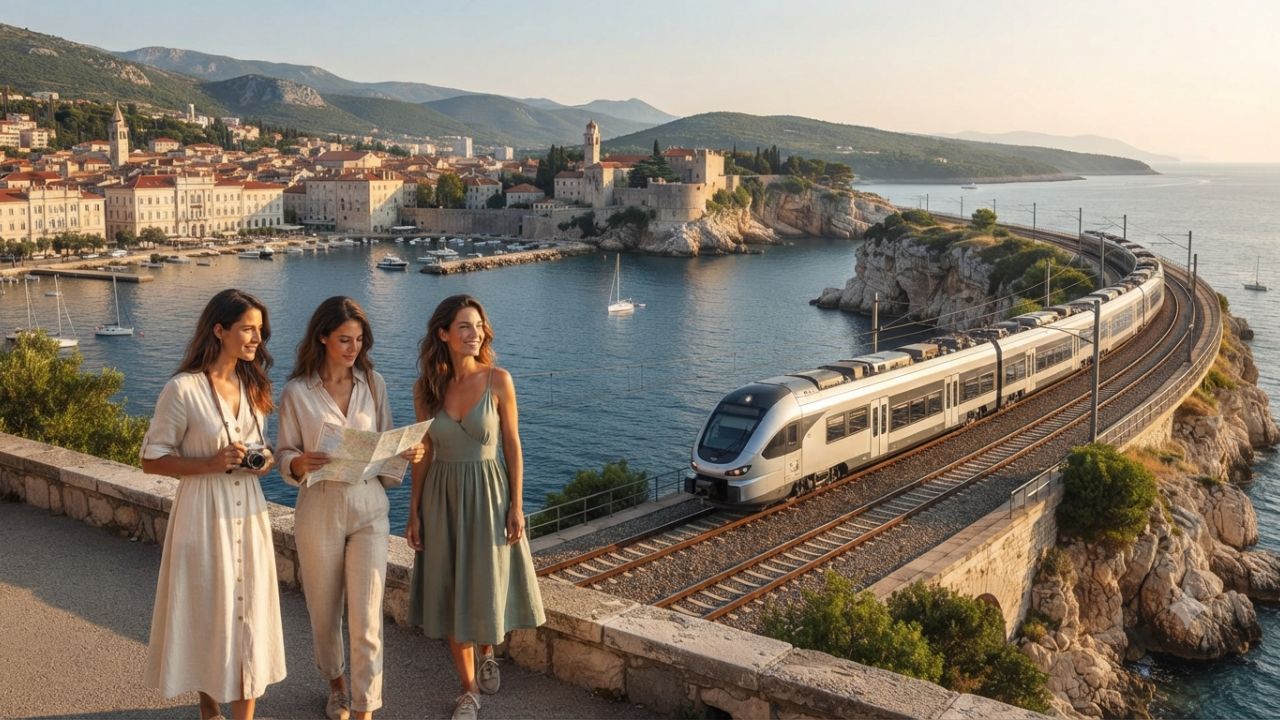
A proposed seven-country Adriatic-Ionian railway corridor aims to integrate transport infrastructure across Italy, Slovenia, Croatia, Bosnia and Herzegovina, Montenegro, Albania, and Greece.
A proposed seven-country Adriatic-Ionian railway corridor announced in Zagreb in October 2026 aims to transform cross-border travel across Southern Europe. Connecting Italy, Slovenia, Croatia, Bosnia and Herzegovina, Montenegro, Albania, and Greece, the infrastructure vision seeks to integrate coastal rail networks, port interchanges, and regional transit systems across the Adriatic-Ionian sea basin.
Seven-Country Rail Proposal Unveiled in Zagreb to Link Southern European Corridors
[ZAGREB, October 4, 2026] — Transport officials and regional policy boards convened in Zagreb to unveil a long-term proposal for an integrated Adriatic-Ionian railway corridor. The initiative outlines a continuous rail transport link traversing seven nations: Italy, Slovenia, Croatia, Bosnia and Herzegovina, Montenegro, Albania, and Greece.
While currently at an early conceptual stage, the initiative aligns with the European Union's Strategy for the Adriatic and Ionian Region (EUSAIR) transport framework, which prioritizes closing infrastructure gaps, removing cross-border bottlenecks, and upgrading rail interoperability. The proposed Croatian alignment targets key Adriatic urban nodes, including Trieste, Koper, Rijeka, Zadar, Šibenik, Split, and Ploče, before extending south toward Montenegro, Albania, and Greek rail connections.
Proposed Route Geography and Identified Transport Destinations
The project framework identifies specific regional stops and coastal transit gateways intended to connect local rail networks into a continuous international corridor.
| Country | Proposed/Identified Destination | Traveller Appeal | Current Status |
|---|---|---|---|
| Italy | Trieste & Northeastern Adriatic | Historic waterfront, Italian cuisine, museums | Existing railway network; corridor integration proposed |
| Slovenia | Koper | Adriatic coast, Venetian architecture | Existing railway network; integration proposed |
| Croatia | Rijeka | Kvarner Gulf, port hub, island ferries | Existing rail; major network upgrades proposed |
| Croatia | Zadar | Old town, Roman heritage, Dalmatian coast | Existing rail access requires onward transit links |
| Croatia | Šibenik | Medieval fortresses, UNESCO cathedral | Future corridor connection proposed |
| Croatia | Split | Diocletian's Palace, ferry hub | Existing rail network terminus |
| Croatia | Ploče | Deep-water port, Neretva Valley | Strategic proposed corridor interchange point |
| Bosnia & Herzegovina | Southern Corridor (Mostar/Neretva) | Ottoman heritage, Mostar Old Bridge | Regional rail requiring cross-border upgrades |
| Montenegro | Bar & Coastal Line | Adriatic beaches, Old Bar, mountain rail | Existing line; corridor integration proposed |
| Albania | Durrës | Adriatic port, Roman amphitheater | International rail connectivity proposed |
| Greece | Western & Ionian Rail Hubs | Historic centers, coastal resorts | Final passenger alignment pending confirmation |
Transport authorities emphasize that passenger schedules, ticket availability, and continuous travel times cannot be confirmed until feasibility studies, environmental reviews, and cross-border construction agreements are finalized. A formal European transport conference in Brussels scheduled for 2027 is set to review preliminary alignment models.
Macro Tourism Data Across Participating Adriatic-Ionian Markets
Statistical data across the seven participating nations demonstrates the substantial market potential for cross-border passenger rail infrastructure.
| Country | 2021 Arrivals | 2022 Arrivals | 2023 Arrivals | 2024 Arrivals | 2025 Commercial Arrivals / Nights |
|---|---|---|---|---|---|
| Croatia | ~13.8M | ~18.9M | 19.493M | 20.246M | 20.699M arrivals / 94.821M nights |
| Slovenia | 4.004M | 5.868M | ~6.2M | 6.583M | 6.994M arrivals / 17.843M nights |
| Montenegro | 1.660M | 2.180M | 2.613M | 2.607M | 2.729M arrivals / 15.367M nights |
| Bosnia & Herzegovina | Pandemic-affected | Recovery year | 1.733M | 1.957M | 1.963M arrivals / 4.084M nights |
| Italy | Recovery period | Recovery period | Record era | 129.3M arrivals (Istat) | 476.9M accommodation nights (Eurostat) |
In Croatia, foreign visitors generated 17.614 million arrivals and 85.612 million accommodation nights in 2025, accounting for 90.3% of total commercial nights. Slovenia recorded record totals in 2025, with foreign tourists accounting for 5.471 million arrivals and 13.359 million nights. In Montenegro, foreign travelers generated 95.8% of all commercial nights, with coastal resorts accommodating 92.6% of total overnight stays.
Regional City Breakdown: Northern Termini to Southern European Gateways
The proposed corridor links eleven distinct destination zones across the seven nations:
- Trieste, Italy: Serves as the northern starting point, offering direct connections to Venice and Milan via Italy's existing high-speed rail network.
- Koper, Slovenia: Connects Slovenia's coastal hub and Venetian-era historic center to international rail corridors.
- Rijeka, Croatia: Acts as a major transit hub on the Kvarner Gulf, connecting coastal ferry routes with proposed Istrian rail links including the Učka tunnel project.
- Zadar, Croatia: Provides access to northern Dalmatian islands and historical sites, requiring infrastructure modernizations to connect seamlessly with Rijeka.
- Šibenik, Croatia: Connects UNESCO-listed heritage sites and Krka National Park to the Dalmatian rail spine.
- Split, Croatia: Functions as a primary transport hub, linking central Dalmatian island ferry networks directly with inland rail routes.
- Ploče, Croatia: Positions its port infrastructure as a strategic rail interchange between coastal Dalmatia and inland Bosnia and Herzegovina.
- Mostar and Neretva Valley, Bosnia and Herzegovina: Opens the historic Old Bridge and Neretva Valley to regional passenger traffic.
- Bar, Montenegro: Links Montenegro's coastal resort centers and deep-water port with the scenic Belgrade-Bar mountain railway line.
- Durrës, Albania: Establishes a key port city gateway connecting Tirana and central Albania to international rail lines.
- Greece: Forms the southern terminus of the corridor, providing rail access to Ionian coastal regions and Thessaloniki.
Infrastructure Parameters and Regional Transport Milestones
Key technical indicators outline the scope of the proposed transport network:
| Indicator | Metric / Figure | Operational Significance |
|---|---|---|
| Participating Nations | 7 | Italy, Slovenia, Croatia, Bosnia and Herzegovina, Montenegro, Albania, Greece |
| Adriatic Road Corridor Benchmark | ~1,500 km | Existing highway alignment from Trieste toward Kalamata |
| Montenegro Corridor Share | ~110 km | Represents approximately 7% of total regional route length |
| EU Total Tourism Nights (2025) | ~3.1 Billion | Total accommodation volume across European Union markets |
| Italy Tourism Nights (2025) | 476.9 Million | Eurostat baseline for Italian tourism accommodation |
| Croatia Commercial Nights (2025) | 94.821 Million | Confirmed commercial accommodation volume |
| Slovenia Commercial Nights (2025) | 17.843 Million | Record national tourism accommodation volume |
Seasonality Analysis: Optimal Travel Windows for Multi-Country Rail Journeys
Tourism data reveals heavy seasonal concentration across the region. In 2025, 54.5% of Croatia's annual accommodation nights occurred during July and August. Similarly, Greece recorded 41.6% of its annual nights during the same two-month summer peak.
To avoid peak overcrowding and high summer temperatures, transport planners recommend shoulder season windows for future multi-country rail travel:
- May to June: Mild temperatures, active coastal ferry services, and moderate crowds.
- September to October: Warm sea temperatures, reduced accommodation rates, and optimal conditions for cultural touring.
- November to April: Low-season window suitable for urban city breaks in Trieste, Rijeka, and Split.
Critical Impact Analysis: Infrastructure Interoperability vs. Promotional Concepts
While the Zagreb proposal presents a compelling vision for Southern European travel, transport economists emphasize that significant financial and structural hurdles remain. Establishing a continuous passenger railway requires harmonizing different track gauges, electrification standards, signaling protocols, and border inspection procedures across EU and non-EU member states.
Until construction contracts are awarded and international operating agreements are signed, travelers cannot book continuous rail tickets between Italy and Greece. Current travel itineraries must rely on existing regional train lines, cross-border bus operators, and coastal ferry connections.
Why This Matters (Information Gain & Experience)
For global travelers, an operational Adriatic-Ionian rail corridor would create a unified overland travel route across seven European nations. Passengers could combine Italian culinary hubs, Slovenian coastal towns, Croatian islands, Bosnian cultural sites, Montenegrin fjords, Albanian coastal resorts, and Greek historical monuments within a single continuous train ticket.
While full implementation remains a multi-year infrastructure project, monitoring regional developments allows travelers to utilize expanding regional links. By tracking project updates through the 2027 Brussels transport summit, rail enthusiasts can plan future itineraries as individual cross-border segments come online.
Related Travel Guides
European High-Speed Rail Network Expansion and Cross-Border Corridors 2026
Ukraines Uzhhorod Transforms into European Travel Hub With Direct Rail Links
The Best Adriatic Rail Itineraries from Trieste to Greece According to Reddit
Disclaimer
This article is for informational and educational purposes only. It does not constitute legal, financial, or professional advice. While we strive to provide accurate and up-to-date information, travel policies, regulations, and conditions change rapidly. Always verify information with official sources before making travel decisions. Nomad Lawyer makes no representations about the accuracy, reliability, completeness, or suitability of the information provided. Readers should consult qualified professionals for advice specific to their circumstances. The views expressed in this article are those of the author and do not necessarily reflect the views of Nomad Lawyer.
Raushan Kumar
Founder & Lead Developer
Full-stack developer with 11+ years of experience and a passionate traveller. Raushan built Nomad Lawyer from the ground up with a vision to create the best travel and law experience on the web.
Learn more about our team →